
Vandaag of morgen in huis

Kwaliteit gegarandeerd

Welkomstaanbiedingen ontgrendelen: GRATIS bezorging | Tot 80% korting | Gratis 30 dagen JoyPlus-proefperiode
Download de app
A steamer can cook vegetables, fish, rice, dumplings and meat without the need for several saucepans. However, not every model is suitable for every kitchen. A compact electric steamer works differently from a stainless steel steamer for induction hobs, and having multiple tiers does not automatically make a model easy to use.
Pay particular attention to these common pitfalls:
A traditional steamer for induction, gas or electric cooking uses the heat source already available in your kitchen. This type is straightforward and often includes a spacious pan for soup, pasta or stews. However, you will need to monitor the cooking time, amount of water and temperature yourself.
An electric food steamer usually has a timer, water reservoir and automatic switch-off. This is useful when preparing several dishes at once or carrying out other tasks while cooking. Make sure the plug, voltage and safety instructions are suitable for use in the Netherlands. Products with a nominal voltage of 220–240 V are compatible with the standard Dutch mains voltage.
For one or two people, a compact steaming basket or a model holding around 2.5 to 6 litres may be sufficient. Families will generally benefit more from a 3-tier steamer or a 9- to 10-litre electric steamer.
Do not look only at the total capacity. Also consider:
Heavier ingredients, such as fish or chicken, generally belong at the bottom or in a spacious separate tier. Vegetables and smaller items can go above them. This prevents a shallow upper tier from becoming overcrowded.
A stainless steel steamer made from 304-grade steel is often chosen for its sturdy construction and the absence of a non-stick coating on the inside. That does not mean every model performs in the same way. Check the base construction, handles, lid and finish.
An uncoated pan may discolour due to high temperatures, salt or minerals in the water. According to product information from some manufacturers, white marks or rainbow-coloured discolouration can be removed with vinegar or lemon. Do not use an abrasive sponge if the manufacturer advises against it.
For an electric steamer, removable parts and dishwasher-safe baskets are convenient. The electrical base, cord and plug must not be immersed in water. Also check whether the product is genuinely dishwasher-safe: with the MAXCOOK steamer, for example, hand washing is recommended.
The choices below are based on verifiable specifications such as capacity, power, material, timer, heat-source compatibility and maintenance instructions.
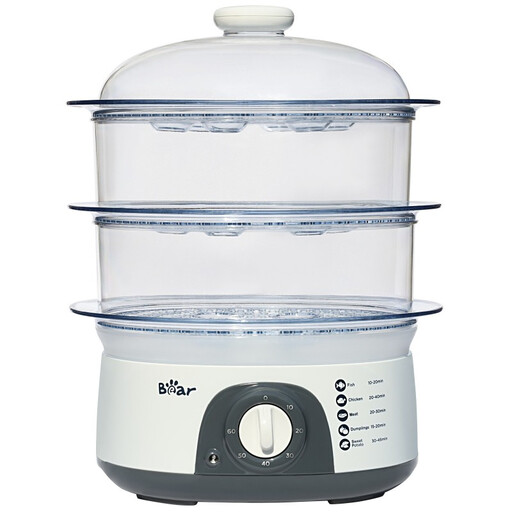
Why it suits this profile: This electric steamer offers a 10-litre capacity, three stackable tiers and a 60-minute timer for everyday use.
The capacity and number of tiers are clearly stated. According to the product information, the separate parts are removable and dishwasher-safe.
10-litre capacity, 650–775 W power, 60-minute timer and a sauce collection tray.
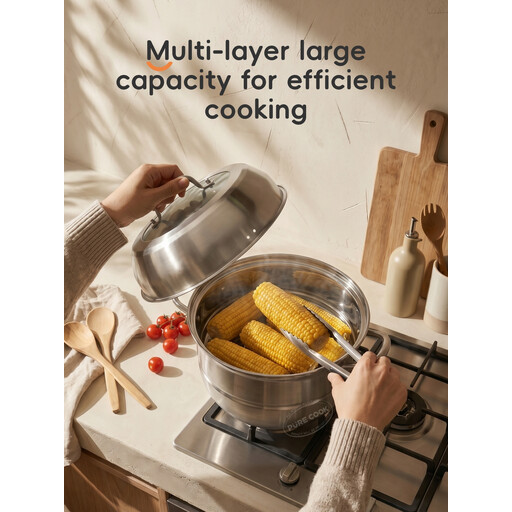
Why it suits this profile: This 7-piece cookware set is designed for households that want to use different combinations and cooking techniques.
The set specifies the materials used, the components included and the compatible hobs. This allows you to check the available space and compatibility in advance.
304 stainless steel, 30 cm diameter, dishwasher-safe parts and suitable for induction, gas, ceramic and halogen cooking.
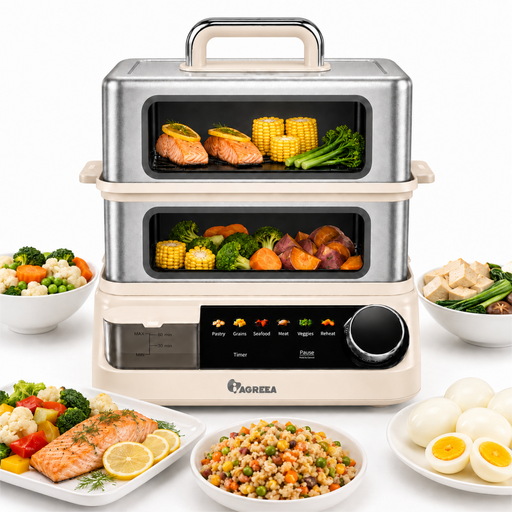
Why it suits this profile: This large electric steamer is aimed at families and meal preppers who want to cook several ingredients at the same time.
The two tiers have separate stainless steel trays and an external water tank. This reduces the need to remove the tiers while cooking.
14-litre capacity, 2000 W power, 2.5-litre external water tank, six presets and two removable trays.
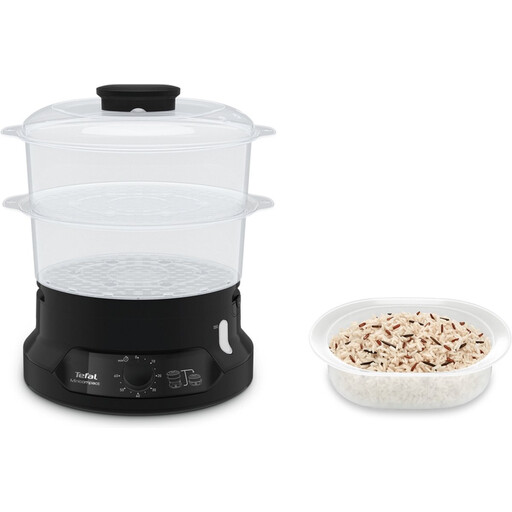
Why it suits this profile: With two tiers, a total capacity of 6 litres and a separate rice bowl, this model is well suited to everyday cooking in a smaller kitchen.
The capacity is clearly specified and the collapsible baskets are designed to save space. The timer runs for up to 60 minutes.
800 W power, 6-litre capacity, rice bowl, water-level indicator and dishwasher-safe accessories according to the product information.
We have put together a complete, up-to-date list of products that fully meet these strict selection criteria and the applicable European safety regulations.
Fill the water reservoir or bottom pan to just below the steaming plate. The water must not touch the ingredients. Place products with a longer cooking time at the bottom and keep the openings in the steaming basket clear. Open the lid carefully, directing it away from you, as hot steam may escape.
With a hob model, a stable, level surface is important. For induction cooking, only use a pan whose manufacturer states that it is induction-compatible. With electric models, do not place the appliance next to a hot oven or on a wet surface.
Clean the parts once they have cooled. Remove limescale according to the instructions and regularly check the cord, handles and lid rim for damage.
This varies by model. A stainless steel pan only works on induction when its base is suitable for it. Look for “induction-compatible” in the product specifications and also check the stated diameter.
For one or two people, one or two tiers are often sufficient. A 3-tier steamer is more practical for families or when you want to cook vegetables, fish and rice at the same time. However, check that the overall height fits inside your kitchen cupboard.
Consumption depends on the power rating and how long the appliance is used. An 800 W appliance running for half an hour theoretically uses around 0.4 kWh, excluding start-up and regulation losses. A timer and automatic switch-off can prevent the appliance from heating for unnecessarily long periods.
