
Vandaag of morgen in huis

Kwaliteit gegarandeerd

Welkomstaanbiedingen ontgrendelen: GRATIS bezorging | Tot 80% korting | Gratis 30 dagen JoyPlus-proefperiode
Download de app
A steam cleaner can loosen stubborn dirt, grease and dried-on stains using hot water. This makes one appliance appealing for floors, bathroom tiles, kitchen surfaces, windows and certain fabrics. However, not every model is suitable for every task. A handheld steam cleaner is useful for grout and taps, while a steam mop is particularly effective on hard floors.
The right choice therefore starts not with the number of accessories or an impressive temperature claim, but with how you will actually use the appliance.
A powerful steam cleaner with a high bar rating sounds appealing, but pressure alone does not determine how convenient the appliance is to use. The steam output, heat-up time, hose length and controls also matter. For example, a small appliance with high pressure may need frequent refilling or be awkward to use on larger surfaces.
Always look at the combination of:
A multifunctional steam cleaner often comes with brushes, cloths, window squeegees and nozzles. This increases its versatility, but it does not mean that every material can be safely treated with steam.
Take care with untreated wood, waxed furniture, delicate plastics, silk, velvet and non-water-resistant upholstery. Test the appliance on an inconspicuous area first and follow the instructions. Steam can damage adhesive joints, paintwork or coatings.
Many models are designed to be used with water and no cleaning products. This can be convenient, but limescale in tap water can block the steam channels. Check whether the manufacturer recommends using filtered or distilled water. Do not add vinegar, fragrance or cleaning products unless this is expressly permitted.
A steam cleaner removes visible dirt, but you should not automatically treat a marketing claim about killing bacteria as a guarantee. A brand’s own research may report certain results under specific conditions; these do not automatically apply to every surface or use case.
For everyday use on tiles, grout and hard floors, a model with adjustable steam may be more useful than an appliance with the highest stated pressure. For example, a steam mop with two settings gives you more control when dealing with light dirt and stubborn grime.
Also pay attention to how the figures are stated. A temperature of 135 °C or 145 °C may refer to the steam at the nozzle rather than the temperature reached by the surface. Treat these figures as a technical indication, not a guarantee of results.
A tank of 250 to 400 ml keeps a handheld steam cleaner compact, but you will need to refill it more often. For cleaning an entire floor or several rooms, a model with 1.5 to 1.6 litres is more practical. However, a larger tank makes the appliance heavier and can affect the heat-up time.
Also check:
A steam cleaner with accessories is most useful when the attachments match your cleaning tasks. A narrow nozzle is suitable for gaps and grout, a round brush for baked-on dirt, and a window attachment for smooth glass. For a sofa, carpet or car interior, you will need a suitable textile tool.
A carpet cleaner with a steam function can also extract dirty water. This differs from a standard steam cleaner, which usually only produces steam and does not remove moisture from textiles.
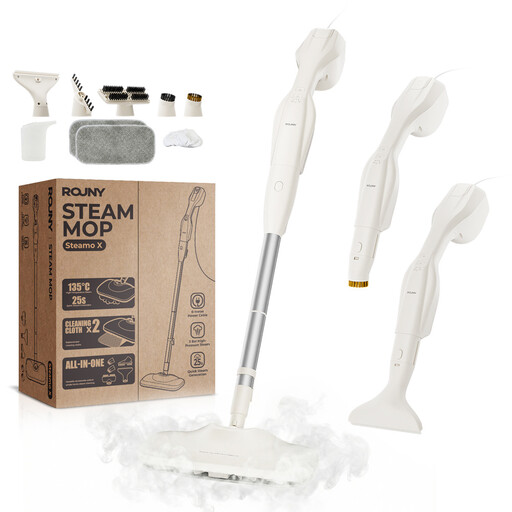
Why it suits this profile: This model combines a steam mop for floors with a handheld steam cleaner for windows, kitchen surfaces and corners. The stated heat-up time is approximately 25 seconds.
The two steam settings mean you do not have to use the highest setting for light dirt. However, check that your floor is fully sealed.
2-in-1 design, 6-metre cable, two steam levels and accessories for floors, windows and kitchens.
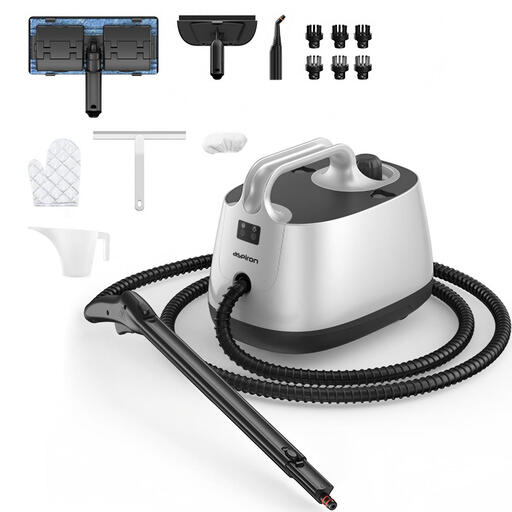
Why it suits this profile: The product information states that it has a 1.5-litre tank, a maximum pressure of 4 bar and 21 accessories for floors, bathrooms, kitchens, windows, carpets and car interiors.
The large tank and accessories are clearly described. Before buying, check which attachments you really need and allow for the stated heat-up time of approximately 5 minutes.
1.5-litre reservoir, integrated wheels, flexible hose and child lock according to the product description.
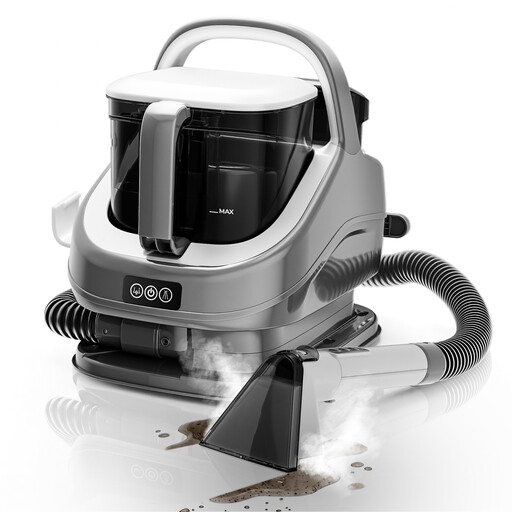
Why it suits this profile: This appliance is designed for sofas, carpets, stairs, car seats and other upholstery. According to the product information, it has cold-water, hot-water and steam settings, plus separate clean- and dirty-water tanks.
This is not a standard steam mop that leaves moisture behind: the machine has a suction function and two tanks. Do not use it on non-water-resistant fabrics.
1300 W, 13 kPa suction power, 1400 ml clean-water tank, 1200 ml dirty-water tank and 3-metre cable.
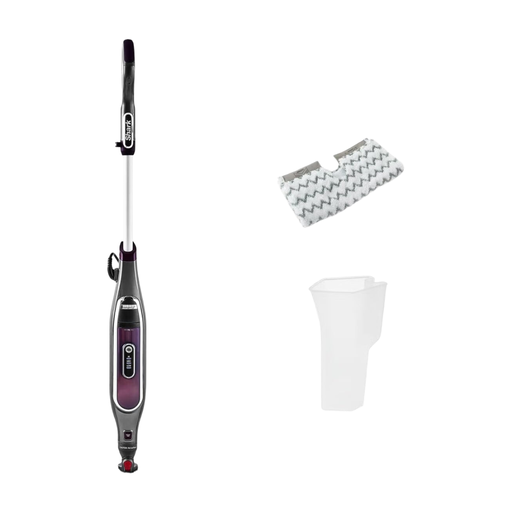
Why it suits this profile: This steam mop is designed for sealed hard floors and has a 380 ml tank, a 6-metre cable and two washable cleaning pads.
The product information clearly states that it is for use on sealed hard floors. This defines its intended use rather than leaving it vaguely described as being “for all surfaces”.
1200 W, two steam settings, an extra steam burst and machine-washable pads according to the product specifications.
We have put together a complete, up-to-date list of products that fully meet these strict selection criteria and the applicable European safety regulations.
Steam exits the nozzle at a high temperature. Keep these basic rules in mind:
In the Netherlands, also check that the plug is suitable, along with 220–240 V and 50–60 Hz. The LUBLUELU JJ-SC-053A model, for example, states 100–120 V and 60 Hz. Before buying, carefully check that the electrical specifications are compatible with a Dutch socket.
Only if the manufacturer confirms that the floor is suitable for steam and properly sealed. Untreated, oiled or damaged wood can react to heat and moisture. Always test an inconspicuous area first and use a low setting if one is available.
This depends on the water and how frequently you use the appliance. Limescale can build up more quickly when using hard tap water. Follow the brand’s maintenance instructions and do not add descaler to the tank unless this is expressly stated. Emptying, rinsing and storing the appliance dry on a regular basis will help with maintenance.
A standard steam cleaner may be suitable for certain water-resistant fabrics, but not for every type of upholstery. For sofas, carpets and cars, an appliance with a textile nozzle and suction function is more practical. Check the care label and test a small, hidden area first.
