
Vandaag of morgen in huis

Kwaliteit gegarandeerd

Welkomstaanbiedingen ontgrendelen: GRATIS bezorging | Tot 80% korting | Gratis 30 dagen JoyPlus-proefperiode
Download de app
A steam cleaner can be useful for baked-on kitchen stains, grout, hard floors and awkward corners. However, many people choose a model based on one eye-catching figure, such as wattage or steam temperature. That does not automatically tell you how easy the appliance is to use or whether it is suitable for your home.
So, before ordering a handheld steam cleaner, steam mop or multifunctional model, look out for the following pitfalls.
A higher wattage mainly means that the appliance uses more electrical power. It does not tell you exactly how quickly the water heats up, how much steam is produced or how easy the appliance is to control. Also look at heat-up time, steam pressure, steam flow rate and adjustable settings.
For example, a 1200-watt model may be practical for everyday use, while a 1500- or 1800-watt appliance may be better suited to longer or more intensive cleaning sessions.
High temperatures and moisture are not suitable for every surface. Take care with untreated wood, delicate fabrics, certain plastics, glued surfaces and cold glass. If in doubt, test the appliance on an inconspicuous area first and follow the instructions.
A steam cleaner for bathrooms and kitchens is mainly intended for surfaces that can withstand heat and moisture, such as tiles, grout, glass and some metal surfaces. Never use steam on people, pets, plug sockets or the inside of electrical appliances.
A long list of attachments may sound appealing, but only the right accessories make a real difference. A window squeegee is useful for glass, a narrow nozzle for gaps and a brush for grout. For sofas, carpets and mattresses, you also need a method that can remove moisture afterwards.
A steam cleaner is not the same as a carpet cleaner or spot cleaner. A steam model loosens dirt using heat and moisture, while a spot cleaner generally uses water, cleaning solution and suction power to remove liquid and dirt.
Steam pressure, measured in bar, indicates the force with which steam comes out of the nozzle. A lower pressure may be sufficient for light household tasks. For grout, grease and stubborn dirt, several settings or a higher pressure are more practical.
Also check the stated temperature. Product information sometimes gives a maximum temperature, but the temperature at the surface may be lower depending on the distance, duration of use and condensation. According to the product description, the ROUNY Steamo X, for example, operates at 2.5–3 bar, has two steam settings and reaches a stated temperature of up to 135 °C.
A small tank makes an appliance more compact, but it needs refilling more often. A tank of 250 to 400 ml is suitable for short cleaning sessions or localised dirt. For several rooms, a larger capacity is more convenient. According to the product information, the ASPIRON AS-CA019 has a 1.5-litre water tank, while the Monsga lists a tank capacity of 1.6 litres.
Only use the liquid approved by the manufacturer. Several models explicitly state that only clean water may be added to the tank. So do not add vinegar, fragrance, alcohol or cleaning products without checking first. This could cause blockages, damage or unwanted vapours.
If you want to clean a sofa, rug, mattress or car interior, look at suction power, tank configuration and brush width. These features are more relevant than steam temperature alone. The Uwant B400 Multi Spot Cleaner, for example, lists suction power of up to 18,000 Pa, a 14 cm brush and separate clean- and dirty-water systems.
For a targeted stain, a compact upholstery cleaner or spot cleaner is often more practical than a large steam machine. The Rowenta Clean It Compact IN3010 lists suction power of up to 11.5 kPa, a 1.5-litre clean-water tank and a 0.85-litre dirty-water tank. According to the product description, the appliance is intended for carpets, sofas, mattresses and car interiors, among other surfaces.
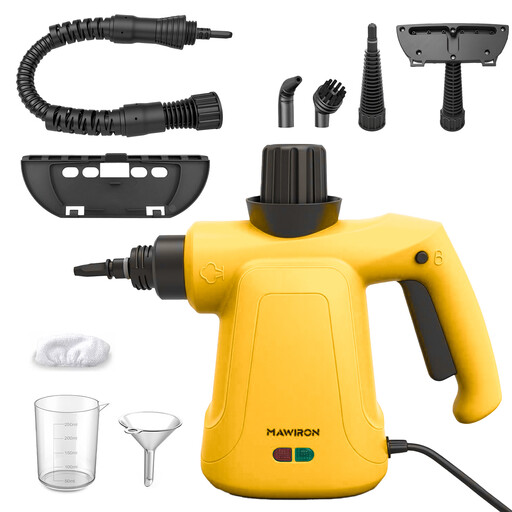
Why it suits this profile: A compact model for short cleaning sessions in the kitchen, bathroom or car, or around furniture. The 400 ml tank keeps the weight and storage requirements to a minimum.
The product listing mentions nine accessories, so you do not have to choose based on wattage alone. However, check that the supplied attachments are suitable for your surfaces.
1000 watts, a 400 ml tank and nine accessories; suitable for upholstery, cars and a range of household applications according to the product information.
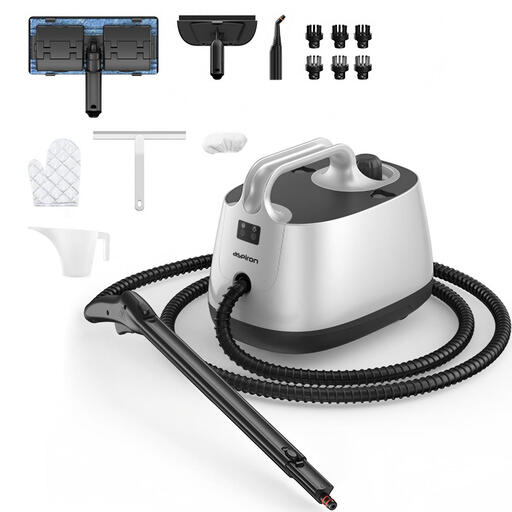
Why it suits this profile: For households that want to clean several rooms consecutively and value a large tank and plenty of accessories.
The product description lists 21 accessories, a 1.5-litre tank and wheels. This means the model is designed for reach and longer sessions, rather than focusing solely on a high power rating.
1500 watts, up to 4 bar according to the product information, a 1.5-litre tank and 21 accessories for floors, windows, grout, kitchens and cars.
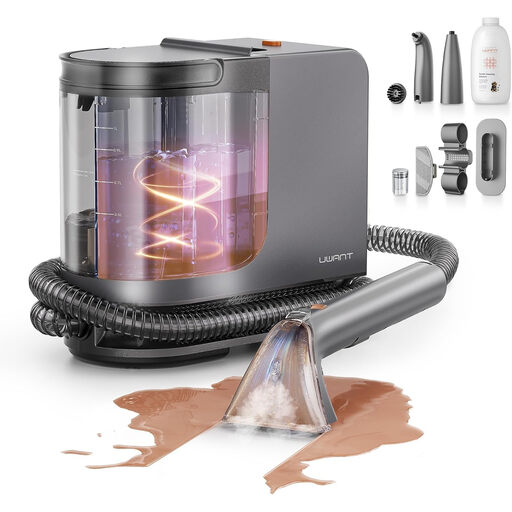
Why it suits this profile: For families with children or pets who regularly need to tackle localised stains on carpets, sofas, beds or car seats.
This is a spot cleaner with suction, not a standard steam mop. Its 2-in-1 water system separates clean and dirty water, according to the product description.
600 watts, stated suction power of up to 18,000 Pa, a 14 cm brush width and suitability for carpets, sofas, beds and cars according to the product information.
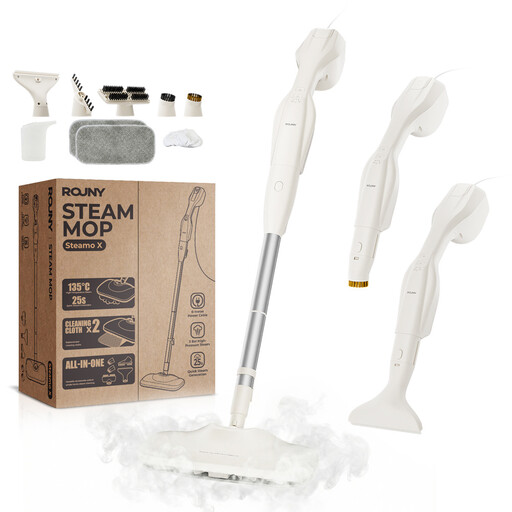
Why it suits this profile: For anyone who mainly cleans hard floors but also wants to be able to tackle windows, kitchen surfaces and corners with one appliance.
The two steam settings allow you to adjust the output. The six-metre cable also reduces the need to keep changing plug sockets.
Heat-up time of around 25 seconds, a 250 ml tank, a 6-metre cable and five listed accessories for floors, windows and kitchens.
Chemical-free cleaning is possible with models that use clean water only, but steam is not a substitute for a suitable cleaner or suction function in every situation. For grease, textile stains and liquids, choosing the right product category is more important than simply opting for a high temperature.
We have put together a complete, up-to-date list of products that fully meet these strict selection criteria and the applicable European safety regulations.
That depends on the material and its care instructions. Test it on an unseen area first and use only a small amount of moisture. For deep stains on textiles, an upholstery cleaner or spot cleaner with a suction function is often the more sensible choice, as it can remove dirty water.
Its lifespan depends on how often it is used, water quality, descaling and storage. Use the recommended types of water, allow the appliance to dry after use and prevent the accessories or hoses from becoming blocked. Also check whether parts such as cloths, brushes and filters can be replaced.
Electricity consumption is mainly determined by the wattage and how long the appliance is used. A 1500-watt appliance running for twenty minutes theoretically uses around 0.5 kWh. The actual cost depends on your energy tariff. Models that use water only have limited cleaning-product costs, but maintenance and any replacement parts still form part of the overall running costs.
