
Vandaag of morgen in huis

Kwaliteit gegarandeerd

Welkomstaanbiedingen ontgrendelen: GRATIS bezorging | Tot 80% korting | Gratis 30 dagen JoyPlus-proefperiode
Download de app
A steam cleaner can be useful for grease, dried-on dirt and damp cleaning on hard surfaces. However, not every model is suitable for every floor or task. A compact handheld steam cleaner works differently from a floor cleaner with a suction function, while a steam mop is mainly designed for everyday cleaning.
The biggest buying mistakes usually come down to three misunderstandings:
A steam cleaner for hard floors or a steam mop usually has a wide mop head and is designed for sealed tiles, vinyl or other suitable hard floors. A handheld steam cleaner is more compact and better suited to grout, taps, hobs, windows and hard-to-reach corners.
A multifunction steam cleaner with a hose and accessories offers more ways to clean. However, this type of appliance often takes up more space and needs longer to heat up. For carpets, sofas and car interiors, a model with a suction function and separate water tanks is often a more sensible choice than a standard steam floor cleaner.
Pay particular attention to:
Claims such as “removes 99,9% of bacteria” should be treated with caution. According to BLACK+DECKER’s own testing, this percentage is quoted for the FSM13E1. However, the result depends on factors including the surface, temperature, distance and treatment time. So don’t take this as a guarantee for every cleaning situation.
Only use the liquid permitted in the instruction manual. For many models, this means clean water only. Cleaning products, perfume, oil or vinegar can damage the heating element and affect the warranty.
Also check:
Never direct hot steam at people, pets, sockets or electrical appliances. Allow the head and accessories to cool before changing them.
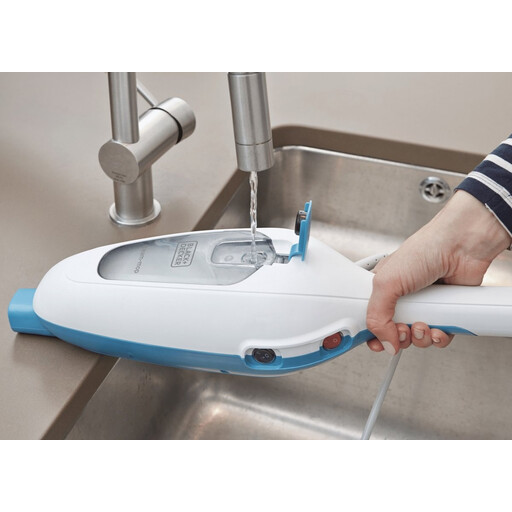
Why it suits this type of user: A straightforward steam mop for anyone mainly looking to clean sealed hard floors in the kitchen, hallway or living room.
The specifications are focused on floors: a 30-second heat-up time, a 0,38-litre tank and a 4-metre cable. That means you’re not paying for a large set of accessories you may never use.
1300 W power, an indicated steam time of around 11 minutes and a weight of 1,8 kg. Includes a microfibre pad.
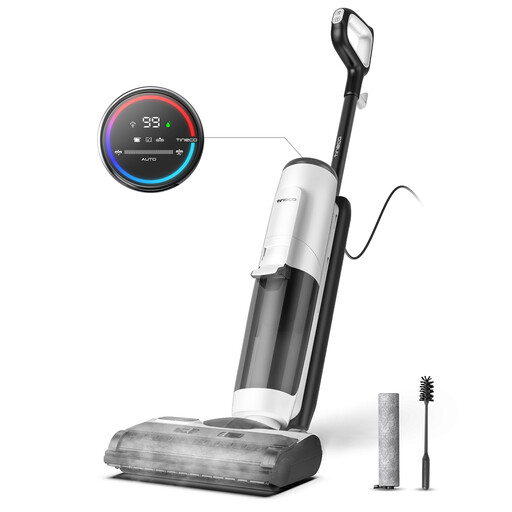
Why it suits this type of user: For households looking to tackle dust, spills and stuck-on dirt in one go on suitable hard floors.
This isn’t a standard floor cleaner: the product information describes a combination of wet and dry cleaning and steam. Use it only on suitable indoor hard floors, such as vinyl, tiles and sealed wood.
Digital display, an extra brush roller, cleaning tool and storage tray. The stated weight is 6 kg.
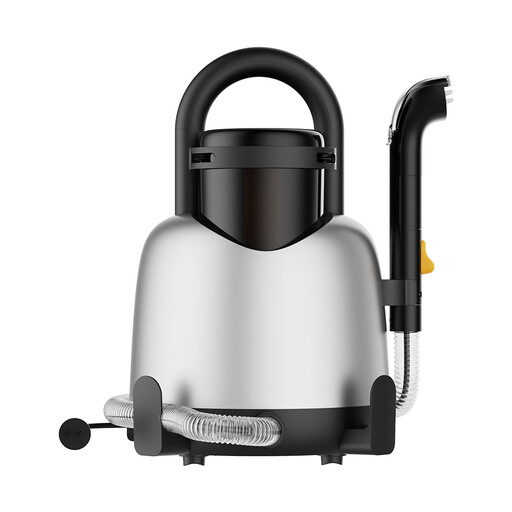
Why it suits this type of user: For families, pet owners and motorists who mainly want to clean upholstery, carpets and localised stains.
The BY700 S isn’t focused solely on steam. Its three water settings and separate tanks make it better suited to cleaning fabrics and stains than a standard steam floor cleaner.
1700 W, stated suction power of 13 kPa, a 1,7-litre clean water tank and a 1,4-litre dirty water tank. Includes five brush attachments.
We’ve put together a full, up-to-date list of products that meet these strict selection criteria and the applicable European safety regulations.
That depends on the floor and the manufacturer’s instructions. Only use steam if the laminate is suitable for it and properly sealed. Test an inconspicuous area first and don’t leave a hot, wet mop head in one place. Avoid using a steam cleaner if there are gaps between the boards, a damaged surface layer or any swelling.
Often, yes, as you won’t need to buy floor cleaner or sprays. However, you’ll still use electricity and water. Costs depend on the power rating, heat-up time, cleaning duration and your local energy and water rates. Don’t use additives unless the instruction manual expressly allows them.
Lifespan varies by model and use. Emptying it regularly, descaling it according to the instruction manual, replacing filters when needed and storing it dry can help reduce wear. When buying, also check that microfibre cloths, filters and replacement parts are available. An appliance with lots of features is only practical if you can keep up with the maintenance.
