
Vandaag of morgen in huis

Kwaliteit gegarandeerd

Welkomstaanbiedingen ontgrendelen: GRATIS bezorging | Tot 80% korting | Gratis 30 dagen JoyPlus-proefperiode
Download de app
A steam cleaner can help loosen dirt, grease and dried-on residue using water and heat. That sounds simple, but not every model is suitable for every floor or cleaning task. A lightweight steam mop for a flat needs different features from a multifunctional steam cleaner for bathrooms, kitchens, windows and car interiors.
Pay particular attention to three common pitfalls:
The capacity of the tank determines how often you need to stop and refill it. A compact handheld steam cleaner often has a smaller tank and is useful for short tasks such as cleaning grout, taps or hobs. A steam floor cleaner generally needs a larger capacity to cover several rooms.
Do not just look at the tank capacity; also check the stated continuous operating time. A tank of 250 to 400 ml is practical for short cleaning sessions. For larger homes or intensive cleaning, 1.5 litres or more may be more convenient. Bear in mind that the actual operating time depends on the selected steam setting.
A short heating time is useful when you want to clean a kitchen or hallway quickly. Product information may quote times of 15 to 30 seconds, while larger appliances can take several minutes.
Steam pressure in bar indicates the force with which steam is released. Higher pressure can help tackle stubborn dirt, but adjustable steam is at least as important. A low setting is better suited to light dirt or surfaces that cannot tolerate as much heat. A high setting is more appropriate for tiles, grout and baked-on grease, provided the surface is suitable.
A long cord reduces the number of times you need to change sockets. Models with a 4 to 6-metre cord are practical in living rooms, kitchens and hallways. Also consider the weight: a lightweight steam mop is easy to move around, while a larger wheeled machine can often carry more water and accessories.
A steam cleaner with accessories is only versatile if the included parts are genuinely useful. These may include:
Always check the manual for the correct surface. Only use clean water when specified by the manufacturer. Cleaning products, perfume or vinegar can damage the heating element or create unwanted vapours.
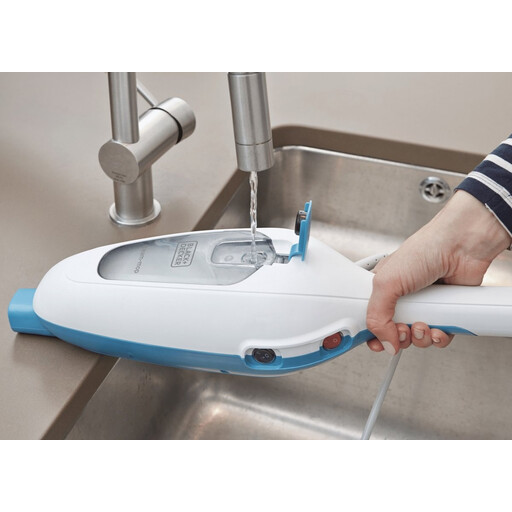
Why it suits this profile: This steam mop is designed for quickly cleaning sealed hard floors and is relatively lightweight at 1.8 kg, making it easy to handle.
The product specifications clearly state a 30-second heating time, a 0.38-litre tank and a 4-metre cord. This makes the main limitations clear before you buy.
1300 W power, 30-second heating time, 0.38-litre tank and a weight of 1.8 kg.
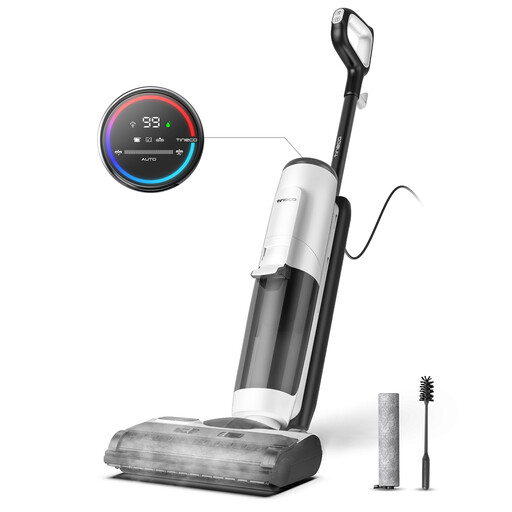
Why it suits this profile: Ideal for anyone who wants to vacuum and steam-clean hard floors with one appliance.
The product information clearly lists the suitable surfaces, including vinyl, tiles and sealed wood. The appliance is not designed for rough or unsuitable surfaces.
Wet/dry cleaning combination, digital display, an additional brush roller and a weight of 6 kg.
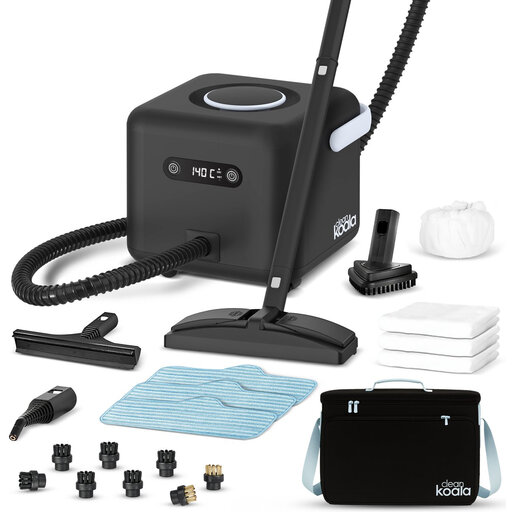
Why it suits this profile: The large tank and accessory set are practical for households that tackle several rooms and surfaces in a single session.
Rather than simply listing lots of separate parts, the product description also specifies the 2.2-litre tank capacity, 4 bar working pressure and a hose for higher surfaces.
1650 W, 4 bar working pressure, 2.2-litre water tank, 21-piece accessory set and a stated steaming time of up to 60 minutes.
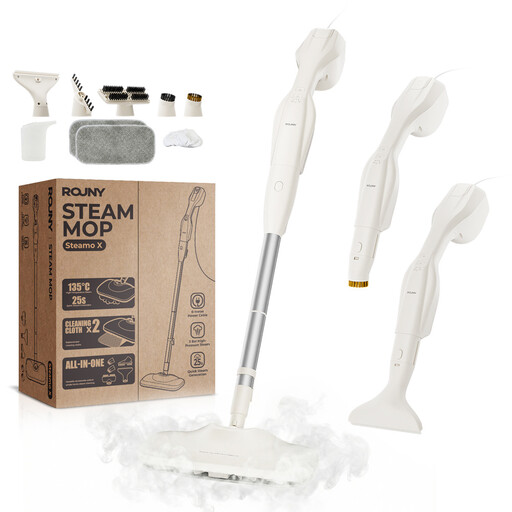
Why it suits this profile: Switching between floor and handheld modes is useful for cleaning floors, windows, kitchen surfaces, walls and corners.
Two steam levels allow you to adjust the output. The specifications also state a 25-second heating time, a 6-metre cord and a 250 ml tank.
2-in-1 design, stated steam pressure of 2.5–3 bar, 5 attachment accessories and a 6-metre cord.
Chemical-free cleaning does not mean that every surface can be treated without preparation. Vacuum or sweep away loose dirt first, and always test the steam on an inconspicuous area. Only use a steam floor cleaner on floors that the manual confirms are suitable. Avoid untreated wood, delicate adhesive layers and surfaces that cannot withstand heat or moisture.
Allow the appliance to cool down before emptying the tank or changing an accessory. Never direct steam at people, animals, power sockets or the inside of electrical appliances. Washable pads help reduce ongoing costs, while a removable tank makes maintenance easier. Regular descaling may be necessary in hard-water areas; always follow the manufacturer's instructions.
We have put together a complete, up-to-date list of products that fully meet these strict selection criteria and the applicable European safety regulations.
That depends on the type of laminate, its sealing and the manufacturer's instructions. Only use a low steam setting if the manual permits it. Do not leave a steam mop stationary in one place, as heat and moisture can affect the top layer or joints.
Its lifespan depends on how often it is used, water quality, maintenance and the availability of replacement pads or accessories. Empty the tank after use, keep the nozzles clear and follow the descaling schedule. An appliance that is frequently used in the bathroom and kitchen will generally require more maintenance than a model used occasionally on floors.
Running costs can be low because you mainly use water and electricity. However, you also need to consider the purchase price, replacement cloths and any maintenance. So do not compare wattage alone; also look at the tank capacity, operating time, included accessories and parts that will be available later.
