
Vandaag of morgen in huis

Kwaliteit gegarandeerd

Welkomstaanbiedingen ontgrendelen: GRATIS bezorging | Tot 80% korting | Gratis 30 dagen JoyPlus-proefperiode
Download de app
A steam cleaner can be handy for hard floors, grout, kitchen worktops, windows and awkward corners. That said, not every device suits every job. A steam mop for sealed tiled floors works differently from a carpet cleaner with a water tank and suction. If you only compare wattage or the number of accessories, you might end up with a device that sees little use after a few weeks.
The main pitfalls:
Steam pressure is usually shown in bar. A higher number can help lift baked-on dirt and grease, but real-world performance also depends on steam flow, the nozzle and the distance to the surface. Product descriptions for some models mention 2,5 to 4 bar and temperatures up to 145 °C. These are technical specs, not a guarantee every stain will disappear.
Heat-up time determines how quickly you can start. A model that heats in around 15 to 30 seconds is ideal for quick clean-ups. A larger device may take longer, but often has a bigger tank for extended sessions.
Always use steam with care. Test on an inconspicuous area first and avoid untreated wood, delicate fabrics, heat-sensitive plastics and surfaces that don’t tolerate moisture. According to the safety information from several brands, you must not add cleaning agents, perfume or alcohol to the water unless the manual explicitly allows it.
A tank of 250 to 400 ml keeps the device compact but means more frequent refills. That can be enough for a worktop, shower wall or a few stains. For a whole home, models with a tank around 1,5 to 1,6 litres are more practical.
Note the difference between a removable and a fixed tank. A removable water tank is easier to fill and empty. Also check whether the manual permits tap water and what to do about limescale. Never use a device without sufficient water and unplug it before refilling or changing accessories.
For carpet, a sofa or car seats, suction power matters more than steam temperature alone. A carpet or upholstery cleaner typically sprays water with a suitable detergent onto the fabric and vacuums the dirty moisture back up. Look for:
According to the product description, the Uwant B400, for example, lists suction up to 18,000 Pa, a 14 cm brush and a combined clean/dirty water design. The Rowenta Clean It Compact IN3010 is described with suction up to 11,5 kPa, two water tanks and a self-cleaning accessory. Treat these figures as comparison points from the product specs; the result also depends on the stain, fabric type and technique.
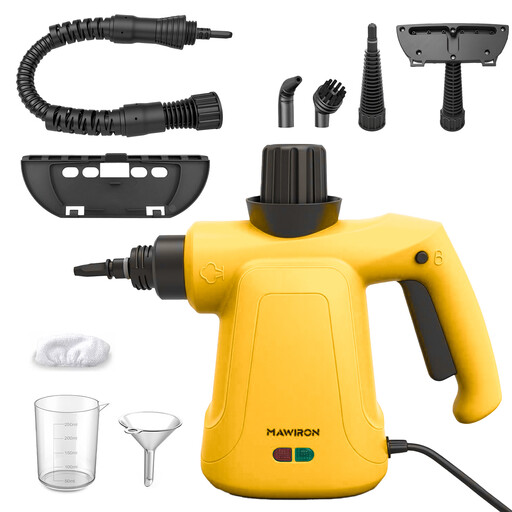
Why it suits this profile: A compact entry-level choice for small, regular cleaning jobs in the kitchen, bathroom or car.
The tank size and number of accessories are clearly stated. Do expect that 400 ml is less suitable for a whole home.
1000 W power, 400 ml tank and 9 listed accessories.
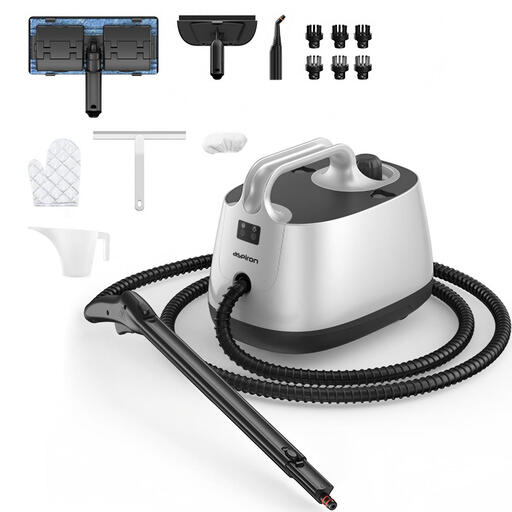
Why it suits this profile: Designed for households that want to tackle multiple areas with one multifunctional cleaner.
The description specifies 21 accessories, a 1,5 litre tank and wheels. That makes its use cases clearer than a model with only vague claims.
1500 W, up to 4 bar, 1,5 litre tank and 21 accessories.
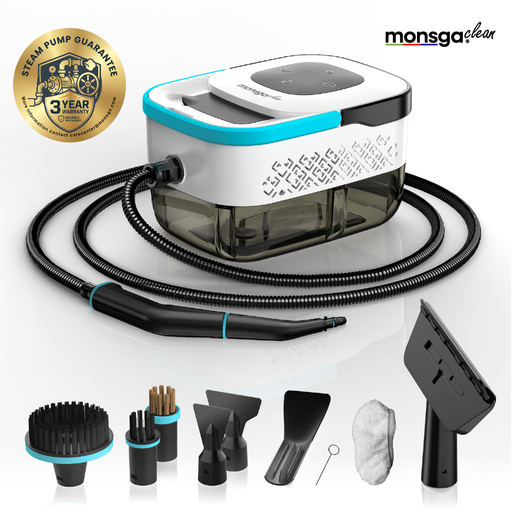
Why it suits this profile: Suits longer cleaning sessions in the kitchen, bathroom, home or car interior thanks to the larger tank.
The description lists 6 steam settings and a 1,6 litre tank. Always start on the lowest setting on delicate surfaces.
Heat-up time per the product description: 15 seconds; 3,5 bar and 1,6 litre tank.
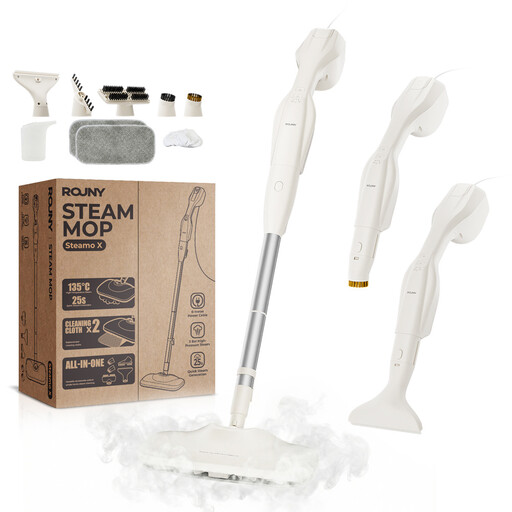
Why it suits this profile: A practical combo for floors and detail work on windows, in the kitchen, on walls and in corners.
The 2-in-1 build means you don’t need two devices for floors and detail work. With a 250 ml tank it’s geared to shorter sessions.
1200 W, 2,5–3 bar, about 25 seconds heat-up time, 6 metre cable and multiple accessories.
Steam can cause burns. Keep children and pets away, never aim the jet at people, animals, sockets or electrical devices and don’t touch a hot nozzle directly. Let the device cool before changing a brush.
For regular use:
For a fabric sofa, mattress or carpet, a dedicated sofa cleaner, upholstery cleaner or car cleaner is often a better choice than a standard steam mop. If you want to remove moisture from textiles, pick a model with clear information on water collection. If your main focus is degreasing and grout, a handheld steam cleaner or multifunctional unit with targeted brushes will usually serve you better.
We’ve compiled a complete, up-to-date list of products that fully meet these strict selection criteria and current European safety regulations.
No. Only use a steam cleaner on surfaces the manufacturer deems suitable. Sealed tiles and some hard floors are often fine, but untreated wood, delicate lacquer and materials sensitive to heat or moisture can be damaged. Check the manual and test a small, inconspicuous area.
That depends on the device and the fabric. A steam cleaner may loosen dirt, but it doesn’t always have sufficient suction to extract moisture from textiles. For stains on carpet, a sofa, mattress or car seats, a spot cleaner with clean and dirty water tanks is usually more effective. Follow the fabric care label and let the surface dry thoroughly.
Electricity consumption depends on power and runtime. A 1,200 W device theoretically uses 1,2 kWh per hour when running continuously at full power. In practice, the heater cycles on and off. Costs are also affected by descaling, replacement cloths and any permitted cleaning agents. Chemical-free cleaning with just water can reduce the purchase of detergents, but it doesn’t replace the right treatment for every stain or surface.
