
Cook without a built-in space
You want to steam sea bass without renovating your kitchen. Consider the available worktop space, how the door opens and the ventilation clearance around a freestanding appliance.


If you don’t have a suitable built-in space, a freestanding model with a dedicated steam setting could be an option. If you do have a suitable space, you can choose between an oven that focuses on steaming and a combi oven that can bake too. As well as the available space, measure the ventilation clearance, door movement and usable tray dimensions: the oven capacity in litres doesn’t prove that your whole sea bass will fit. Before choosing a specific model, also check its product documentation and the applicable conformity information.
You want to steam sea bass without renovating your kitchen. Consider the available worktop space, how the door opens and the ventilation clearance around a freestanding appliance.
You want to steam sea bass and use the same built-in oven for baking or roasting. The exact dimensions of the space and whether the oven has a full steam setting are key factors to consider.
You mainly want a separate steam function for fish and other dishes, without paying again for baking functions you already have.
Start by checking where the oven will go and how large your fish is. Then choose between a freestanding model, a combi oven or a separate built-in steam oven.
When to choose it: if you don’t have a suitable built-in space and have enough worktop room for the appliance, its door and the required ventilation clearance.
Consider: the oven takes up worktop space; also check that the steam tray is long enough for the fish.
When to choose it: if your built-in space is suitable and you want to bake or roast as well as steam with the same appliance.
Consider: a compact height doesn’t guarantee that the space is wide or deep enough; check the installation diagram for each model.
When to choose it: if steaming is your priority and you already have a conventional oven for baking and roasting.
Consider: a separate steam oven won’t replace the baking functions of a combi oven; measure the tray to make sure a whole fish will fit.
| What to consider | What to look for | Who should consider this? |
|---|---|---|
| Space and placement | Measure the appliance’s external dimensions, the clearance specified in the manual and the door opening; for built-in models, measure the entire space. | I want to make sure the oven doesn’t obstruct a walkway or lack sufficient room for heat to escape. Placement is the main purchase concern for around 33% of consumers. |
| Fish size and steam setting | Check whether the model has a dedicated steam setting, and measure both the fish and the usable steam tray. | I want to know whether my sea bass will fit on the tray and cook fully with steam. This is the main consideration for around 25% of consumers. |
| Multiple oven functions | Compare the steam and baking settings listed for the complete model number, and consider whether you already have a conventional oven. | I want to decide whether one appliance can also handle my baking or roasting, or whether a separate steam oven will do. Multiple oven functions are the most important consideration for around 25% of consumers. |
| Maintenance and aftercare | Read the instructions for the water tank and descaling, and check what additional cover the seller offers. | I want to know in advance how filling and maintenance work, and who to contact if something goes wrong. Maintenance and aftercare are the main concern for around 17% of consumers. |
A compact built-in model can still be almost 60 cm wide. Heat also needs room to escape; the Netherlands Fire Service highlights the importance of sufficient heat dissipation around electrical appliances.
Measure the space and compare it with the installation diagram and ventilation requirements for the complete model.
The stated capacity doesn’t tell you how long the usable steam tray is. For example, Miele lists a capacity of 40 litres for the DG 7240, but that alone doesn’t tell you what size of fish will fit on the tray.
Measure the fish and check the tray’s internal dimensions; otherwise, choose portions or fillets that will fit.
Combining steam with oven heat isn’t the same as having a dedicated steam setting. AEG distinguishes between 100% steam and combinations with fan cooking on the CS7900T; Smeg lists pure steam for the COF01CREU.
Check the manual for the complete model number to see which settings are available.
According to the Dutch Government, the seller remains responsible for ensuring the product is of satisfactory quality; additional cover doesn’t replace that responsibility.
Compare the terms of any additional cover with the rights you already have, and check who the seller is.
The COF01CREU is a freestanding combi steam option for kitchens without a suitable built-in space.
The DG 7240 is a separate compact built-in steam oven for anyone who already has a conventional oven.
The CSG7361B1 is a compact built-in oven that Bosch describes as offering full steam functionality.
The CS7900T is a compact built-in combi oven for anyone looking for a steam setting and fan cooking functions.
This selection focuses on a built-in steam oven for a suitable space.
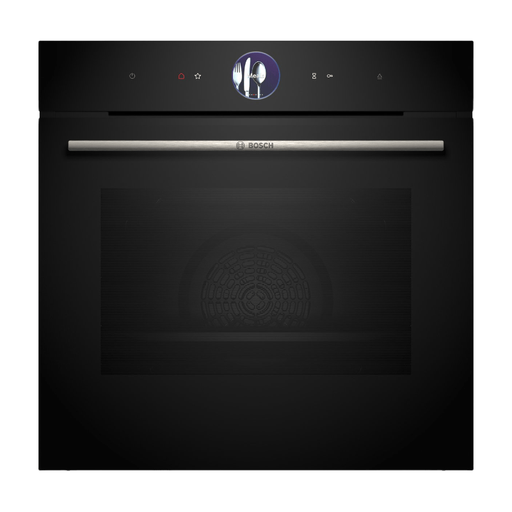 Image unavailable
A good option if you’re looking for a built-in model with a steam function, provided the space and tray suit your kitchen and the size of fish you want to cook.
No. Check whether the complete model lists a dedicated steam setting. AEG distinguishes between 100% steam and combinations with fan cooking on the CS7900T; Smeg lists pure steam for the COF01CREU. Also check that the fish will fit on the steam tray.
Compare the dimensions in the model-specific installation diagram with the actual built-in space or worktop area, and allow for the door and heat dissipation. The Netherlands Fire Service advises that heat from electrical appliances must be able to escape.
Heat the fish thoroughly so that it’s cooked all the way through. This is the Netherlands Nutrition Centre’s advice for raw fish.
For electrical appliances covered by the applicable European product rules, the Dutch Government’s Ondernemersplein website lists a CE marking and an EU declaration of conformity as manufacturer requirements. Check the documentation for the specific model; a product page alone doesn’t confirm that these requirements have been met.
For applicable online purchases from a business, the Dutch Government generally provides a 14-day cooling-off period. If a product is faulty, the seller is responsible for providing a solution under the statutory guarantee; the Netherlands has no fixed statutory guarantee period.