Which steam oven is right for you?

Home cooks making steamed rice cakes

If you’re following a recipe that calls for steaming throughout, check that the appliance has a separate, full steam function. The Consumers’ Association and AEG distinguish between steaming throughout and adding steam to oven heat.

Cooks making a large family-sized portion

If you want to use your own tin or cook several portions, check the usable cooking space and the available shelf positions, not just the stated capacity in litres. Manufacturers such as Miele and AEG list different capacities and configurations for each model.

Cooks without a suitable built-in space

If you don’t have a suitable housing unit, consider a freestanding appliance and weigh up the worktop space it needs against its extra cooking functions. Panasonic lists separate steam, oven, grill and microwave functions for the NN-DS59N.

What should you look for when choosing?

Built-in oven with full steam function

A good fit if: you have a suitable housing unit, want to keep your worktop clear and are looking for a separate steam function.

Bear in mind: the installation dimensions and the usable space for your tin. A capacity in litres doesn’t automatically tell you whether it will fit.

Freestanding combination steam oven

A good fit if: you don’t have a suitable built-in space and want to use the appliance for other cooking functions too.

Bear in mind: the worktop space it needs and the internal dimensions of the exact model you choose.

Oven with steam injection only

A good fit if: you mainly cook regular oven dishes and want to add steam while baking.

Bear in mind: steam injection works alongside oven heat and doesn’t replace a separate function for steaming throughout.

What to consider What should you check? Who is this important for?
Steaming throughout Check the manual for the exact model to see whether it has a separate, full steam function. If my rice cake recipe calls for steaming throughout, I don’t want to rely solely on a baking function with added moisture. Around 36% of consumers give this steam function top priority.
Tin and portion size Measure your tin and compare its size with the width, depth and height available, the usable shelf positions and the trays supplied. For a family-sized portion, I want to know whether my own tin will actually fit; capacity alone won’t tell me. Around 29% of consumers put space for their tin and portion size first.
Placement Compare the required housing dimensions for a built-in model, or the appliance dimensions and placement instructions for freestanding use. If I don’t have a suitable built-in space, the appliance needs to fit somewhere appropriate. Around 21% of consumers choose placement as their main consideration.
Care and accessories Check the cleaning and descaling instructions in the manual, and see which trays or accessories come with the model. I want to know in advance what care the appliance needs and whether it comes with the tray I need. Around 14% of consumers give care and accessories top priority.

Common buying mistakes

  • Assuming ‘steam’ on the list of functions means it can steam throughout

    Steam injection works alongside oven heat and is different from a separate function for steaming throughout. An appliance may mention steam without offering the cooking method your recipe calls for.

    Before buying, check the steam functions and the manual for the specific model.

  • Relying on the capacity in litres alone

    The stated oven capacity doesn’t tell you whether your tin will fit in the space available or how you can arrange several portions.

    Measure your tin and compare it with the usable internal dimensions, shelf positions and trays supplied with the model you’re considering.

  • Leaving leftover rice lukewarm for too long

    The Netherlands Nutrition Centre warns that Bacillus cereus can be present in rice dishes that haven’t been stored properly. Steaming food again is no substitute for safe storage.

    Allow leftovers to cool within 2 hours, store them covered at 4 °C and eat them within 2 days. When reheating, heat them all the way through until steaming hot.

  • Overlooking installation and care when choosing

    A built-in model needs a suitably sized housing unit; cleaning and descaling should follow the instructions for the specific appliance.

    Before choosing, check the installation dimensions, accessories supplied and care instructions.

Brands to compare

AEG

The SteamPro built-in range is worth considering if you want to combine a separate steam function with oven functions.

  • AEG describes both a steam-only function and functions that combine steam with hot air for SteamPro and SteamBoost.
  • AEG lists a capacity of 70 l for the BS9900B. Also check the usable cooking space and installation dimensions for your tin; this isn’t a rice cake test.

Miele

The DG 2840 is a built-in steam oven for those comparing dedicated steaming and cooking on several levels.

  • Miele lists a 40 l cooking compartment and steaming on three levels for the DG 2840.
  • The number of levels doesn’t prove that your tin will fit. The DG 2840 is described as a steam oven, not as a replacement for all oven functions.

Panasonic

The freestanding NN-DS59N is worth a look if you don’t have a built-in space and want several cooking functions.

  • Panasonic lists separate steam, oven, grill and microwave functions for this model, along with a 600 ml water tank.
  • The appliance takes up worktop space. There’s no evidence that an automatic programme is suitable for every rice cake recipe.

Bosch

The built-in range is worth considering if you want to compare Full Steam with Added Steam.

  • Bosch distinguishes between full steam and added steam, and describes models with a water tank.
  • These features don’t automatically apply to every model. Check the function and housing dimensions of the version you choose.

Siemens

The HS936GCM1 is worth considering if you want to combine full steam with regular oven cooking.

  • Siemens describes the HS936GCM1 as an oven with full steam and lists appliance dimensions of 595 × 594 × 548 mm.
  • Also check the required housing dimensions, usable cooking space and manual; these specifications aren’t an independent assessment of rice cakes.

Products for family steaming

These products range from a built-in steam oven to freestanding steamers. Check that the steam function on each model suits your recipe; a steamer without an oven isn’t the same as a steam oven.
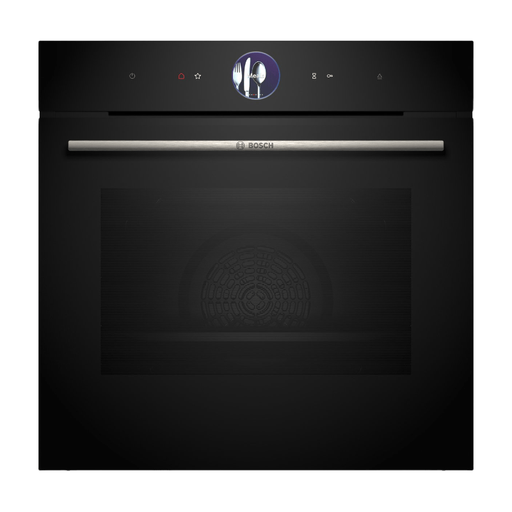
Bosch HSG7364B1 Series 8 built-in steam oven

Bosch HSG7364B1 Series 8 built-in steam oven

A built-in option for anyone looking to combine steam with oven functions; check the manual to see whether the separate function for steaming throughout is available.

The product listing gives a capacity of 71 l, five levels and 21 heating functions. It also lists perforated and non-perforated steam trays.

The housing unit must be the right size; according to the product information, installation must be carried out by a qualified electrician.

View product at Joybuy
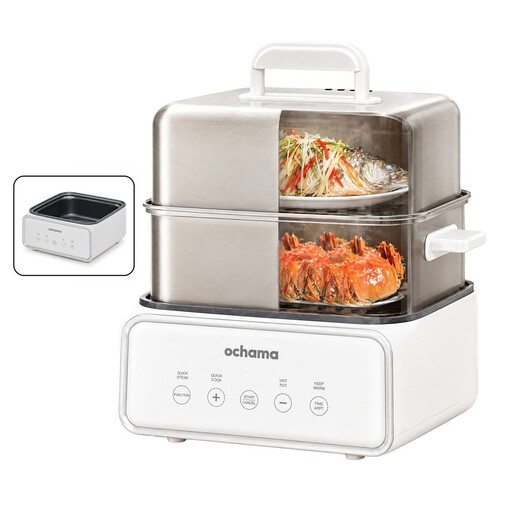
ochama electric steamer with dual steam chamber

ochama electric steamer with dual steam chamber

A freestanding steamer for anyone looking to divide a family-sized portion between layers; check that the dimensions suit your tin and recipe. This isn’t an oven.

The product information lists a capacity of 12 l, two layers and a removable steam tray. The divider can be removed.

View product at Joybuy
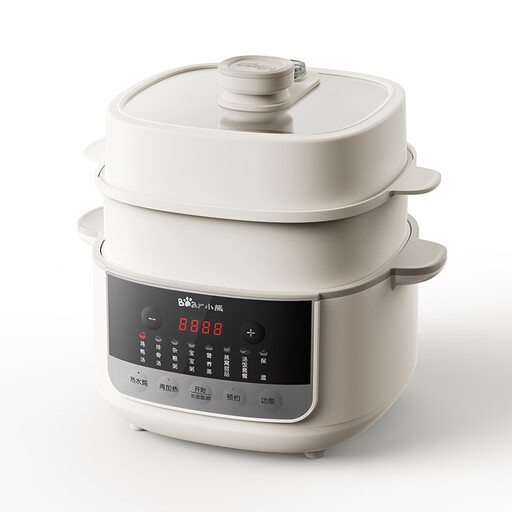
BEAR DDZ-J25G2 electric steamer with steaming basket

BEAR DDZ-J25G2 electric steamer

A freestanding steamer for anyone looking to prepare several portions; check the dimensions of your own tin. This isn’t an oven.

The product information lists a 2,5 l pot, four 0,4 l pots and a steaming basket.

View product at Joybuy
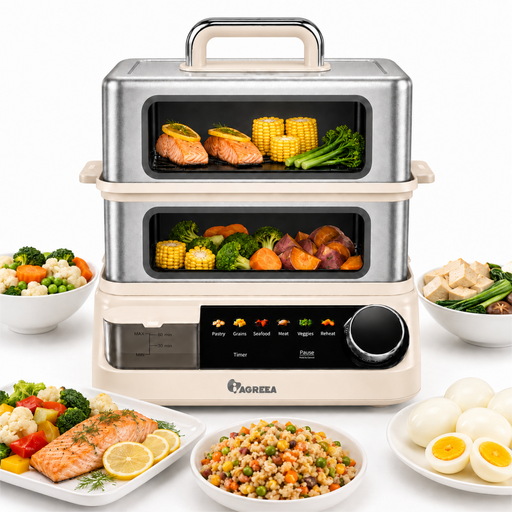
IAGREEA MS-22ZG21-Q electric food steamer with two layers

IAGREEA MS-22ZG21-Q electric food steamer

A freestanding steamer for anyone looking to cook several dishes or portions at once; measure your tin and compare it with the trays. This isn’t an oven.

The product information lists a capacity of 14 l, two steaming layers and two stainless steel trays measuring 300 × 230 mm. It also lists a 2,5 l water tank and six programmes.

View product at Joybuy
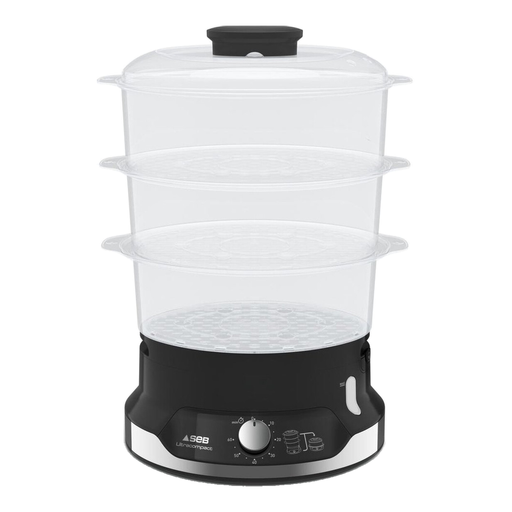
Tefal Ultracompact VC2048 three-tier steamer

Tefal Ultracompact VC2048 steamer

A freestanding steamer for anyone looking to cook several items at once; check that the trays suit your tin. This isn’t an oven.

The product information lists a capacity of 9 l, three levels and a timer of up to 60 minutes. It also mentions automatic shut-off.

View product at Joybuy

Frequently asked questions

Is every oven with a steam function suitable for steaming a rice cake throughout?

No. Adding steam while baking isn’t the same as having a full steam function. If your recipe calls for steaming throughout, check the separate steam function in the manual for the exact model. Follow the cooking time for your recipe and tin, rather than relying on a programme name alone.

How can I tell whether my rice cake tin and family-sized portion will fit?

Measure your tin and compare it with the usable internal dimensions, the space available for racks or trays, and the appliance instructions. Capacity alone doesn’t guarantee that your tin will fit; manufacturers list different oven capacities and numbers of steam levels for each model.

How do I care for a steam oven?

Follow the manual for your chosen model for cleaning and descaling. Bosch generally recommends cleaning its steam ovens with a soft cloth and soapy water; don’t treat this as a universal instruction for other models.

How should I store and reheat leftover rice cakes?

For cooked rice-based leftovers, the Netherlands Nutrition Centre recommends cooling them within 2 hours, storing them covered at 4 °C and eating them within 2 days. Heat leftovers all the way through until steaming hot; Bacillus cereus can be present in rice dishes that haven’t been stored properly.

Which product and warranty rules apply when buying in the Netherlands?

Electrical equipment covered by the EU Low Voltage Directive must meet safety requirements and carry a CE marking before it is placed on the market; EUR-Lex describes the directive and Your Europe explains CE marking. A CE marking isn’t an independent test result for a specific model. According to the Dutch government, consumer purchases come with a legal guarantee and the seller is your point of contact if a product is faulty; there is no fixed statutory guarantee period of two years.
