
Vandaag of morgen in huis

Kwaliteit gegarandeerd

Welkomstaanbiedingen ontgrendelen: GRATIS bezorging | Tot 80% korting | Gratis 30 dagen JoyPlus-proefperiode
Download de app
A steam iron can smooth shirts, bedding and curtains more quickly, but a high wattage or eye-catching marketing term doesn’t tell you everything. If you focus only on “extra power” or a large number of steam holes, you could end up with an appliance that’s heavy, leaks easily or needs frequent refilling.
In this guide, you’ll find out which specifications matter in practice, which pitfalls to avoid and which type of iron is right for your household.
A power rating of 2,400 or 3,200 watts mainly tells you about how quickly the iron heats up. It doesn’t determine how well it removes creases on its own. Also look at the continuous steam output in grams per minute and the power of the steam boost. A high-wattage model with low steam output may be less suitable for linen or thick cotton than a model with a better balance of power and steam.
A steam iron with a large water tank needs refilling less often, but it may also feel heavier. A 300 to 350 ml tank is handy for longer ironing sessions, while 150 to 220 ml is often enough for a few garments. Also check the size of the filling opening and whether the water level is easy to see.
Limescale can put a strain on the steam vents and internal parts, especially if you have hard tap water. A self-cleaning iron, anti-limescale system or filter can make maintenance easier, but it doesn’t replace cleaning the iron as instructed in the manual. Also check whether it has automatic shut-off. This is a useful safety feature, but you should never leave a hot iron unattended.
Continuous steam output matters during normal ironing. The models in this selection range from around 25 to 60 g/min. A steam iron with a steam boost is useful for stubborn creases. The steam boost figures for these models range from 120 to 250 g, for example.
Bear in mind that a steam boost is usually released in short bursts. If you have a large pile of laundry, continuous steam output matters more than the highest steam boost figure alone.
A ceramic soleplate distributes heat across the surface and is generally easy to clean. The shape matters too. A precision tip helps you reach collars, seams and the areas around buttons. A rounded heel can make it easier to glide the iron back over zips and pockets.
According to the product description, the Braun TexStyle 7 Pro uses a FreeGlide 3D EloxalPlus soleplate. The Tefal models in this guide use a Durilium soleplate with a ceramic coating. These are verifiable product specifications, but the way the iron glides may feel different to each user.
Choose a tank that suits your ironing routine:
An anti-drip system helps to reduce water droplets at lower temperatures, according to the product description. Also check whether the model switches off automatically when left in a horizontal or vertical position. According to the stated specifications, the Braun FreeStyle 5 SI5037 switches off after 30 seconds when horizontal and 8 minutes when upright.
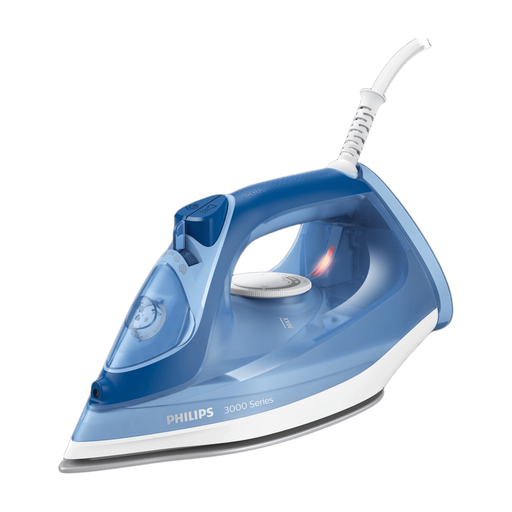
Why it suits this type of user: This model combines a 300 ml tank with 2,400 watts of power, vertical steam and a ceramic soleplate. It’s suitable for regular use at home without the bulk of a steam generator.
Alongside 2,400 watts of power, the product details list a continuous steam output of 40 g/min, a 180 g steam boost, anti-drip protection and automatic shut-off.
300 ml water tank, ceramic soleplate, vertical steam and automatic shut-off after 8 minutes upright or 30 seconds lying flat.

Why it suits this type of user: If you iron a lot of shirts, cotton and linen, you may appreciate the combination of 3,200 watts, variable steam output of 60 g/min and a 250 g steam boost.
As well as the power rating, the product description lists a Micro-Calc filter, anti-drip function, self-cleaning and automatic shut-off.
350 ml tank, ceramic-coated soleplate, vertical steam and an anti-limescale system with Calc Stick.
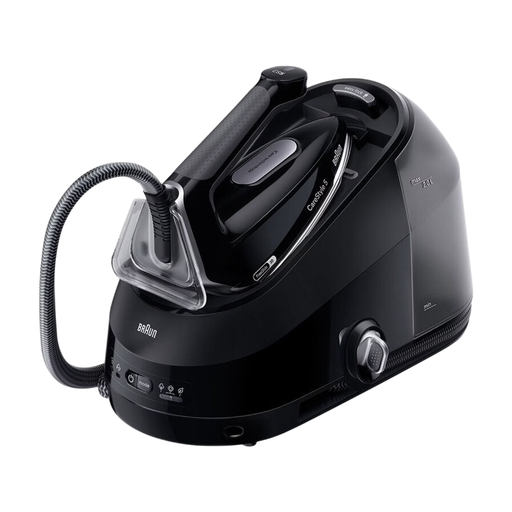
Why it suits this type of user: For households with lots of laundry, a steam generator offers a large separate water tank and higher continuous steam output than many standard irons.
The detachable 2-litre tank means you’ll need to refill it less often. The product details also list anti-drip protection, automatic shut-off and anti-limescale support.
Continuous steam output of 150 g/min, a 510 g/min steam boost, 7.5 bar pressure and vertical steam, according to the product specifications.
We’ve put together a complete, up-to-date list of products that meet these strict selection criteria and the applicable European safety requirements.
A standard steam iron has its water tank built into the appliance. A steam generator uses a separate base with a larger tank and generally produces more continuous steam. This can be handy for large loads of laundry, but the base takes up more space and is heavier to move.
It depends on the hardness of your water, how often you use the iron and the manufacturer’s instructions. Use the self-cleaning or anti-limescale function when the manual recommends it. Only clean the soleplate once it has cooled completely, and don’t use abrasive products.
A higher wattage can bring the iron up to temperature more quickly, but energy use also depends on how long you use it and which settings you choose. According to the product description, an eco mode can reduce energy use. Switch the iron off after use and unplug it.
