
People who mainly iron shirts
You usually iron for short sessions and want to work carefully around collars, seams and buttons. The Dutch Consumers' Association discusses this use when helping you choose a steam iron.


A standard steam iron is the obvious choice if you mainly iron a few shirts and want to work precisely around collars and seams. For regular, lengthy ironing sessions, a steam generator with a separate tank may be more comfortable, but it takes up more space. When ironing mixed fabrics, always follow the care labels and the settings for your specific model.
You usually iron for short sessions and want to work carefully around collars, seams and buttons. The Dutch Consumers' Association discusses this use when helping you choose a steam iron.
You regularly iron for longer stretches and weigh up the weight of a filled iron in your hand against the separate tank and extra space needed for a steam generator. The Dutch Consumers' Association explains these differences in its steam iron buying guide.
You switch between fabrics such as cotton and more delicate textiles, so you need to adjust the temperature and steam settings according to the care label. Philips recommends checking the label before ironing.
Best for: short ironing sessions with a few shirts, when you need to manoeuvre around collars and seams.
The trade-off: the water tank is in the handheld iron, so the weight in your hand may feel more noticeable during longer sessions.
Best for: regular, lengthy sessions or large piles of washing, when you’d rather not carry the water in the handheld iron.
The trade-off: the separate tank and base need more working and storage space, and a large soleplate isn’t automatically handy for every collar.
| What to consider | What to check when buying | Who is this important for? |
|---|---|---|
| Precision around collars | Check the soleplate tip on the exact model and consider how heavy it feels in your hand. | If I want to iron around narrow collar sections and seams, manoeuvrability matters more than steam power alone; around 36% of consumers prioritise precision around collars. |
| Long ironing sessions | Weigh up the tank and the weight in your hand against the space taken up by a separate tank and base. | When I have a large pile to iron every week, I want less water weight in my hand and a practical way to refill the tank; around 29% of consumers prioritise comfort during long sessions. |
| Mixed fabrics | Check which temperature and steam settings are available, and follow the care labels. | When I switch between different fabrics, I want to know which settings are right for each garment; around 21% of consumers prioritise fabric protection. |
| Maintenance and storage | Follow the manual’s descaling instructions and consider how much storage space you have. | If I have limited space or want to keep maintenance simple, these factors matter alongside ironing performance; around 14% of consumers give the most weight to maintenance and storage space. |
A powerful steam boost doesn’t automatically make it easy to manoeuvre around a narrow collar or seams. When reviewing a tested steam generator, the Dutch Consumers' Association notes that its soleplate tip may not be small enough for every shirt.
Check the soleplate shape on the exact model and make sure its temperature and steam settings suit the clothes you iron.
A standard steam iron has its tank in the handheld unit, while a steam generator has a separate tank and base. That means you need to consider both how comfortable it feels in your hand and how much space you have in your ironing area and cupboard.
Choose based on how long your sessions usually last, how heavy the iron feels in your hand and how much space you have available.
The Dutch government states that there is no fixed statutory warranty period in the Netherlands: you are entitled to a product that works properly, and the retailer is your point of contact if something goes wrong. A manufacturer’s guarantee or paid service plan is separate from this.
Check what additional rights an extended cover plan offers, and report any fault with a defective product to the retailer.
Braun offers TexStyle steam irons for targeted ironing and CareStyle steam generators for longer sessions. These product ranges are not directly comparable.
Tefal offers Express Steam handheld irons and Express Easy steam generators for different-sized ironing sessions.
The 5000 Series includes handheld irons with soleplate and maintenance features.
The Compact Steam range offers a steam generator as an alternative to a handheld iron.
This selection of Joybuy products includes standard steam irons for shorter, more targeted sessions and steam generators for longer sessions.
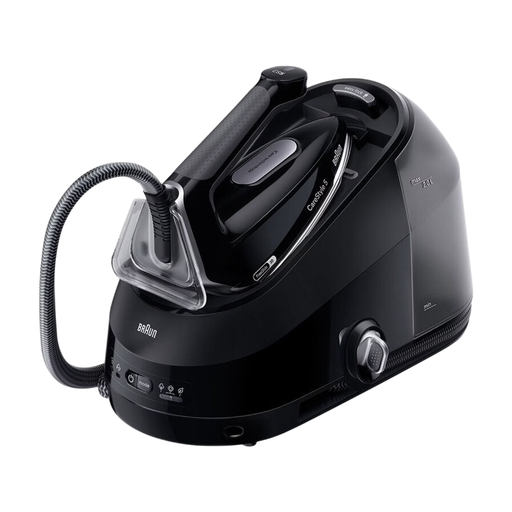 No image available
A steam generator to consider if you regularly have longer ironing sessions and are looking at an appliance with a separate base.
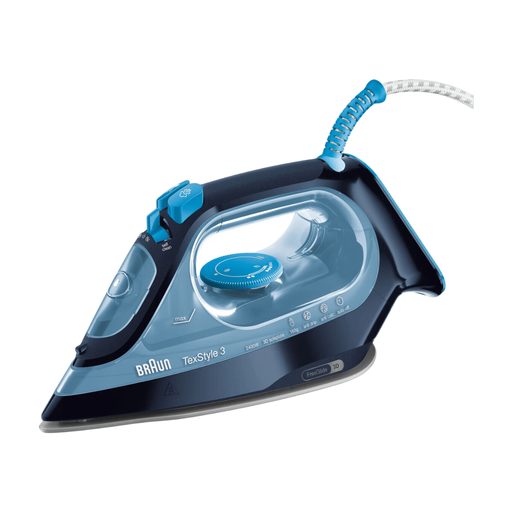 No image available
A standard steam iron to consider if you want a handheld model for collars and smaller or mixed ironing loads.
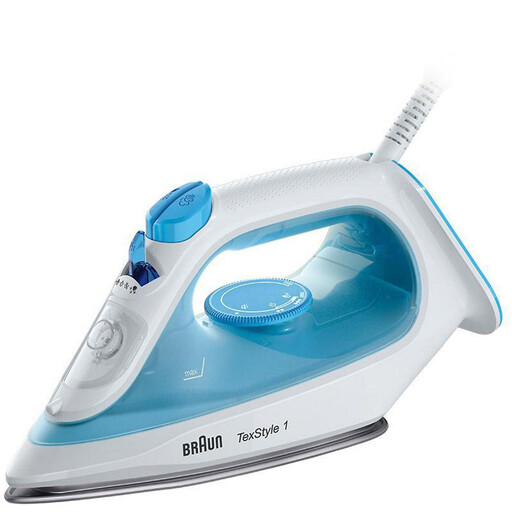 No image available
A handheld iron to consider if you want to work precisely around collars and seams and adjust the temperature for each garment.
According to the product description, steam is not available on the synthetic setting.
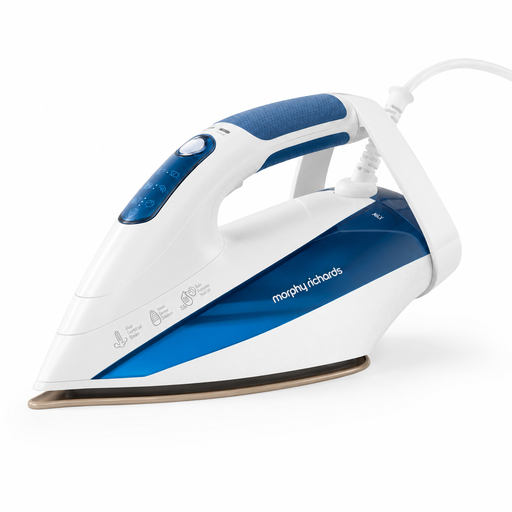 No image available
A standard steam iron to consider if you want to iron collars and have mixed ironing loads.
The product name lists 2400–2800 W, a steam output of 50 g/min and a 350 ml water tank.
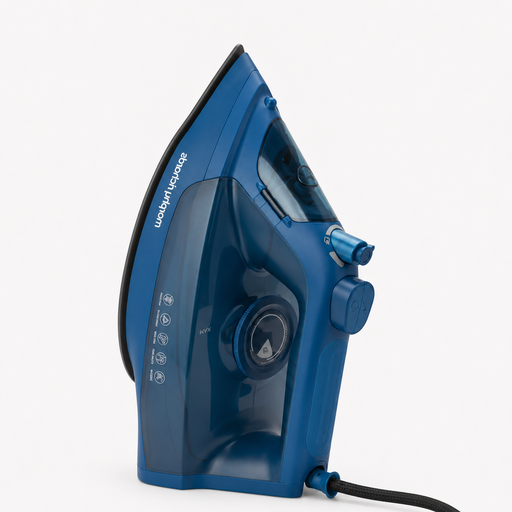 No image available
A standard steam iron to consider for targeted ironing sessions with varying amounts of washing.
The product name lists a power rating of 2800 W and a ceramic soleplate.
Check the care label first, as it may prohibit ironing or steam and will give you temperature guidance. Philips recommends starting with the collar in its step-by-step guide.
No. Follow the manual for your specific model. Tefal warns against using vinegar or descaling products when rinsing a steam generator tank; the instructions for a removable anti-scale rod may be different.
No. The Dutch government says there is no fixed statutory warranty period in the Netherlands. You are entitled to a product that works properly, and can contact the retailer if something goes wrong. A manufacturer’s guarantee or additional warranty is separate from this.
The Netherlands Food and Consumer Product Safety Authority states that CE marking is mandatory for electrical appliances covered by the Commodities Act Decree on Electrical Equipment. Check the marking and whether the rules apply to the specific version; this general requirement does not confirm that a particular model has been checked.
The Dutch government states that you have a 14-day cooling-off period for a distance purchase. This is separate from your rights if a product is faulty and from any more generous returns policy offered by the retailer.