
For ironing shirts
If cotton shirts, collars and cuffs make up most of your ironing, compare how easily the tip reaches smaller areas and what steam settings are available. The Dutch Consumers' Association also advises following the care labels.


A compact steam iron is a sensible choice for a few shirts and smaller loads of laundry. A steam generator is worth considering if you often iron large piles. The Dutch Consumers' Association cites the smaller storage space and lower purchase cost as reasons to consider a steam iron, while a generator's larger tank can mean fewer refills. Bear in mind that you'll need extra room for the base, and follow the care labels and the model's descaling instructions whichever type you choose.
If cotton shirts, collars and cuffs make up most of your ironing, compare how easily the tip reaches smaller areas and what steam settings are available. The Dutch Consumers' Association also advises following the care labels.
If you switch between cotton and other ironable fabrics, check whether you can adjust the temperature and steam for each fabric. Philips says that OptimalTEMP on the PSG7200/20 is suitable for ironable fabrics; this is the manufacturer's claim for this model.
If you often iron for long stretches, compare the tank capacity and the weight of the iron itself with the space taken up by a separate generator base. The Dutch Consumers' Association lists a steam generator as an option for larger loads of laundry.
For this kind of ironing, your choice mainly comes down to the amount of laundry, the different care labels and the space you have for the appliance.
Best for: smaller loads, limited storage space or a lower purchase cost.
Bear in mind: the water tank is in the iron itself, so you may need to refill it more often during longer sessions.
Best for: frequent large piles or longer ironing sessions, if you have room for a separate base.
Bear in mind: the base takes up space and the purchase cost is usually higher; descaling is still necessary.
| What to consider | What should you check? | Who is this important for? |
|---|---|---|
| Shirts and small areas | Look at the shape of the iron's tip and compare continuous steam output and any steam boost separately. | If collars and seams are my main concern, I want to be able to reach them easily. Around 29% of consumers make getting shirts smooth their top priority. |
| Different fabrics | Read the care labels and check whether the model offers manual temperature and steam controls. | When ironing a mix of fabrics, I want to be able to match the settings to the care labels. Around 23% of consumers prioritise following different ironing instructions. |
| Long ironing sessions | Compare the tank capacity and the weight of the iron itself; a larger tank does not guarantee a specific running time. | If I iron a lot of laundry in one go, I want to minimise interruptions to refill the tank. Around 18% of consumers make long sessions their top priority. |
| Space and purchase cost | Compare the appliance's dimensions and features with your available storage space and budget. | If space is limited or my budget is tight, I don't want to choose a larger base than I need. Around 18% of consumers prioritise storage space or purchase cost. |
| Descaling | Check the maintenance instructions for the exact model and whether it uses replaceable cartridges. | If I want to plan maintenance easily, I want to know in advance how descaling works and which parts are needed. Around 12% of consumers put maintenance ahead of other buying priorities. |
A steam boost is not the same as continuous steam output. The Dutch Consumers' Association assesses steam production and smoothing performance separately.
Compare the two steam figures separately. To assess ironing results, look for tests of the exact model under comparable conditions.
The separate base needs storage space, and an anti-scale system does not eliminate the need for maintenance. The Dutch Consumers' Association notes that some models use replaceable cartridges or cassettes.
Check whether your model needs these parts and how often the manual says they should be replaced; this could mean ongoing maintenance costs.
Tefal lists five temperature settings for the Tefal FV2838E0. So, a product title mentioning automatic temperature selection is no reason to ignore care labels.
Check the full model number and follow the manufacturer's instructions for the fabrics you want to iron.
The DST3031/20 is a steam iron for smaller loads; the PSG7200/20 is a steam generator to compare for longer sessions.
The FV2838E0 is a steam iron with adjustable settings; the SV8055E0 is a steam generator with a separate tank.
The TexStyle 7 Pro SI 7181 is worth considering if collars and seams matter when ironing shirts; the CareStyle 7 Pro range consists of steam generators.
This selection features steam generators for longer ironing sessions and mixed loads of ironable laundry. Compare the tank specifications and maintenance requirements with your care labels and the space you have for the base.
 Image unavailable
An option to compare if you're looking for a steam generator with a separate base for longer sessions.
2400 W; steam boost 350 g; water tank 1,4 l; vertical ironing.
 Image unavailable
An option if you want to compare a steam generator with a separate base against a standard steam iron.
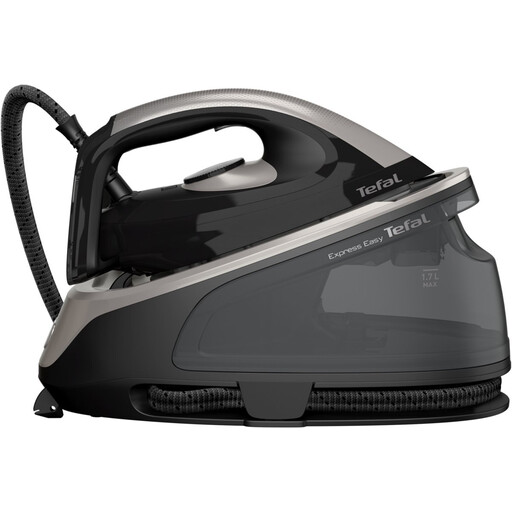 Image unavailable
An option to compare with other types if you often iron for long stretches and have space to store a separate base.
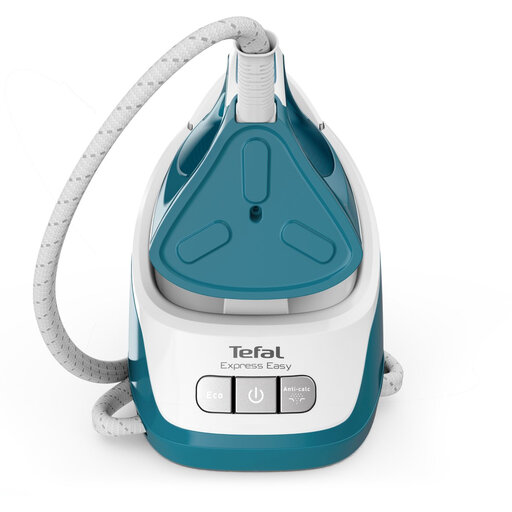 Image unavailable
An option to compare if you're looking for a generator with a removable tank for longer sessions.
2400 W; pressure 5,8 bar; steam boost 350 g; removable 1,7 l tank; ceramic soleplate.
 Image unavailable
An option to compare if you're considering a generator with a separate tank; remember to allow for the storage space it needs.
Steam boost 120 g; steam output 70 g; pressure 6 bar; ECO mode; removable 1,8 l tank; anti-scale function; automatic shut-off.
If your iron has manual temperature controls, it's a good idea to check the care labels and, as the Dutch Consumers' Association advises, sort items from cool to warm. A model setting for ironable fabrics does not make garments labelled ‘do not iron’ suitable for ironing.
Follow the manual for your exact model for advice on water and descaling; maintenance is still needed. Also check whether the appliance uses replaceable cartridges or cassettes.
No. According to the Netherlands Authority for Consumers and Markets (ACM), the seller is responsible if a product does not meet the reasonable expectations you can have of it under normal use. A manufacturer's guarantee is separate; the appropriate solution depends on the circumstances.
For online consumer purchases, ACM ConsuWijzer says you generally have a statutory cooling-off period of up to 14 days after delivery, although there are exceptions. Check who the seller is and what returns conditions apply in addition to this statutory right.