
Parents who iron school trousers between other tasks
You want to get a pair of trousers looking neat without having to start a big ironing session for just one item. Check the care label and make sure the appliance’s settings are suitable.


Start with the care label on the school trousers: it tells you which temperature to use and whether steam is suitable. According to the Dutch Consumers’ Association, a steam iron is generally better suited to smaller ironing loads and limited storage space, while a steam generator may be a better fit for longer sessions. The larger set-up and the care label are important considerations; more steam does not make a treatment suitable if the label rules it out.
You want to get a pair of trousers looking neat without having to start a big ironing session for just one item. Check the care label and make sure the appliance’s settings are suitable.
Some weeks you may iron just a few items; other times, a larger load. Tank capacity, storage space and the length of your ironing sessions can help you decide which type of appliance is practical. The Dutch Consumers’ Association lists available space and the amount of ironing as factors to consider.
If you often work through a large amount of ironable laundry in one go, a larger tank can mean fewer top-ups. Also consider how much space the generator and ironing board will take up; the Dutch Consumers’ Association discusses this trade-off between an iron and a generator.
A good fit if: you mainly iron individual pairs of school trousers and smaller loads, or have little room to store an appliance. The Dutch Consumers’ Association considers this type suitable for lighter ironing needs and limited storage space.
The trade-off: the tank is smaller than a steam generator’s, so you may need to refill it sooner during a longer session.
A good fit if: school trousers are part of regular, larger ironing sessions with plenty of ironable laundry. The Dutch Consumers’ Association suggests that people who iron a lot and often may want to consider a generator.
The trade-off: the larger base takes up more space and needs to fit your ironing board and set-up. More steam does not change what the care label allows.
| What to consider | What to look for | Who should pay particular attention |
|---|---|---|
| Care label and fabric | Read the ironing symbol and check whether you can adjust the temperature and steam separately, including switching steam off. | When ironing school trousers, I want to follow the care label and avoid using unsuitable heat or steam. Around 36% of consumers prioritise fabric care. |
| Size and tank | Compare the tank capacity and appliance size with the length of your usual ironing session and the storage space available. | For frequent, varied and often short ironing sessions, I want an appliance that’s easy to put away and get out. Around 29% of consumers prioritise compact flexibility. |
| Long sessions | Compare the tank capacity and stated continuous steam output; also check that the base and ironing board will fit together. | When ironing a larger load in one go, I want to stop less often to refill the tank without choosing an oversized set-up. Around 21% of consumers prioritise long ironing sessions. |
| Maintenance | Check the descaling instructions for the exact model and make sure the maintenance steps suit the way you use it. | If ongoing maintenance is a key consideration, check in advance which descaling method the appliance requires. Around 14% of consumers prioritise ease of maintenance. |
The treatment allowed depends on the specific pair of trousers. An appliance with more steam does not change that limit.
Read the ironing symbol first, then choose a suitable temperature and steam setting.
A larger tank is most useful during longer sessions, while the base takes up more space.
Compare the length of your usual ironing sessions with the space you have for the appliance and ironing board.
The set-up may need more storage and working space, and must fit your ironing board.
A manufacturer’s guarantee is not the same as your statutory rights against the retailer. The Netherlands government explains that there is no fixed statutory two-year guarantee period in the Netherlands.
Keep your proof of purchase and the product description, and contact the retailer if there’s a fault.
The 3000 Series includes both steam irons and steam generators; the right choice depends partly on the length of your sessions and the space available.
The TexStyle 3 SI 3030 is a steam iron for targeted ironing; Braun also offers separate CareStyle steam generators.
The Express Steam FV2838E0 is a steam iron; the brand also offers generator options in its Express and Pro Express ranges.
The Autosteam DW4020D1 is a steam iron with a precision tip for detailed ironing.
These steam irons are for anyone who wants to iron school trousers and other ironable clothes in shorter or varied sessions. Check the settings and the care label on the trousers for each model.
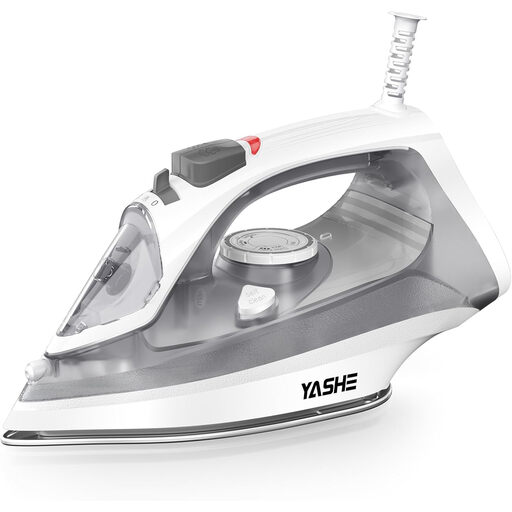 Image not available
An option if you want to adjust the temperature and steam settings on the appliance.
2300 W; 300 ml tank; continuous steam output of 25 g/min; adjustable thermostat and steam settings, including a no-steam option.
Check that the temperature and steam settings suit the care label on the trousers.
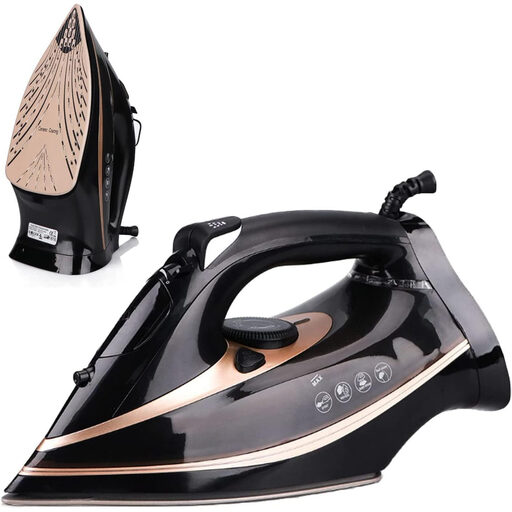 Image not available
A steam iron with a 300 ml tank for anyone who wants to take tank capacity into account when ironing varied loads.
The product name lists 70 g/min steam, a 120 g steam boost, a ceramic soleplate and self-cleaning.
Set the temperature and steam according to the care instructions for the trousers.
 Image not available
An option if you want to choose between different temperature settings and dry ironing or ironing with steam.
350 ml tank; five temperature settings and a self-cleaning function.
Check which setting is suitable for the specific care label on the trousers.
 Image not available
An option if you want to adjust the temperature and steam separately during an ironing session.
300 ml tank; continuous steam output of 40 g/min; 180 g steam boost; adjustable temperature and steam, including a no-steam setting.
The setting you choose must suit the ironing symbol on the trousers.
 Image not available
A compact option for shorter ironing sessions, with manual temperature and steam controls.
Removable 0.15 l tank; stated steam output of 22 g/min; according to the product description, it heats up in 30 seconds and is suitable for vertical steaming.
Check that the settings are suitable for the treatment allowed by the care label on the trousers.
No. Follow the care label on the specific pair. GINETEX states that the ironing symbol for up to 110 °C means ironing without steam, so don’t choose a setting based only on the fibre name or the appliance’s steam power.
Descale it according to the instructions for the exact model. Philips gives different procedures for steam irons and steam generators, so follow the instructions for the right type of appliance.
An appliance covered by the applicable EU rules must meet the relevant requirements and carry the required CE marking. The European Commission explains that the Low Voltage Directive covers, among other things, equipment within 50–1000 V AC. The CE marking is the manufacturer’s declaration that the applicable product requirements have been met; it is not an independent performance label. Check the marking and product identity on the item itself.
When you buy online from a business, you usually have a 14-day cooling-off period, although exceptions apply. This is separate from your rights if a product is faulty: the Netherlands government identifies the retailer as your point of contact and states that there is no fixed statutory two-year guarantee period in the Netherlands.