
A few shirts before you head out
If you only iron a few cotton shirts and are short on storage space, a steam iron could be a good fit. The Consumentenbond says this type is suitable for people who don’t iron a lot of clothes in one go.


For a few cotton shirts before the family comes round, a steam iron is often a good choice if you’re short on storage space. For a large pile of washing, a steam generator with a separate tank may be a better fit. Compare the continuous steam output, tank capacity and how easily you can reach collars and cuffs, and always follow the care label.
If you only iron a few cotton shirts and are short on storage space, a steam iron could be a good fit. The Consumentenbond says this type is suitable for people who don’t iron a lot of clothes in one go.
If you have a lot of clothes to iron in one go, a separate tank can be useful if you’d rather refill less often. The Consumentenbond discusses steam generators for larger ironing sessions.
If you alternate cotton with clothes that have different ironing instructions, follow the care label for each item. Philips advises checking the label before ironing.
Choose this if: you iron a few shirts or have limited space to store your appliance.
The trade-off: with a larger pile, an integrated tank may mean you need to refill more often.
Choose this if: you often iron a lot of clothes in one go and would find a separate tank useful.
The trade-off: the base takes up more space while you’re ironing and when you put it away.
Choose this if: you want to quickly freshen up hanging clothes and don’t need a sharply pressed collar or cuff.
The trade-off: Philips says flat ironing is often better for thick cotton and precise finishing; this is the manufacturer’s advice.
| What to consider | What to look for when buying | Who is this important for? |
|---|---|---|
| Finishing a few shirts precisely | Check how easily you can reach collars and cuffs, the continuous steam output and the available settings. | If you’re only ironing a few cotton shirts before the family comes round, you’ll want to finish the details neatly without having to store a large appliance. Around 42% of consumers have this priority. |
| Ironing a large pile | Compare the continuous steam output, tank capacity and the space needed for a separate base. | If you’re ironing lots of shirts in one go, being able to keep going and refill less often may influence your choice. Around 25% of consumers prioritise this. |
| Following the care label | Check the permitted temperature and whether the label rules out ironing or steaming. | If you iron different types of clothing, you’ll want to follow the care instructions for each item. Around 17% of consumers prioritise checking the care label. |
| Maintenance and ease of use | Check the descaling instructions for the exact model and read the warranty terms. | If you’re weighing up maintenance and ease of use, you’ll want to know in advance what the appliance requires. Around 16% of consumers have this as their main priority. |
A steam boost isn’t the same as the continuous steam you use when ironing several shirts in a row.
Compare the two figures separately and choose the type of appliance to suit the amount of laundry you iron.
For collars, cuffs and thick cotton, flat ironing may be better for the finish you want. Philips offers this as manufacturer advice, not as an independent comparison.
Choose a garment steamer primarily if freshening up clothes matters more to you than having a sharply pressed shirt.
According to the Dutch government, there is no fixed period for the statutory guarantee in the Netherlands. If a product is faulty, contact the retailer.
Check what an additional manufacturer’s warranty covers, and keep its terms separate from your statutory rights.
Tefal offers both compact steam irons and steam generators. Compare the full model code to make sure you’re looking at the right type of appliance.
The 3000 Series includes both the DST3041/80 steam iron and the PSG3000/20 steam generator. Check the full model code.
The TexStyle 3 SI 3030 is a steam iron range worth comparing if preparation and finishing details matter to you.
These models are steam irons for anyone who wants to iron cotton shirts flat. The NVWA requires CE marking for electric irons sold in the Netherlands; check the marking on the specific listing before choosing a model.
 Image unavailable
A steam iron to consider for a short session ironing cotton shirts.
Compare the continuous steam output, settings and tank capacity with what you need for your pile of washing.
 Image unavailable
This could suit a small ironing session if you want to adjust the temperature and steam manually.
The product name mentions Dual Voltage; check that the stated voltage is suitable for where you plan to use the appliance.
 Image unavailable
An option to compare if you want to finish collars and button areas precisely.
The product name lists 2000 W. Choose the temperature for each shirt according to its care label.
 Image unavailable
This could suit an ironing session with several shirts in a row.
Compare the continuous steam output and tank capacity with the amount of clothing you usually iron.
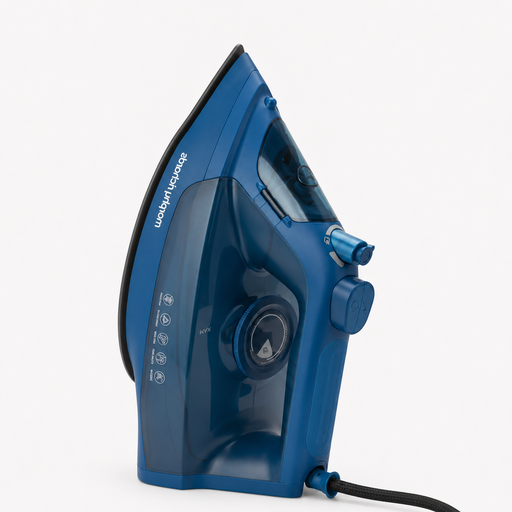 Image unavailable
A model to compare if you iron cotton shirts flat and a precision tip is important to you.
The product name lists 2800 W and a ceramic soleplate. Also check which steam settings are suitable for the care label.
First, check the shirt’s care label: the dots show the permitted ironing temperature, while a crossed-out iron means you must not iron the garment. Also check whether the label allows steaming; don’t rely on the fabric name alone.
Check the care instructions for the exact model well before you use it. Philips warns that limescale can cause brown stains and leaks, and gives different descaling instructions for steam irons and steam generators.
When you buy remotely from a professional seller, you generally have 14 days to change your mind, although there are exceptions. According to the Dutch government, there is no fixed period for the statutory guarantee in the Netherlands. If a product is faulty, contact the retailer.
The NVWA requires CE marking for electric irons sold in the Netherlands. Check the marking on the specific listing before choosing an appliance.