
Weekly-batch ironer
You have several cotton shirts to iron at the end of the week and want a consistently smooth finish with as few interruptions as possible.


If you iron just a few cotton shirts and have limited storage space, a steam iron is the obvious choice. For a larger weekly pile, a steam generator with a bigger tank may be more convenient. Also compare how well each model handles cotton, how easy it is to manoeuvre around collars and buttons, and what descaling maintenance is required. A higher stated steam output alone does not guarantee better results.
You have several cotton shirts to iron at the end of the week and want a consistently smooth finish with as few interruptions as possible.
You iron a few shirts and want an appliance that’s quick to take out and easy to store away neatly.
You want to steam regularly without limescale problems or unexpected costs for anti-scale parts, so the maintenance system is an important factor in your choice.
Cotton calls for a different approach from lightweight synthetic fabrics. The Consumentenbond describes cotton, including shirt fabric, as harder to iron until smooth. Where possible, look for a rating for cotton and consider the soleplate shape around collars and buttons.
| What matters | What to look for | Who it matters most to |
|---|---|---|
| Smoothing cotton | Compare any available cotton rating and look at the soleplate shape around collars and buttons. | If my main aim is to smooth cotton shirts, a cotton rating matters more to me than a high steam output alone. Around 36% of consumers put smooth cotton first when choosing an iron. |
| Getting through a larger pile | Compare the tank capacity and the weight of the iron itself; for a generator, also check the base unit. | When ironing several shirts in a row, I want to stop less often to refill and find the appliance comfortable to handle. Around 29% of consumers prioritise getting through a large weekly pile. |
| Storage space and upfront cost | Check the dimensions and total weight, and make sure your ironing board can support a generator. | If I only iron a few shirts, I don’t want to have to store a large base unit. Around 21% of consumers prioritise compact storage or a lower upfront cost. |
| Descaling and maintenance | Check whether the model has a collector, a cleaning function or a replaceable cartridge, and follow the instructions. | I want to know in advance whether I’ll need to rinse or replace a part, and how often maintenance is required. Around 14% of consumers prioritise easy maintenance. |
A stated steam boost is a manufacturer’s figure. The Consumentenbond points out that cotton can be harder to iron smooth than lightweight fabrics, so the figure alone doesn’t tell you how a shirt will look.
Where possible, compare a rating for cotton and also consider the soleplate shape around collars and buttons. Follow the care label for the correct temperature.
A generator has a separate base unit, which may be too large or too heavy for a standard ironing board, as the Consumentenbond warns.
Check the appliance’s dimensions and total weight in advance, and make sure your existing ironing board can support the base unit.
An anti-scale system slows limescale build-up, but doesn’t eliminate the need for maintenance. The Consumentenbond notes that cartridges can involve recurring costs on some models.
Check the instructions for the exact model: do you need to rinse a limescale collector, run a cleaning programme or replace a cartridge?
Philips offers both steam irons and steam generators in the product ranges mentioned. This gives you a choice between a standalone iron and a system with a base unit.
The Tefal product ranges mentioned include a steam iron and a steam generator. Descaling requirements vary by model.
The TexStyle 7 Pro SI 7149 is a steam iron; Braun also offers CareStyle steam generators.
The Autosteam DW4020D1 is a steam iron with a precision tip designed to reach awkward spots.
This selection of Joybuy products includes handheld steam irons and steam generators for both shorter and longer ironing sessions.
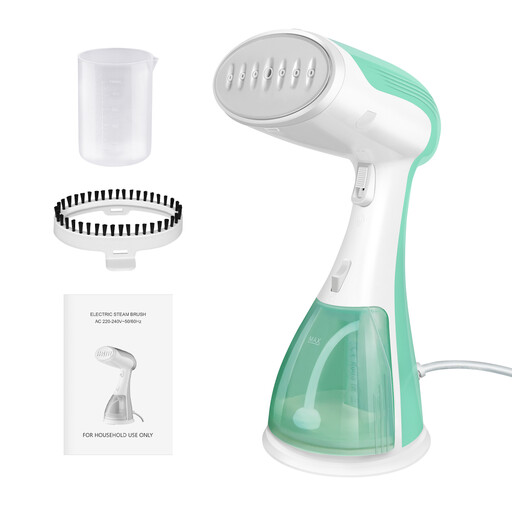 No image available
A portable option to consider if you’re looking for a compact appliance for shorter ironing sessions.
The product name lists 1500 W and a 25-second heat-up time.
 No image available
A steam generator to consider if you regularly iron a larger pile in one go; make sure you have room for the base unit.
The product name lists 2400 W, a 350 g steam boost and a 1.4-litre water tank.
 No image available
This steam generator could suit a longer ironing session; remember to allow space for the base unit too.
 No image available
A steam iron to consider if you only iron a few shirts and would rather not store a separate base unit.
 No image available
A steam generator to compare if you have a longer ironing session; check how much space the base unit takes up beforehand.
Not necessarily. According to the Consumentenbond, a steam iron is generally better suited to smaller ironing loads or limited storage space. A generator may be worth considering for a larger pile, if you have room for the base unit.
Follow the care label for the permitted temperature. The Consumentenbond recommends tackling stubborn creases with a steam boost or spray function if needed, then letting the shirt cool and dry after steaming.
The Consumentenbond says that steam irons and steam generators sold in the Netherlands are generally designed for tap water; if your water supply is different, follow the instructions for your model. Always use the instructions when descaling: Tefal, for example, warns against using vinegar or descaling products when rinsing the steam tank.
Check that the base unit fits on the board and that the board can support its weight. The Consumentenbond warns that a generator base may be too large or too heavy for a standard ironing board.