
Quick cuff touch-ups
After a wet journey, you mainly want to tidy up one creased cuff. Fast heat-up and easy manoeuvring around buttons matter more than a large water tank.


If you need to sort out one cuff or a single shirt after a wet journey, a standard steam iron is usually the more practical choice: according to Consumentenbond, it generally heats up faster and takes up less space. A steam generator is worth considering if you regularly iron several shirts. In either case, check the care label first, and bear in mind that extra steam won’t automatically make a wet shirt ready to wear.
After a wet journey, you mainly want to tidy up one creased cuff. Fast heat-up and easy manoeuvring around buttons matter more than a large water tank.
You often iron several shirts and want to tackle stubborn creases without having to keep topping up the water. You have room for a base unit.
You switch between different shirt fabrics or want to take account of the care label instructions. Having control over the settings and maintenance matters to you.
Start by deciding whether you’re just touching up a cuff or often doing a larger ironing session. Then compare fabric care instructions, ease of handling and the space the appliance needs.
| What to consider | What should you check? | Who is this important for? |
|---|---|---|
| Quick, precise touch-ups | Check the heat-up time and soleplate shape, and see how easily you can iron around buttons. | If I just want to touch up a cuff after my journey, I want to get started quickly and work around the fastening easily. Around 33% of consumers prioritise quick, precise touch-ups. |
| Fabric and steam | Read the symbols on the care label and check how the temperature and steam are controlled. | If I iron different shirts, I want to follow the fabric care instructions rather than rely on an automatic setting. Around 27% of consumers prioritise treating fabrics correctly. |
| Several shirts | Compare the tank capacity and iron weight, and check whether your ironing board has room for the base unit. | If I iron several shirts in a row, I want to top up less often and finish the session without hassle. Around 20% of consumers say the size of the ironing session is their main consideration. |
| Space and maintenance | Check the base unit’s dimensions, how it fits on your ironing board and the model’s descaling instructions. | If I have limited storage space or want to keep maintenance simple, I want to know in advance what’s involved in setting it up and descaling it. Around 20% of consumers prioritise space and maintenance. |
For a quick touch-up, heat-up time, ease of handling and storage space may matter more than the amount of steam needed for a full ironing session. Consumentenbond cites compact size and fast heat-up as advantages of a standard steam iron when you have only a small amount of ironing to do.
First decide whether you occasionally touch up one cuff or regularly iron several shirts.
A larger appliance needs more storage space and may require an ironing board with room for the base unit.
An automatic setting doesn’t override the care label instructions. Some labels prohibit ironing or steam.
Check the ironing and steam symbols on the shirt before use.
A descaling system doesn’t eliminate the need for maintenance. Your statutory guarantee is also separate from any manufacturer’s warranty; ACM ConsuWijzer explains the difference.
Check the maintenance instructions for the exact model and review the warranty terms alongside your statutory rights.
A system with replaceable anti-scale cartridges may require periodic replacements.
The CareStyle range may be worth a look if you need to manoeuvre around buttons when ironing cuffs.
The PerfectCare range is worth comparing if you switch between different ironable fabrics and would prefer to make fewer manual adjustments.
The Pro Express Vision Max GV9920E0 is worth comparing if visibility of small creases and adjustable fabric care are important to you.
These models are steam generators for anyone who regularly irons several items of clothing as well as cuffs. Before buying, check the CE marking and EU Declaration of Conformity information for the exact model.
 No image available
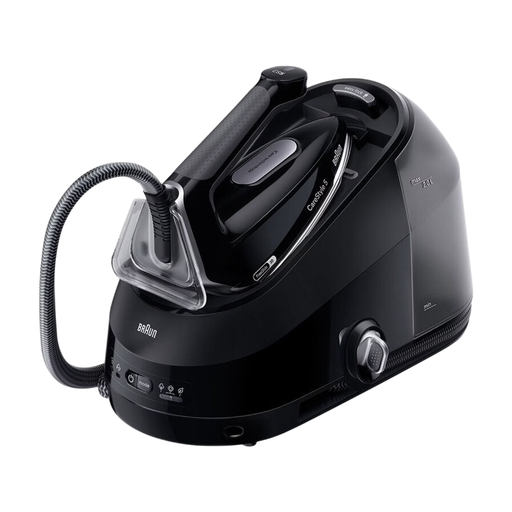
A steam generator to compare if you also have longer ironing sessions.
1,800 ml tank; Calc Clear descaling; vertical steaming.
The product description lists continuous steam and a steam boost function.
 No image available
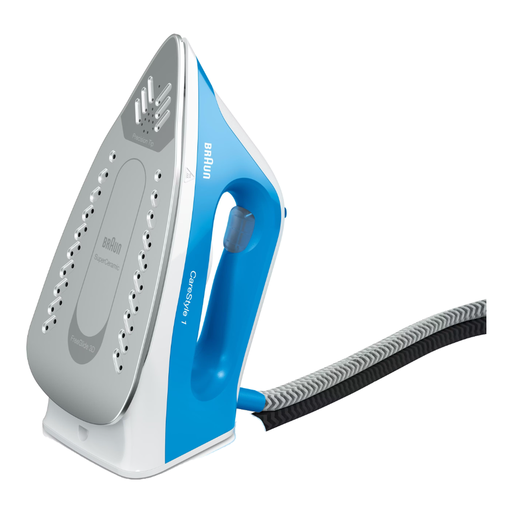
An option to compare if you want to work around buttons on cuffs and also iron several shirts.
FreeGlide 3D soleplate; removable 2-litre tank.
The product description lists automatic fabric adjustment, a steam output of 150 g/min and a steam boost of 510 g.
 No image available
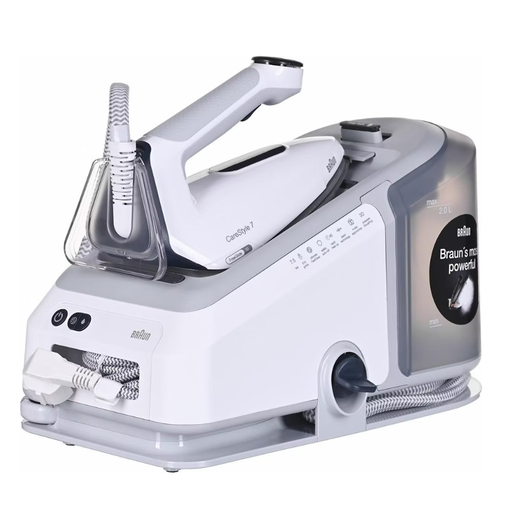
A model to include in your comparison if you want adjustable settings for different ironable fabrics.
Four settings; 1.5-litre tank; vertical steaming.
The product description lists a FreeGlide 3D soleplate and CalcClean.
 No image available
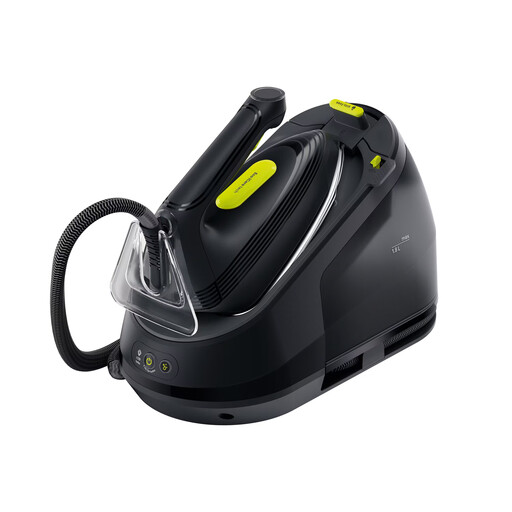
An option to compare if you’re looking for a larger tank for longer ironing sessions.
2-litre tank; vertical steaming.
The product description lists a FreeGlide 3D soleplate and a descaling system.
 No image available
A model to compare if you’re looking for a steam generator for different ironable fabrics.
The product description lists iCare temperature control, a turbo setting and vertical steaming.
According to the product description, the FreeGlide 3D soleplate is designed to glide over buttons, seams and pockets.
Check the care label first: an iron symbol with a cross through it means you mustn’t iron the garment, and a no-steam symbol means you mustn’t use steam. Don’t assume a steam generator will make a wet shirt ready to wear quickly or safely.
Not always. Consumentenbond points out that a steam generator may be too large or heavy for a standard ironing board. Check that the board has enough space and can support the base unit, and follow the manufacturer’s instructions.
Follow the instructions for the exact model on water use and descaling. According to Consumentenbond, an anti-scale system can slow limescale build-up, but maintenance is still needed.
For a standard online purchase of goods, ACM ConsuWijzer says you generally have a statutory 14-day cancellation period from the day after delivery, although exceptions may apply. Your statutory guarantee depends on what you could reasonably expect from the product under normal use and isn’t automatically limited to the manufacturer’s warranty.
According to information from the Dutch government, electrical appliances placed on the market must meet the applicable European requirements. Where the product complies, the manufacturer must affix the required CE marking and draw up an EU Declaration of Conformity. Check the documentation for the exact model.