
If you iron cotton shirts
Look for adjustable steam and a pointed soleplate that can reach collars and seams. A high steam boost alone doesn’t tell you how well an iron will press a shirt.


If you only have a few cotton shirts to iron and little storage space, a compact steam iron is the obvious choice: there’s no separate base to carry, as the water tank is built into the hand-held unit. For larger ironing sessions, a steam generator with a separate tank and a lighter hand-held unit may be more comfortable, provided you have room to carry, store and set up the larger base securely. The Dutch Consumers’ Association presents this as a choice between types of appliance, not as a proven performance comparison of specific models.
Look for adjustable steam and a pointed soleplate that can reach collars and seams. A high steam boost alone doesn’t tell you how well an iron will press a shirt.
If you carry your appliance between floors and put it away after ironing a few shirts, compare the weight and dimensions of the complete appliance. The Dutch Consumers’ Association describes steam generators as larger and more awkward to move and store.
A separate water tank can be useful when you’re ironing a lot of clothes in one go and want to refill less often. Check that the base will fit on your ironing board, and make sure you have somewhere to store it at home.
Best for: ironing a few shirts at a time, limited storage space or an appliance you regularly carry up and down stairs.
The trade-off: the tank is built into the hand-held unit, which may feel heavier while you’re ironing and need refilling sooner.
Best for: regular, larger ironing sessions, if you have room for the base and a suitable ironing board.
The trade-off: the separate tank makes the hand-held unit lighter, but the complete appliance is larger and more awkward to carry and store. The Dutch Consumers’ Association also points out that too much steam can leave your shirt and ironing board damp.
| What to consider | What to look for | Who should consider this? |
|---|---|---|
| Cotton and tricky areas | Check whether the steam is adjustable and whether the soleplate tip can reach collars and seams. Consider continuous steam separately from the steam boost. | If I want my cotton shirts to look neat, I focus on steam control and small, tricky areas. Around 31% of consumers prioritise smooth shirts and hard-to-reach areas. |
| Carrying and storage | Compare the complete appliance and its storage dimensions. For a steam generator, also check where the base can sit on the ironing board. | If I regularly carry the appliance between floors or have little cupboard space, I want to know how large and heavy the complete set is. Around 31% of consumers give carrying and storage convenience top priority. |
| Long ironing sessions | Consider the tank capacity and where a separate base would go, in relation to the amount of laundry you need to iron. | If I iron a lot of shirts one after another, I want to stop less often to refill the tank. Around 23% of consumers prioritise large ironing sessions. |
| Maintenance | Check the maintenance instructions for the exact model and whether it needs replaceable cartridges. | If I want descaling to be straightforward, I check in advance what maintenance the model requires. Around 15% of consumers make maintenance and possible consumables their top priority when choosing. |
The separate base matters too: according to the Dutch Consumers’ Association, a steam generator is larger overall and more awkward to move and store.
Compare the complete set with the space available on your ironing board, your storage space and the route you’ll need to take through your home while carrying it.
Manufacturers list continuous steam output and the short burst of steam separately. A high steam boost alone doesn’t prove that you’ll iron a shirt faster or leave it drier.
Compare the two figures separately and check whether you can adjust the steam.
An anti-scale feature can slow the build-up of limescale, but maintenance is still necessary.
Read the instructions for the exact model and check whether maintenance involves replacing cartridges or other parts.
The TexStyle range includes steam irons for anyone looking for a standalone appliance for smaller ironing sessions.
The Ultragliss Plus FV6810E0 is worth a look if you’re after a steam iron with a stated continuous steam output.
The PerfectCare PSG7300/70 represents the steam generator option for larger ironing sessions, with a separate water tank.
Rowenta provides model-specific manuals and parts for some steam iron ranges. This may be worth considering if maintenance and replacement parts matter to you.
These product picks are steam irons for cotton shirts and smaller ironing sessions; they don’t cover the steam generator option.
 No image available
A steam iron worth considering if you’re looking for adjustable steam and a slim soleplate for seams and areas around buttons.
The product description mentions a Durilium Airglide soleplate, anti-drip feature and automatic shut-off.
 No image available
A model to consider if you’re looking for a cotton setting and a pointed soleplate tip for smaller areas.
The description mentions adjustable steam, a cotton setting, a slim-tip soleplate and a Calc-Clean system.
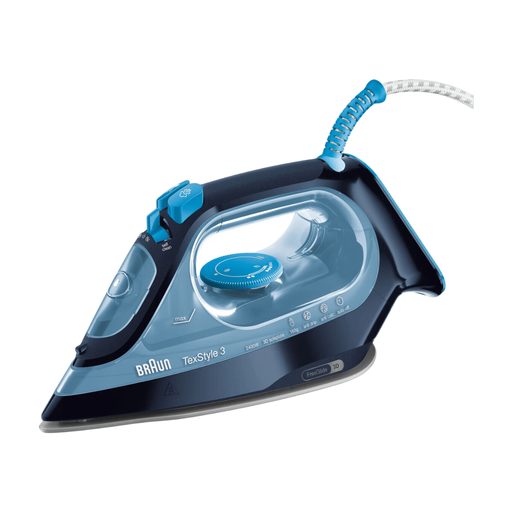 No image available
A steam iron to compare if you want a precision tip for collars and seams.
The product description mentions a steam boost, anti-drip system, automatic shut-off and anti-scale system.
 No image available
A model worth a look if a precision tip and adjustable steam are important to you.
The description mentions self-cleaning and 3D FreeGlide technology.
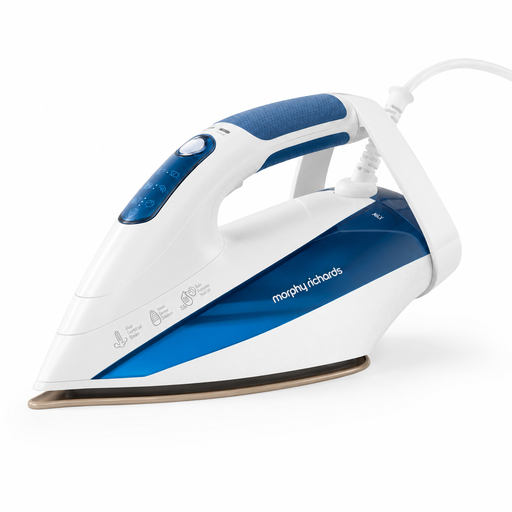 No image available
A steam iron to compare if you’re looking for variable steam and a precision tip for collars and the areas between buttons.
The description mentions a ceramic soleplate, six steam settings, an eco mode and self-cleaning.
Use steam in moderation: the Dutch Consumers’ Association advises ironing with steam first, then without steam until the fabric is dry. Too much steam can also make the ironing board damp.
Follow the manual for your exact model when descaling and, if applicable, using softened water. The Dutch Consumers’ Association says that steam irons and generators are generally designed for tap water; don’t use scented ironing water or other additives.
For a faulty product, the retailer is your point of contact for the statutory guarantee, according to the Government of the Netherlands. There is no fixed two-year statutory guarantee period for all products in the Netherlands; what you can reasonably expect depends on the product and the information provided at the time of purchase.
The Netherlands Food and Consumer Product Safety Authority states that the rules for electrical equipment apply, among other cases, to products with a rated voltage of 50–1000 V AC. Products covered by the Electrical Equipment Decree under the Commodities Act must carry a CE mark. That mark is the manufacturer’s declaration, not a safety test of the products listed here; check the documentation for the exact model.