For a few cotton dresses at a time, a steam iron is often more practical; for long, regular ironing sessions, a steam generator is worth considering. The Dutch Consumers’ Association cites shorter ironing sessions and limited storage space as reasons to choose a steam iron. Always check the dress’s care label, then compare the settings, ease of handling, tank and descaling method. A high steam boost alone is no guarantee of better results on cotton.
Who is this relevant for?
A family with a weekly pile of ironing
Irons cotton dresses as well as other laundry in one go, and wants to avoid stopping to refill the tank. The Dutch Consumers’ Association identifies the length of your ironing session and the storage space available as factors to consider.
Someone who irons dresses occasionally
Irons a few dresses at a time and wants an appliance that’s easy to put away after use. The Dutch Consumers’ Association suggests a steam iron if you don’t iron for long stretches or have limited space.
Someone who irons dresses with delicate details
Wants to carefully tackle seams, buttons and hard-to-reach areas, adjusting the temperature and steam to suit the garment. Check the care label on each dress, as recommended by the Dutch Consumers’ Association.
What should you look for when choosing?
Steam iron
Best for: a few dresses at a time, limited storage space or a small pile of ironing.
The trade-off: during longer sessions, you may need to refill the built-in tank more often; compare appliances based on how you’ll use yours. The Dutch Consumers’ Association considers this type suitable if you don’t iron for long stretches.
Steam generator
Best for: a large, regular pile of ironing when you iron for long stretches.
The trade-off: the separate base takes up extra space when in use and in storage. The Dutch Consumers’ Association describes the larger tank as an advantage for longer sessions.
The Dutch Consumers’ Association highlights the care label, results on cotton, the length of ironing sessions and the space available as relevant factors. When comparing appliances for cotton, don’t just look at the quoted steam figures: check for tests that assess cotton separately too.
| What to consider |
What should you check? |
Who does this matter most to? |
| Creases and fabric care |
Follow the care label and compare adjustable temperature and steam settings; where possible, look for independent cotton test results from the Dutch Consumers’ Association. |
When I iron dresses made from different fabrics or with different finishes, I want to tackle creases without going against the care label. That’s why around 40% of consumers prioritise results on cotton and fabric care. |
| Long ironing sessions |
Compare tank capacity, how easy it is to refill and how much space the base takes up. |
When I iron several dresses and the family laundry in one go, I want to stop as little as possible to refill the tank. That’s why around 30% of consumers prioritise longer sessions with fewer interruptions. |
| Dress seams and details |
Look at the shape of the tip and the settings; adjust them to suit the care label for the whole dress. |
When I iron around seams, buttons or narrow sections, I want to work precisely without putting unnecessary strain on the fabric. Around 20% of consumers make careful treatment of dress details their top priority. |
| Maintenance and use |
Check the descaling method in the manual and see whether the exact model switches off automatically. |
When I use an iron regularly, I want to know what maintenance it needs and which safety features the model I choose has. Around 10% of consumers say maintenance and safe use are their main buying concerns. |
Common mistakes when choosing
-
Assuming a high steam boost means better results on cotton
A quoted steam boost is a product specification. The Dutch Consumers’ Association assesses how well an iron smooths cotton as a separate test criterion.
Where possible, compare results for cotton and check that the temperature and steam settings you choose are suitable for the dress’s care label.
-
Choosing a steam generator for just a few dresses at a time
The larger tank can be particularly useful for long ironing sessions, but the separate base takes up extra space.
Think about how long a typical ironing session lasts and whether you have room for the base while using and storing it.
The separate base takes up extra storage space.
-
Assuming ‘anti-scale’ means no maintenance
An anti-scale system slows the build-up of limescale, but it doesn’t mean you can skip maintenance.
Before you buy, check the descaling procedure specified in the manual for the exact model. The Dutch Consumers’ Association also recommends emptying the tank after ironing.
Brands to consider
Tefal
The Easygliss Energy FV5781 is a steam iron worth comparing if you’re interested in steam settings and model-specific maintenance information.
- Tefal lists a continuous steam output of 50 g/min for the FV5781E1.
- This model specification alone says nothing about how well it will iron your dress.
Braun
The TexStyle 5 SI5256BL is worth considering if manual temperature control and access to dress details are important to you.
- Braun lists a precision tip, self-cleaning and automatic shut-off after 8 minutes vertically or 30 seconds horizontally for the SI5256BL.
- These features apply to this model. Braun describes its glide performance as a manufacturer claim, not as an independently measured result.
Philips
The PerfectCare 6000 PSG6064/80 is a steam generator worth comparing if you have larger ironing sessions.
- Philips describes this model as compact and links its claim about preventing scorch marks to OptimalTEMP.
- That claim doesn’t replace the care label; always check which treatment is allowed for the specific dress.
Products for ironing at home
This selection includes steam irons and steam generators for dresses and other ironing at home. Before choosing, check the mains connection and safety information for the exact model.
 No image available
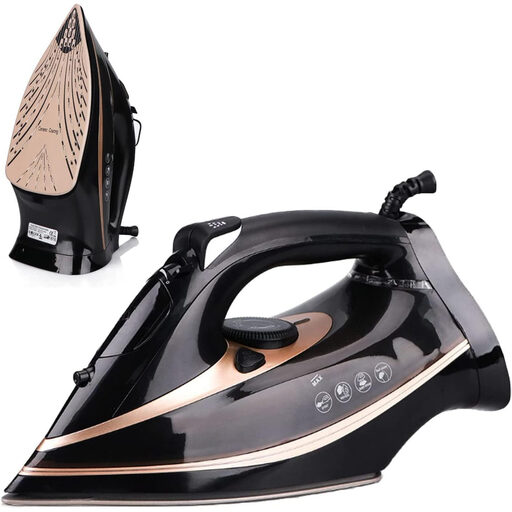
Steam iron with ceramic soleplate
Compare this model if you want to adjust the steam and temperature settings to suit each garment; always follow the care label.
Listed power: 2600 W; continuous steam: 70 g/min; steam boost: 120 g; water tank: 300 ml. Features a ceramic soleplate and self-cleaning.
View at Joybuy
 No image available
Tefal SV8026 steam generator
The 1.8-litre tank is worth comparing if you often iron for long stretches.
Features variable steam control, continuous steam, a steam boost and a precision tip.
View at Joybuy
 No image available
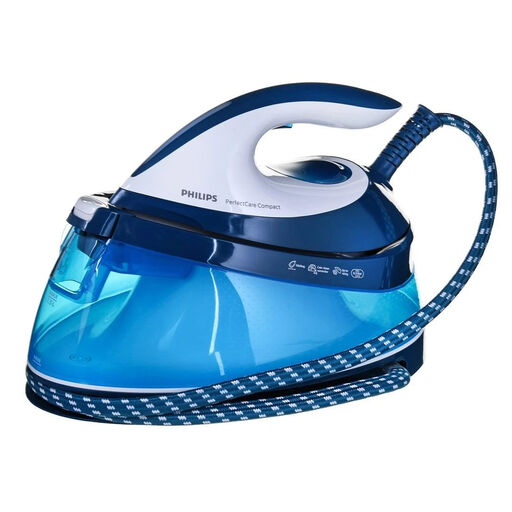
Philips GC7840/20 PerfectCare steam generator
Tank capacity and the ability to refill while in use are worth comparing if you have longer ironing sessions.
Listed power: 2400 W; steam boost: 400 g; water tank: 1.5 l. Features automatic temperature control with no manual temperature setting and can be used for vertical steaming.
View at Joybuy
 No image available
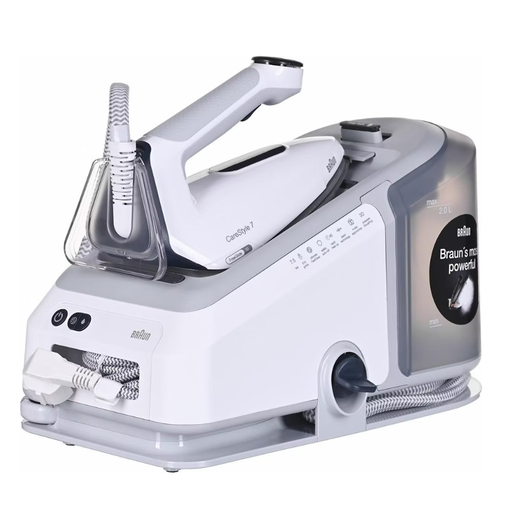
Braun CareStyle 7 IS7262GY ironing system
Tank capacity is worth comparing if you regularly have longer ironing sessions.
Water tank: 2 l. Features a FreeGlide 3D soleplate and can be used for vertical steaming.
View at Joybuy
 No image available
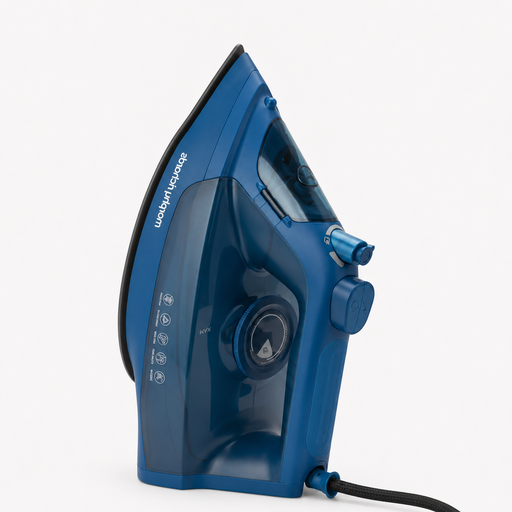
Morphy Richards Crystal Clear MDH-IRK4V
A precision tip and variable steam are features worth comparing if you want to focus on dress details and settings.
Listed power: 2800 W. Features a ceramic soleplate, variable steam, a steam boost, anti-scale protection and self-cleaning.
View at Joybuy
Frequently asked questions
Can I iron every cotton dress on the hottest setting?
No. First, read the care label for the specific dress. It may say that ironing is not allowed or give a maximum temperature of 110 °C, 150 °C or 200 °C. Take account of any other fabrics and delicate areas on the dress too.
How can I prevent limescale problems?
Follow the descaling procedure in the manual for the exact model. The Dutch Consumers’ Association also recommends emptying the tank after ironing; what else you need to do depends on the anti-scale system.
In the Netherlands, am I only entitled to a two-year legal guarantee?
No. According to ACM ConsuWijzer, your legal guarantee depends on what you could reasonably expect from the product under normal use. If a fault is covered by the guarantee, the seller must offer an appropriate solution at no cost.
What safety rules apply to an electric iron sold in the Dutch market?
According to the European Union, the Low Voltage Directive applies to electrical equipment designed for 50 to 1,000 V AC. Equipment within its scope must meet the applicable safety requirements and carry a CE mark. Check the mains connection and safety information for the specific model; the brand name alone is not confirmation.


