If you only have a few cotton shirts to iron and limited storage space, a standard steam iron is usually the practical choice. For a large pile with stubborn creases, a steam generator may be worth considering, according to the Dutch Consumers' Association. A generator has a separate, larger tank, but takes up more storage space. Compare the continuous steam output, tank and maintenance requirements, and always follow the care label for the temperature. A garment steamer is better suited to freshening clothes than to getting collars and cuffs neatly pressed.
Which type is right for you?
If you want crisp collars and cuffs
You want to hang your cotton shirts back up smooth after the seasonal change, including the collars and cuffs. The Dutch Consumers' Association describes a garment steamer primarily as an option for freshening clothes; Tefal lists a precision tip for the FV9844.
If you iron a large pile in one go
You want to get several shirts done in one session and refill less often, but you need space for an appliance with a separate tank. The Dutch Consumers' Association discusses steam generators as an option for people who do a lot of ironing.
If you occasionally iron a few shirts
You want an appliance that’s quick to get out and easy to store away after use. The Dutch Consumers' Association says a standard steam iron is a good fit if you do little ironing or have limited storage space.
What should you look for when choosing?
Standard steam iron
Best for: a small pile of shirts, getting started quickly and limited storage space.
Bear in mind: the water reservoir is in the iron itself, so the tank is smaller and the iron may feel heavier.
Steam generator
Best for: a large pile of shirts and longer ironing sessions. The Dutch Consumers' Association says this type is suitable for people who do a lot of ironing.
Bear in mind: the separate tank can mean fewer refills, but the appliance takes up more space and may need a sturdy ironing board.
Garment steamer
Best for: quickly freshening a hanging shirt when a sharply pressed collar isn’t your main priority.
Bear in mind: according to the Dutch Consumers' Association, some of the garment steamers tested did not smooth cotton or heavier fabrics.
For cotton shirts, the finish you want, the size of the pile and the storage space available are the main things to consider. The Dutch Consumers' Association advises choosing the maximum temperature according to the care label, rather than the fabric alone.
| What to consider |
What should you check? |
Who is this important for? |
| Cotton and shirt details |
Compare continuous steam output in g/min separately from the steam boost; also check the shape of the soleplate tip and the care label. |
I want to smooth cotton and tricky areas such as collars and cuffs. Around 36% of consumers prioritise a crisp finish on cotton. |
| Long ironing sessions |
Compare the tank capacity in litres, refill options and the space needed for the separate base. The Dutch Consumers' Association gives approximately 0.3 l for a standard iron and approximately 1.5 l or more for a generator as typical figures for each type, not model specifications. |
When I iron a large pile in one go, I want to minimise interruptions to refill the tank. Around 29% of consumers prioritise being able to keep going without refilling. |
| Space and storage |
Measure your storage space and compare the weight and dimensions of the iron and, where applicable, the base. |
I only iron a few shirts and want to get the appliance out and put it away quickly. Around 21% of consumers give compact, quick use their highest priority. |
| Limescale and maintenance |
Check the manual for the exact model to see how to descale it and whether replacement parts are available. |
I want to know what maintenance is needed with repeated use to help prevent limescale problems and stains. Around 14% of consumers prioritise maintenance and stain prevention. |
Common mistakes
-
Confusing the steam boost with continuous steam
Steam boost and continuous steam output are different specifications. If you’re ironing a whole pile of shirts, it’s useful to check both figures separately.
Compare the continuous steam output in g/min, the steam boost and the tank capacity.
-
Choosing a steam generator without measuring your ironing space
The separate base takes up space and may be too large or heavy for a standard ironing board.
Before you buy, check the dimensions, the stability of your ironing board and the storage space available.
Also check that your ironing board can support the base securely; you may need a sturdier board.
-
Expecting a garment steamer to press cotton crisp
In the Dutch Consumers' Association test referred to, some garment steamers did not smooth cotton.
Choose an iron if you want a crisp shirt with smooth collars and cuffs; use a garment steamer only if freshening is enough.
-
Assuming an anti-limescale feature means no maintenance
An anti-limescale feature doesn’t mean that every model needs the same maintenance, or none at all.
Follow the manual for the exact model and check whether the parts you need are available for that version.
Brands to consider
These examples apply to the product lines and models mentioned; they are not an endorsement of any brand as a whole.
Tefal
The models mentioned include both standard steam irons and steam generators.
- For the Ultimate Pure FV9844, Tefal lists 60 g/min continuous steam, a precision tip and a Micro-Calc filter.
- These are model specifications and manufacturer claims, not independent measurements of how well it irons cotton. Follow the manual for the exact version for maintenance advice.
Philips
The PerfectCare PSG7300/70 is an example of a steam generator with a separate base for longer ironing sessions.
- Philips lists a 1.5 l tank and a maximum continuous steam output of 170 g/min for this model.
- These figures don’t automatically apply to other models. The separate base needs storage space, and the OptimalTEMP and performance claims come from the manufacturer.
Braun
The TexStyle 9 SI9682DB is an example of a standard steam iron as an alternative to a separate tank.
- For this version, Braun lists 60 g/min steam, automatic shut-off and an ActiClean descaling system.
- These specifications apply to the SI9682DB. The descaling system’s performance has not been independently verified here.
Rowenta
Rowenta’s parts finder may be useful if you’re also looking for model-specific parts for an iron.
- Rowenta offers a parts search for various iron ranges.
- The search tool doesn’t confirm that every part is available for every current model, and it says nothing about how well an iron smooths cotton.
Products for ironing shirts
This selection includes steam generators for longer ironing sessions and standard steam irons for smaller piles and compact storage.
 No image available
Philips 3000 Series PSG3000/20 steam generator
A steam generator to consider for longer ironing sessions with several shirts.
Specifications: 120 g/min continuous steam, a 350 g steam boost and a 1.4 l tank. The description also mentions a ceramic soleplate.
View at Joybuy
 No image available
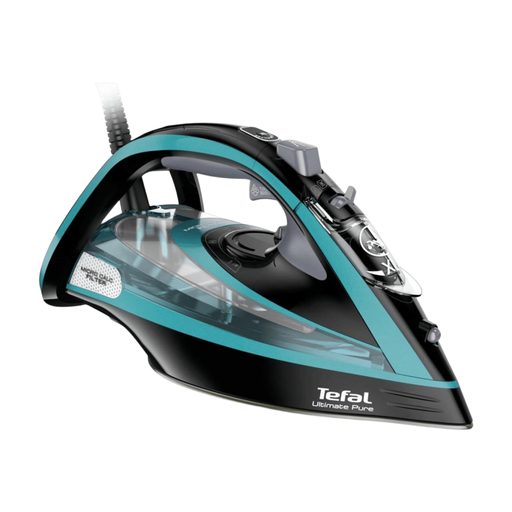
Tefal Ultimate Pure FV9844 steam iron
A standard steam iron to consider for a smaller pile and precise ironing around collars and buttons.
For the FV9844, Tefal lists 60 g/min continuous steam, a 250 g/min steam boost and a precision tip.
View at Joybuy
 No image available
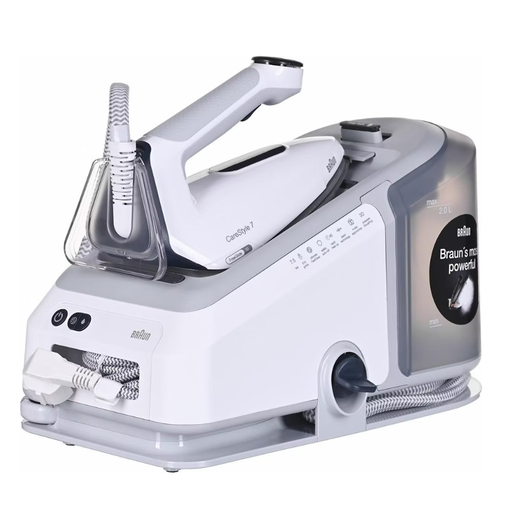
Braun CareStyle 7 IS7262GY ironing system
An ironing system with a separate tank to consider for a larger ironing session.
The product description lists a 2 l tank and a FastClean descaling system. It also mentions a FreeGlide 3D soleplate, designed to glide over obstacles such as buttons and zips.
View at Joybuy
 No image available
Braun FreeStyle 5 SI5037 steam iron
A standard steam iron to consider for a few shirts and ironing around buttons.
Specifications: 50 g/min steam output, a 300 ml tank, automatic shut-off and a precision tip. Keep children under 8 away from the hot soleplate and steam outlet.
View at Joybuy
 No image available
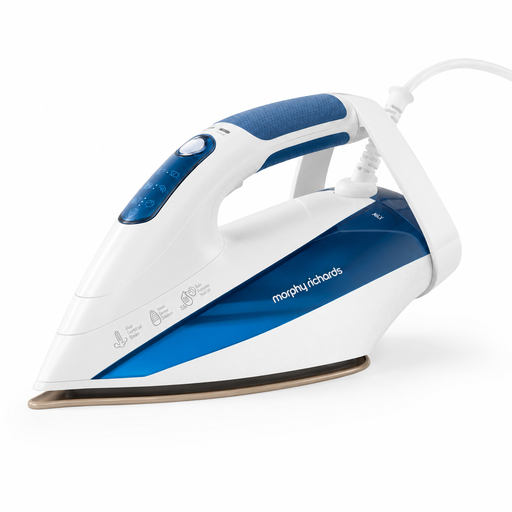
Morphy Richards MDH-IRB4E 2400-2800 W steam iron
A standard steam iron to consider if you want a precision tip for ironing around collars and buttons.
Specifications: 50 g/min steam output, a 350 ml tank, a ceramic soleplate with a precision tip, and anti-limescale and self-cleaning functions. Follow the instructions for the exact version for maintenance advice.
View at Joybuy
Frequently asked questions
What temperature should you use for a cotton shirt?
Follow the ironing symbol on the shirt’s care label. Choose the maximum temperature according to the label, not simply because the fabric is cotton. GINETEX also advises checking any restrictions on steam.
Is a garment steamer enough for a shirt?
A garment steamer may be enough for a quick refresh. If you want to get cotton smooth and crisp, an iron is the more suitable choice according to the Dutch Consumers' Association’s test findings; individual garment steamers may vary.
When should you choose a steam generator over a standard iron?
A steam generator is worth considering if you iron lots of shirts in one go and want a larger separate tank. Bear in mind the extra space the base takes up, and check that your ironing board is stable enough.
How do you descale an iron or steam generator?
Follow the instructions for the exact model, as the descaling method can vary by type. Tefal advises against using vinegar or descaling products in the steam tank; a separate anti-limescale rod may have its own cleaning procedure.
Which electrical product rules apply to ironing appliances in the Netherlands?
Mains-powered appliances within the scope of the Low Voltage Directive, with a nominal AC voltage of 50 V to 1000 V, must meet the applicable electrical safety requirements. The Netherlands Food and Consumer Product Safety Authority and the European Commission outline the relevant requirements and CE obligations; a CE mark is not an independent performance test. Check the product documentation for the specific model.


