What should you look for when ironing cotton shirts?
Standard steam iron
A good fit if: you usually iron a few shirts or have limited space to store the appliance.
Trade-off: the water tank is built into the handle, so you may need to refill it sooner during a long session.
Steam generator
A good fit if: you often iron a large pile of shirts and have room for the base unit and hose.
Trade-off: the base unit needs extra storage space and a stable surface. A high volume of steam can also leave clothes or the ironing board damp.
When comparing irons for cotton, look separately at how well they smooth the fabric and their continuous steam output, rather than focusing only on an extra steam boost. The Consumentenbond makes this distinction in its ironing advice.
| What to consider |
What to look for |
Who is this for? |
| Smooth results on cotton |
Compare ratings for ironing cotton and check whether the steam output is adjustable. |
I mainly want my cotton shirts to come out smooth, rather than just seeing a high stated steam output; shoppers who prioritise results on cotton make up around 33%. |
| Long ironing sessions |
Check the tank capacity, how to refill it and the weight of the handle. |
When I have a large pile to iron, I want to stop less often to refill the water; shoppers who prioritise long sessions make up around 27%. |
| Storage and purchase |
Check how much room the appliance and cord need, and compare the type with how often you iron. |
I only iron a few shirts and want to put the appliance away easily afterwards; shoppers who prioritise compactness and value for money make up around 20%. |
| Maintenance and safe use |
Check the descaling method for the specific model and think about where the appliance can stand securely. |
I want to be able to maintain the appliance and keep hot parts out of reach, for example if children can get near the ironing area; shoppers who prioritise maintenance and safe use make up around 20%. |
Joybuy products for ironing shirts at home
This selection includes steam generators for longer ironing sessions and standard steam irons for smaller loads.
 No image available
Philips 3000 Series PSG3000/20 steam generator
A steam generator to consider if you iron for longer and have room for a base unit.
Tank: 1.4 litres. Continuous steam: 120 g/min. Steam boost: 350 g. The product information states that it can be used for up to one hour in ECO mode.
Allow space for the base unit and make sure it has a stable place to stand.
Joybuy
 No image available
Tefal SV8026 Express Power steam generator
This generator is worth comparing for longer ironing sessions. Check that you have enough room for the base unit first.
Removable tank: 1.8 litres. Continuous steam: 120 g/min. Steam boost: 380 g/min.
The larger setup needs a stable surface and extra storage space.
Joybuy
 No image available
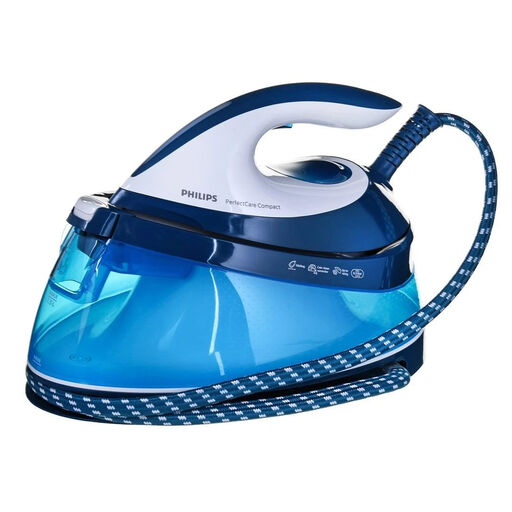
Philips GC7840/20 PerfectCare steam generator
A generator to compare if you regularly iron for longer and have room to store a larger appliance.
Tank: 1.5 litres. Steam boost: 400 g/min. The product information states that you can refill it continuously.
Allow enough room for the base unit.
Joybuy
 No image available
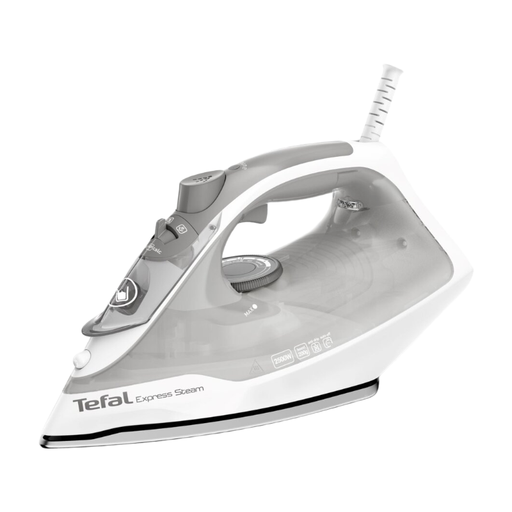
Tefal FV2863E1 Express Steam iron
A standard steam iron to consider for smaller loads and if you do not want to store a separate base unit.
Tank: 270 ml. Continuous steam: up to 30 g/min. Steam boost: up to 200 g/min. The product information lists a rotary temperature control.
For a long session, you may need to refill the tank sooner than you would with a generator.
Joybuy
 No image available
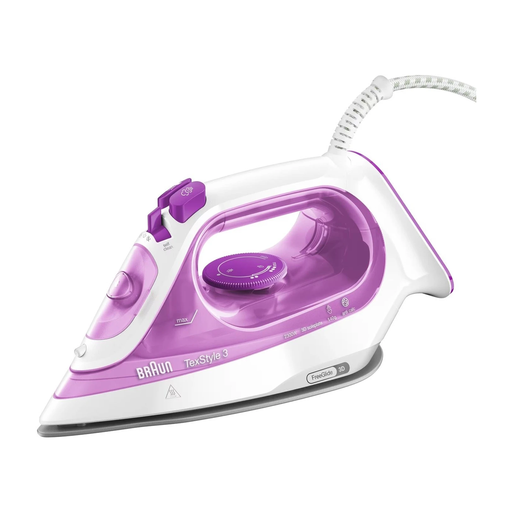
Braun TexStyle 3 SI3030 steam iron
A standard steam iron to compare if you iron a few shirts and want to work carefully around collars and seams.
Tank: 270 ml. The product description lists a precision tip and 3D FreeGlide.
Check the features of this version. Do not assume it has automatic shut-off unless this is confirmed in the model specifications.
Joybuy
Frequently asked questions
How do you iron a cotton shirt without damaging it?
Follow the shirt’s care label and do not automatically choose the highest setting just because it is made of cotton. Use steam sparingly; the Consumentenbond suggests an extra steam boost to tackle a stubborn crease in a specific area. Let the fabric dry after steaming before you continue ironing.
How often should you descale a steam iron?
Follow the manual for your specific model, as the method depends on its anti-scale system. The Consumentenbond generally recommends descaling about once a month, but this is not a universal schedule for every iron.
What type of ironing board do you need for a steam generator?
Check whether the base unit can stand securely on or beside your board. The Consumentenbond warns that a generator may be too large or heavy for a standard ironing board. A high volume of steam can also cause moisture to build up underneath the board.
Is an extra paid-for warranty necessary?
No, not automatically. According to the Dutch Government, if there is a valid issue with a faulty product, the retailer must provide a solution; there is no fixed statutory warranty period that applies to all products in the Netherlands. Consider whether a paid-for plan genuinely adds anything to your rights.
What CE rule applies to an electric iron in the Netherlands?
Electrical equipment covered by the EU Low Voltage Directive must carry a CE marking when it is placed on the EU market. The directive applies to equipment with a rated voltage of 50 to 1,000 V AC. The marking is not an independent quality mark for ironing results, so check the specifications of the specific appliance.


