What should you look for when choosing?
Start with the space you have available and how much laundry you iron in each session. Then compare the care label on your covers with the appliance’s settings and maintenance requirements.
Standard steam iron
Choose this if: you iron a few ironable cotton covers at a time and want an appliance that’s easy to store.
Bear in mind: the water tank is built into the iron, so you may need to refill it during a longer session.
Steam generator
Choose this if: you often iron a larger pile of laundry and have room for the base, iron and hose.
Bear in mind: the separate base takes up extra room, both while ironing and when storing it. Even a generator described as compact still has a separate base.
Handheld garment steamer
Choose this if: a quick refresh or a less crisp finish is enough for you, and the care label allows steaming.
Bear in mind: in its garment steamer tests, the Consumentenbond reported that cotton and heavier fabrics weren’t smoothed as well as with an iron.
| What to consider |
What to look for |
Who should consider this? |
| Storage |
Compare the size of the complete appliance; a generator also has a separate base. |
Would you like to put the appliance away quickly after a short ironing session? For consumers who make storage space their top priority, around 39% pay the most attention to this. |
| Smoothing cotton |
Check whether the steam can be adjusted and compare continuous steam with any steam boost. |
If you mainly want a smooth, ironable cotton cover, the ironing results matter more than the stated steam output alone. Around 31% of consumers prioritise smoothing cotton. |
| Long sessions |
Check the tank capacity, whether the tank is removable and whether the complete generator will fit in your ironing area. |
When ironing a pile of covers, you may want to take fewer breaks to refill the water. Around 15% of consumers prioritise being able to work through several covers. |
| Fabric and maintenance |
Match the temperature and steam to the care label; follow the instructions for cleaning and descaling. |
Do you want to treat the cover according to its care label and keep your appliance in good condition? Around 15% of consumers put fabric care and maintenance first. |
Products on Joybuy
These products are steam irons for flat-surface ironing; the selection also includes a steam generator for anyone who irons for longer sessions more often and has room for the separate base.
 No image available
2400 W steam iron with non-stick soleplate
A standard steam iron to compare if you want to iron cotton covers flat and are looking for an appliance that’s easy to store.
The product name lists 2400 W, a non-stick soleplate, an automatic cleaning function and an anti-drip function.
Joybuy
 No image available
Xiaomi compact steam iron BHR9034EU
A standard steam iron to include in your comparison if storage space is a consideration.
The product name describes a compact, lightweight design with dual voltage.
Joybuy
 No image available
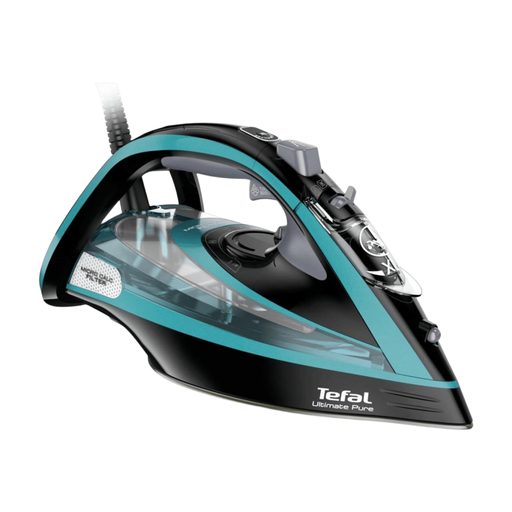
Tefal Ultimate Pure FV9844
A standard steam iron to consider if you’re looking for an appliance with a soleplate for cotton covers.
The product name identifies this model as a steam iron.
Joybuy
 No image available
Philips 1000 Series DST1030/20
A standard steam iron to compare if you want to iron covers on a flat surface.
The product name lists 2000 W.
Joybuy
 No image available
Philips 3000 Series PSG3000/20 steam generator
A steam generator to compare if you iron several covers one after another and have room for the separate base.
The product name lists 2400 W and a 350 g Steam Boost. If storage space is limited, remember to allow for the complete set-up.
Joybuy
Frequently asked questions
Can I iron every cotton cushion cover on a high heat setting?
No. Don’t assume the fabric alone tells you how to care for it. Check the cover’s care label: GINETEX distinguishes between maximum soleplate temperatures of 200 °C, 150 °C and 110 °C; the 110 °C setting is for ironing without steam. Follow any ‘do not iron’ instruction.
How can I avoid putting a cover away while it’s still damp after ironing with steam?
Iron an ironable cover with steam first, then continue without steam until the fabric is dry. This is the Consumentenbond’s advice; too much steam can make the fabric and ironing board damp.
How do I maintain a steam iron?
Follow the instructions for your specific model when descaling it. The Consumentenbond recommends emptying the water tank after each ironing session; water with a high mineral content can cause limescale to build up.
What can I do if an iron bought in the Netherlands is faulty?
If there’s a fault, contact the seller. According to the Dutch government (Rijksoverheid), you’re entitled to a product that works properly, and the seller must provide a solution if there’s a problem. The Netherlands doesn’t have a fixed statutory two-year guarantee; what you can expect depends, among other things, on the product and the information provided.
Do I always have 14 days to change my mind when buying online?
No, this doesn’t apply in every case. According to the Dutch government (Rijksoverheid), when you buy online from a business, you’ll often have 14 days to change your mind, but there are exceptions. Buying online from a private individual doesn’t count as distance selling in this sense, so check who the seller is and which terms apply to your order.


