If you have a few cotton work dresses and limited storage space, a standard steam iron is the most obvious choice. If you regularly have a large pile of ironing, a steam generator may be more practical. A garment steamer is mainly designed to freshen clothes, so it isn’t an automatic substitute for a neatly pressed cotton dress. Before choosing a temperature or using steam, check the care label on each dress, including its lining.
Which appliance is right for you?
Weekly dress ironer
If you usually iron a few dresses at a time, an appliance that’s quick to set up and easy to store is a sensible choice. The Consumers’ Association (Consumentenbond) recommends a steam iron if you don’t do much ironing or have limited space.
Large-load ironer
If you iron lots of other laundry as well as dresses, a steam generator with a separate tank may mean less frequent refilling. Bear in mind that the larger set-up takes up more space.
Ironer of dresses in different fabrics
For dresses made from different fabrics or with a lining, the care label tells you which temperature and whether steam are permitted. GINETEX explains the ironing symbols and their corresponding temperature limits.
What should you look for when choosing?
Steam iron
Choose this if: you iron a few dresses each week and want a compact set-up.
Bear in mind: the smaller tank and the possibility of more work when tackling a large pile or stubborn creases.
Steam generator
Choose this if: your dresses are part of a large pile of ironing that comes around regularly.
Bear in mind: the separate tank takes up more storage and ironing-board space.
Garment steamer
Choose this if: freshening up is enough and you don’t need a sharply pressed cotton dress.
Bear in mind: in a test cited by the Consumers’ Association, garment steamers failed to smooth cotton and heavier fabrics.
| What to consider |
What to check when buying |
Most important for |
| Quick to set up and compact to store |
Compare appliance types and the storage space required. For an iron, also look for a clearly visible water level and easy refilling. |
If I’m ironing a few dresses, I want to get started quickly without having to store a bulky set-up. Around 36% of consumers prioritise compact, quick ironing. |
| Smoothing creases in cotton |
Compare continuous steam like for like, and compare steam boosts like for like; check whether the steam output is adjustable. |
When dealing with stubborn creases in cotton, I want to know which steam settings are available without mixing up different steam figures. Around 29% of consumers prioritise removing creases from cotton. |
| Adjusting the temperature and steam |
Check the temperature and steam settings, and follow the care label on the dress and any lining. |
If my dresses are made from different fabrics or have a lining, I want to be able to match the settings to each garment’s care label. Around 21% of consumers prioritise settings suited to the fabric. |
| Maintenance and running costs |
Check the type of descaling system, the maintenance instructions and which water the manual recommends for filling the tank. |
If you iron regularly, you’ll want to know what maintenance is needed and whether any consumables are required. Around 14% of consumers prioritise maintenance and running costs. |
Common buying mistakes
-
Choosing a garment steamer as a complete replacement for ironing cotton
In a test cited by the Consumers’ Association, garment steamers failed to smooth cotton and heavier fabrics. This makes a garment steamer less suitable if you want a neatly pressed cotton dress.
Choose this appliance mainly if freshening up is enough. For a smooth finish, check that the iron is suitable for the garment’s care label.
-
Comparing a steam boost with continuous steam
A steam boost and the normal, continuous steam output are different specifications. So a figure for the steam boost doesn’t tell you how much steam the appliance produces continuously.
Compare like-for-like figures, and also consider adjustable steam and how easy the controls are to use.
-
Assuming ‘anti-calc’ means maintenance-free
An anti-calc system can slow the build-up of limescale, but maintenance is still necessary. Some systems use replaceable cartridges.
Check the manual for maintenance instructions and any parts that need replacing.
Brands to consider
Braun
The TexStyle 7 Pro SI 7160 is a steam iron with a manual thermostat and precision tip. Braun lists a maximum continuous steam output of 50 g/min and a 300 ml tank for this model.
- Braun says the soleplate is designed to move backwards around obstacles, such as seams and buttons. This is a manufacturer’s claim.
- These figures apply to the SI 7160 version; don’t assume they apply to other models.
Tefal
For the Ultimate Pure FV9851, Tefal lists a maximum continuous steam output of 60 g/min and a precision tip.
- Tefal lists a Micro Calc Filter and an anti-drip system for this model.
- These product features aren’t proof of an independently verified result; check that this version is available when you buy.
Philips
For the 7000 Series DST7040/80R0, Philips lists a steam boost of up to 250 g. This figure refers to the steam boost, not the continuous steam output.
- Philips describes the soleplate and limescale removal features of this version.
- Philips is the source of the claims about the soleplate and crease removal; don’t assume this version is directly comparable with other 7000 Series models.
Steam irons at Joybuy
These models are steam irons for anyone who wants to iron a dress on an ironing surface. For each model on offer, check that the version suits the garment’s care label and your preferred settings. Applicable safety requirements apply to electrical appliances; check the product documentation.
 No image available
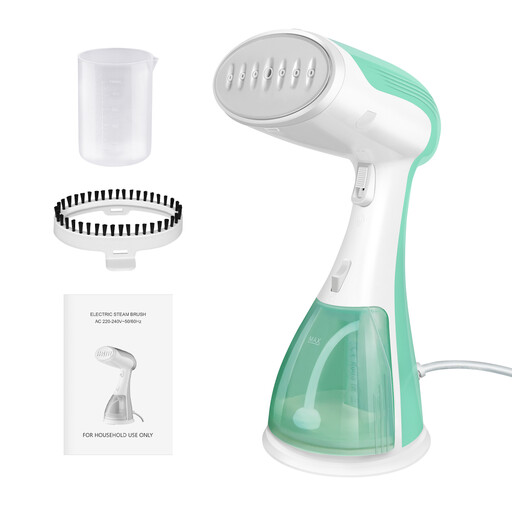
Portable steam iron, 1500 W
A portable option to consider if you’re looking for a compact steam iron; check that the model is suitable for ironing on an ironing surface.
Power: 1500 W.
View at Joybuy
 No image available
Handheld steam iron, 2400 W, with non-stick soleplate
A handheld steam iron to consider if you want to compare temperature and steam settings for creased dresses.
Power: 2400 W. The product name specifies a non-stick soleplate.
View at Joybuy
 No image available
Xiaomi BHR9034EU handheld steam iron
A compact, lightweight model according to the product name; check that this version suits your ironing space and preferred way of adjusting the settings.
The product name specifies dual voltage.
View at Joybuy
 No image available
Philips 1000 Series DST1030/20 steam iron
This model may suit you if you’re looking for a Philips steam iron; check that the settings match the ironing symbol on your dress.
Power: 2000 W.
View at Joybuy
 No image available
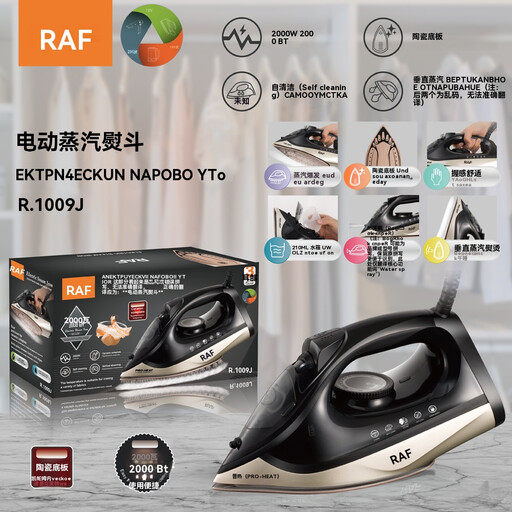
RAF electric steam iron, 2000 W
A model to compare if you’re considering the soleplate type and water tank capacity.
Power: 2000 W. The product name specifies a ceramic soleplate and a 210 ml water tank.
View at Joybuy
Frequently asked questions
Can I use the cotton setting if my dress contains cotton?
No. Choose the temperature based on the ironing symbol, not just the name of the fibre. According to GINETEX, one dot means a maximum of 110 °C without steam, two dots mean a maximum of 150 °C, and three dots mean a maximum of 200 °C.
How can I iron dresses so they’re dry before I put them in the wardrobe?
If the garment’s care label allows steam, the Consumers’ Association recommends ironing with steam first, then without steam, and leaving the fabric to cool until dry. Don’t use a steam boost continuously, so the dress and ironing board don’t get too wet.
What water should I use, and do I need to descale the iron?
Follow the manual for your specific appliance to find out which water you can use and what maintenance is required. The Consumers’ Association says Dutch tap water is generally suitable, but an anti-calc system doesn’t replace maintenance. Don’t use perfumed ironing water.
Who should I contact about a faulty iron in the Netherlands?
Report a fault to the seller. The Dutch government explains that a product must be of satisfactory quality and that there is no fixed statutory two-year guarantee period; what you can expect depends on the fault and the circumstances.
Is CE marking compulsory for an electric iron sold in the Netherlands?
CE marking is required for electrical products covered by the relevant rules. The Netherlands Food and Consumer Product Safety Authority explains the applicable requirement; Business.gov.nl also refers to the EU declaration of conformity for relevant electrical equipment. The CE mark is not an independent performance test.


