
Vandaag of morgen in huis

Kwaliteit gegarandeerd

Welkomstaanbiedingen ontgrendelen: GRATIS bezorging | Tot 80% korting | Gratis 30 dagen JoyPlus-proefperiode
Download de app
A steam iron can make ironing much easier, but not every model is right for every household. If you mainly touch up shirts, your needs will be different from those of a family with a large laundry basket. A clothes steamer can also seem like a fully fledged alternative, but it’s best suited to light creases and hanging garments.
So don’t focus only on wattage or marketing terms such as “powerful steam”. Pay particular attention to the combination of steam output, water tank, soleplate, maintenance and safety features.
A high wattage can help an iron heat up quickly, but it doesn’t tell you on its own how well it will remove creases. Continuous steam output, the steam boost and the soleplate all play a part. In practice, a 2,400-watt model with limited steam may be less suitable for thick fabrics than a steam generator with lower rated figures but a larger tank and higher steam pressure.
A compact handheld steamer with a 70 to 160 ml tank is handy for a few garments. However, you’ll often need to refill it during a full ironing session. If you regularly iron sheets, shirts or children’s clothes, consider a steam iron with a large water tank or a steam generator with a capacity of at least 1.4 litres.
A product description may say that an appliance is suitable for various fabrics. Even so, check the garment care label and the available settings. An iron with manual controls requires more care when used on silk, synthetics and wool. Automatic temperature control can make ironing easier, but you should still follow the manufacturer’s care instructions.
Continuous steam output is usually stated in grams per minute. A higher figure can help when repeatedly ironing cotton and linen. The steam boost is a short burst of extra steam for stubborn creases. Check both figures:
Treat claims about crease removal as product claims. For example, a brand’s technical specifications may list the steam output of certain models; the final result also depends on the fabric, moisture and how you move the iron.
A fast-heating iron is handy when you only need to treat a few garments. According to their product specifications, Philips and Tefal handheld steamers are ready in around 15 to 30 seconds. A steam generator generally takes longer to heat up, but offers a much larger tank in return.
Look out for:
A ceramic soleplate can glide smoothly over fabric, and some models have a scratch-resistant coating. Also check whether the appliance has an anti-drip system, self-cleaning function or limescale filter. An anti-limescale steam iron is especially handy in hard-water areas.
Automatic shut-off is an important safety feature. According to the product specifications, the Braun FreeStyle 5 SI5037 switches off after 8 minutes when left upright and after 30 seconds when left horizontally. This reduces the risk if the appliance is accidentally left in place, but never leave a hot iron unattended.
A CE mark indicates that the product must meet certain European conformity requirements. It is not a rating of ironing performance or lifespan. Check the statutory warranty too; several of the models mentioned come with a statutory or manufacturer’s warranty of at least two years.
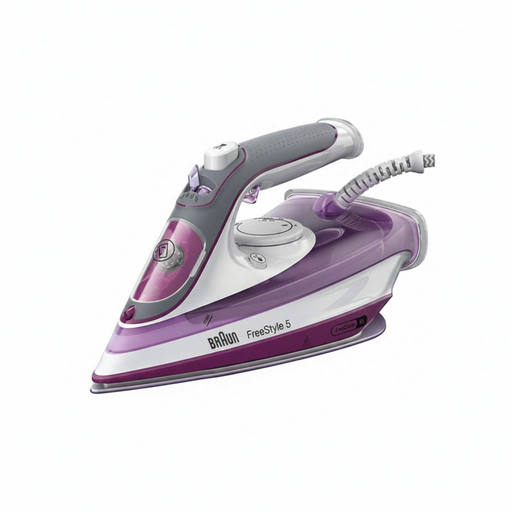
Why it suits this profile: This iron combines a traditional design with 2,600 watts, a 300 ml tank and automatic shut-off. It’s a practical choice for regular household use without needing a separate steam generator.
The product specifications list 50 g/min of continuous steam, a 180 g steam boost and a self-cleaning system. That means you can look beyond wattage alone.
300 ml water tank, FreeGlide 3D SuperCeramic soleplate and automatic shut-off after 30 seconds when left horizontally.
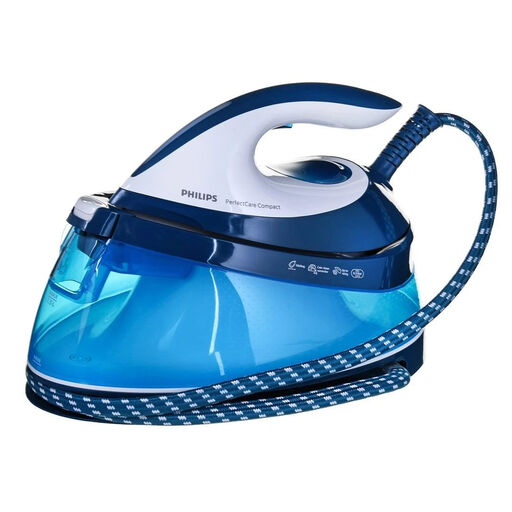
Why it suits this profile: For frequent ironing, this steam generator offers a 1.5-litre tank, vertical steaming and automatic temperature selection, according to Philips’ product specifications.
The large tank means fewer interruptions. According to the manufacturer, the Smart Calc-Clean system lets you know when descaling is needed.
120 g/min of continuous steam, a 400 g steam boost, a 1.5-litre tank and vertical steaming.
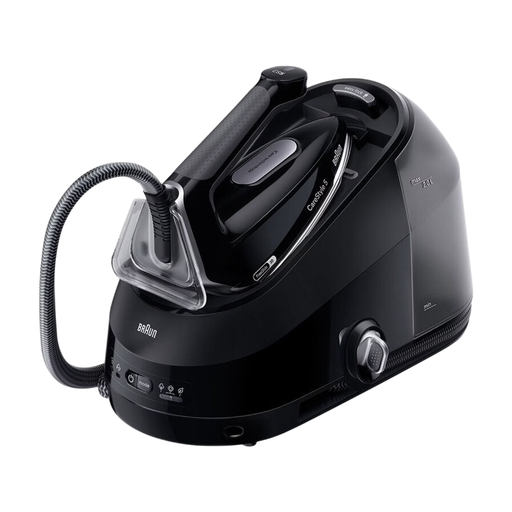
Why it suits this profile: This model is designed for large ironing sessions and households that want to refill the tank less often. It has a removable 2-litre tank and steam pressure of up to 7.5 bar, according to the product specifications.
Its large capacity means this powerful steam generator won’t become impractical during long sessions because of a small tank.
150 g/min of continuous steam, a 510 g steam boost, automatic shut-off and vertical steaming.
A travel clothes steamer is small, quick to use and doesn’t require an ironing board. According to its product specifications, the Philips STH3020/70 heats up in 30 seconds, has a foldable design and a 120 ml tank. The Tefal Pure Pop DT2025 heats up in 15 seconds and weighs 0.71 kg, according to the product information.
A handheld steamer is best suited to:
For crisp collars, cuffs, thick cotton fabrics and large loads of laundry, a steam iron is still more practical. A cordless steam iron gives you more freedom of movement, but check how often you’ll need to return it to its charging base.
We’ve put together a complete, up-to-date list of products that meet these strict selection criteria and the applicable European safety requirements.
That depends on the model and its settings. Always check the care label. Use a lower temperature and less steam on delicate fabrics, and test on an inconspicuous area first. Automatic temperature control can make choosing a setting easier, but it doesn’t replace checking the garment care label.
Follow the instructions and look out for alerts from the appliance. Models with a limescale filter, self-cleaning function or Calc-Clean system can make maintenance easier to manage. More frequent maintenance may be needed in hard-water areas. Empty the tank after use if the manufacturer recommends it, and don’t add perfume, fabric softener or unapproved products.
Energy use depends on the wattage, how long you use it and the mode you select. A 2,400-watt appliance doesn’t use the same amount of power continuously throughout an ironing session. According to the product specifications of some models, an eco mode can reduce energy and water consumption. The shortest ironing time doesn’t automatically mean the lowest energy cost, so consider the total time in use and how many times the appliance needs to heat up.
