
Vandaag of morgen in huis

Kwaliteit gegarandeerd

Welkomstaanbiedingen ontgrendelen: GRATIS bezorging | Tot 80% korting | Gratis 30 dagen JoyPlus-proefperiode
Download de app
If you want to buy a steam iron, you will often look first at the wattage or an impressive steam boost. But that does not tell you everything. An appliance with plenty of power can still be awkward to use if the water tank is small, the soleplate catches on fabric or maintenance proves difficult.
In this buying guide from the Joybuy Product Recommendation Officer, we compare practical specifications. That way, you can avoid paying mainly for marketing claims.
A powerful steam boost is useful for thick cotton, linen and stubborn creases. However, the continuous steam output, measured in grams per minute, determines how smoothly you can work during a normal ironing session. A high boost lasting a few seconds is no substitute for constant steam.
So, pay attention to both values:
A ceramic coating is often mentioned because it glides smoothly. However, the shape, steam holes and precision tip are also important. A narrow tip helps you work around collars, seams and buttons. A rounded rear section can prevent the soleplate from catching on pockets or zips when moving backwards.
Also check whether the product description clearly states whether it has a ceramic soleplate, a ceramic coating or a different finish. These terms are not always interchangeable.
Limescale from tap water can block the steam holes. A self-cleaning function or anti-limescale system makes maintenance easier, but does not remove the need to follow the instructions. Empty the tank after use if the manufacturer recommends doing so.
Automatic shut-off is a useful safety feature. Its exact operation varies by model. For example, according to the product information, the Braun TexStyle 3 SI3050 switches off after 30 seconds when horizontal and after 8 minutes when upright. Even so, unplug it after use.
A power rating of around 2,000 to 3,200 watts mainly indicates the heating power and warm-up time. It does not directly determine how much steam the appliance produces. For regular household use, a continuous steam output of around 40 to 60 g/min is practical. If you iron lots of shirts, bedding or heavy fabrics, you may benefit more from a steam generator offering around 120 g/min continuous steam.
A steam iron with a powerful steam boost is particularly suitable if you only occasionally need to tackle deep creases. Buying a steam generator makes more sense when you iron large quantities of laundry one after another. These appliances generally have a larger tank and a separate base, but they also take up more space.
A tank of 200 to 350 ml is compact and suitable for short sessions. When ironing several loads of laundry, you may need to refill it more often. A steam generator often has a tank holding 1.3 to 2 litres.
Weight is also worth considering. A heavy iron can apply extra pressure to thick fabrics, but is less comfortable during long sessions or when steaming vertically. A lightweight model is easier to manoeuvre, but may sometimes require more movement to achieve the same result.
A steam iron with a ceramic soleplate can glide smoothly and, according to the product descriptions of various models, is easy to clean. Do not use a scouring pad or metal tool, as these can damage the coating.
An iron with an anti-limescale system helps limit mineral deposits. Some models use a limescale collector, while others have a Calc-Clear or self-cleaning system. Check which component needs to be replaced or cleaned, and how often this should be done according to the instructions.
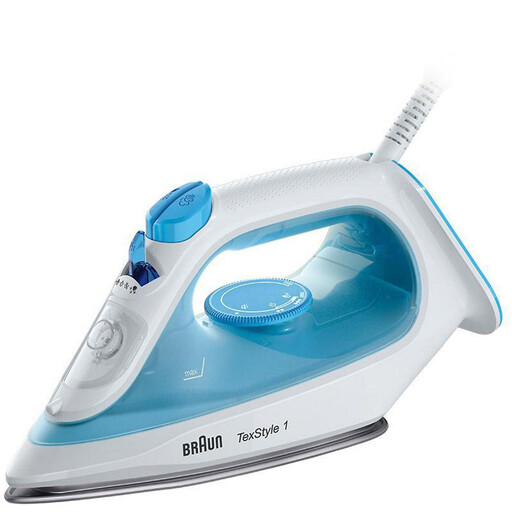
Why it suits this profile: This model has a power rating of 2,000 watts, a 220 ml tank and a warm-up time of no more than 35 seconds. That makes it suitable for short, everyday ironing sessions.
As well as the power rating, the specifications list 25 g/min continuous steam, a steam boost of 120 g/min, an anti-drip function and a self-cleaning system.
Compact size, precision tip, spray function and manual temperature selection.
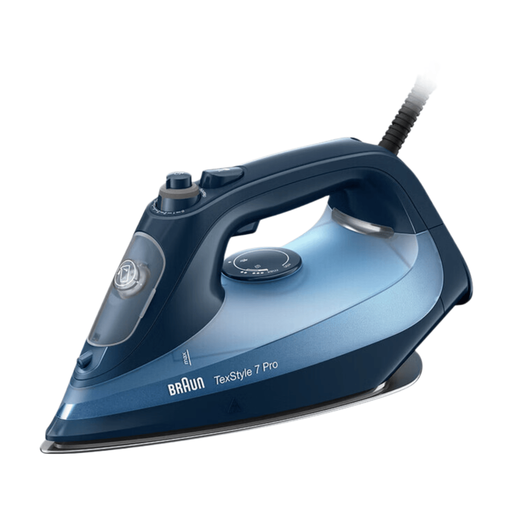
Why it suits this profile: The combination of 3,100 watts, 50 g/min continuous steam and a 225 g/min steam boost is ideal for households that regularly iron a variety of fabrics.
The product information lists self-cleaning, an anti-drip function and automatic shut-off. The 300 ml tank means you do not have to refill it straight away.
FreeGlide 3D EloxalPlus soleplate, precision tip, anti-drip function and automatic shut-off.
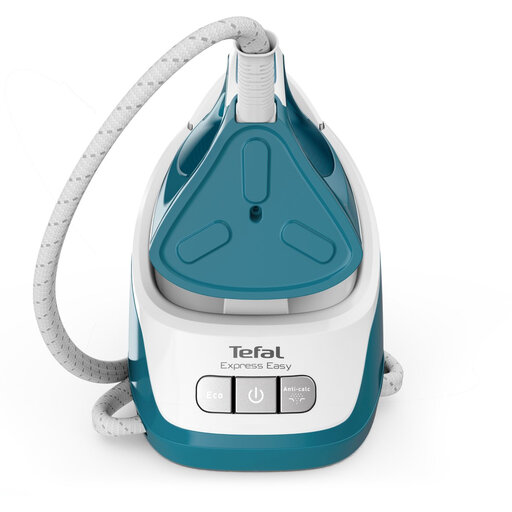
Why it suits this profile: This steam generator has a 1.7-litre tank, 120 g/min continuous steam and a steam boost of up to 350 g/min. That makes it well suited to large quantities of laundry.
The large removable tank reduces interruptions. Calc Clear technology is included to help with maintenance; follow the instructions for the correct cleaning procedure.
5.8 bar pump pressure, vertical steaming, refilling during use and automatic shut-off.
We have put together a complete, up-to-date list of products that fully meet these strict selection criteria and the applicable European safety regulations.
That depends on how you use it. A conventional steam iron is more compact and usually easier to store. A steam generator generally produces more continuous steam and has a larger tank. This can be more practical for large quantities of laundry. For a few garments a week, a regular model is often sufficient.
Empty the water tank after use if the instructions recommend it. Use the self-cleaning function or anti-limescale system according to the specified procedure. Clean the cooled soleplate with a soft, damp cloth and do not use abrasive products. The recommended water quality varies depending on the model and water hardness.
Energy consumption mainly depends on the power rating, warm-up time and length of use. A higher wattage does not automatically mean higher overall costs if the appliance heats up faster. Switch the iron off when taking a break and use an eco mode if available. Automatic shut-off is an additional safety measure, not a substitute for unplugging the appliance.
