
Vandaag of morgen in huis

Kwaliteit gegarandeerd

Welkomstaanbiedingen ontgrendelen: GRATIS bezorging | Tot 80% korting | Gratis 30 dagen JoyPlus-proefperiode
Download de app
Buying a steam iron sounds straightforward until you have to choose between a classic iron, a cordless iron, a garment steamer or a steam generator. Marketing copy often focuses on a powerful steam boost or high wattage. However, these figures do not tell you everything about everyday use.
The following pitfalls are common:
Continuous steam output is usually expressed in grams per minute, for example 40, 50 or 120 g/min. This figure shows how much steam the appliance produces during normal use. A powerful steam boost is listed separately, for example as 180, 350 or 510 g. This burst of steam is designed for thicker fabrics and stubborn creases.
Also look for vertical steaming. An ordinary steam iron can sometimes produce steam when held upright, for clothes on a hanger or curtains. A handheld steamer is generally more compact for this purpose, but usually does not have a ceramic soleplate that allows you to iron flat.
You should not regard brand claims about removing bacteria or viruses as a general guarantee of performance. According to a brand’s own research, such percentages may have been established under specific conditions. Therefore, focus mainly on the stated steam output, instructions for use and suitable fabrics.
For occasional use, a small tank may be sufficient. The Braun QuickStyle 3 Garment steamer GS 3012, for example, has a 70 ml tank and, according to the product description, is ready to use after approximately 30 seconds. This suits travellers and quick clothing touch-ups.
For a normal ironing session, 200 to 350 ml is more practical. Models such as the Philips 3000 Series DST3031/20 and Braun FreeStyle 5 SI5037 combine a 300 ml tank with a heat-up time of around 35 seconds.
If you iron several loads of washing one after another, you may want to consider a steam generator. Tanks holding 1.3 to 2 litres reduce the number of interruptions. However, bear in mind the larger base unit, greater weight and additional storage space required.
A ceramic soleplate or another smooth coating can glide easily over fabrics. Also check whether the soleplate has a precision tip for collars, buttons and seams. The name of the coating varies by brand, so look at the specific product specifications rather than relying solely on words such as “premium” or “professional”.
An anti-drip function helps to reduce water droplets at lower temperatures. This is particularly useful for synthetic fabrics and delicate clothing. An anti-drip system will not prevent you from overfilling the tank or storing the appliance flat while it is still wet.
Automatic switch-off is a valuable safety feature. Some models switch off after around 30 seconds when horizontal or after a few minutes when upright. However, never leave a hot iron unattended. Steam and the soleplate can cause burns; always follow the care label and the instructions.
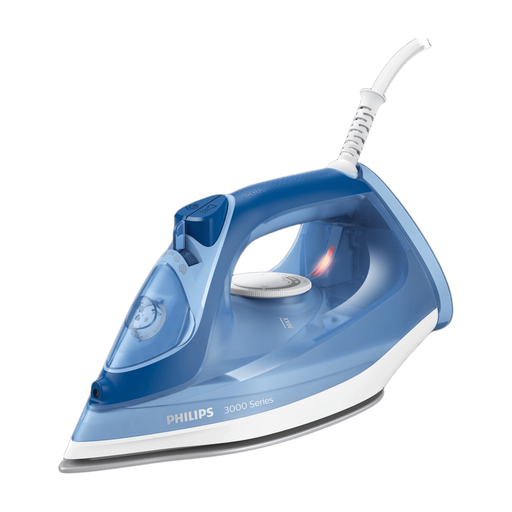
Why it suits this profile: This model is suitable for households looking for a standard steam iron for shirts, cotton and bed linen without moving straight to a steam generator.
The specifications list 40 g/min continuous steam, a 180 g steam boost, a 300 ml tank, anti-drip protection and automatic switch-off.
Ceramic soleplate, vertical steaming function, 2400 W power and a heat-up time of approximately 35 seconds.
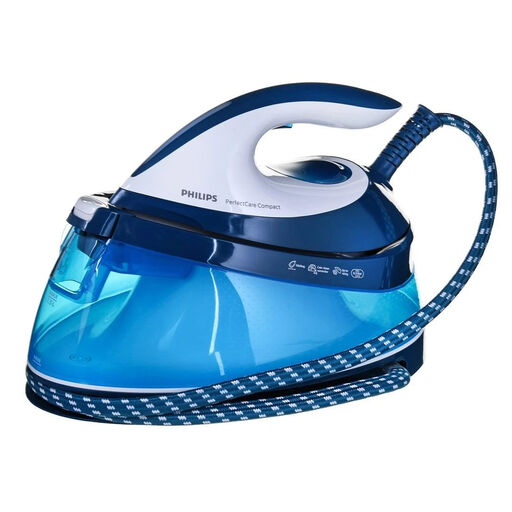
Why it suits this profile: The combination of a large tank, automatic temperature selection and vertical steaming function is ideal for users who iron frequently and for longer periods.
The 1.5-litre tank reduces the need for refilling. According to the product description, the Smart Calc-Clean system indicates when maintenance is required.
120 g/min continuous steam, 400 g steam boost, automatic switch-off and a carry lock.

Why it suits this profile: This system is designed for large quantities of laundry and users who value continuous steam and a generous tank.
The product specifications state that it has a 2-litre water tank and continuous steam of up to 190 g/min. This clearly makes it suitable for extended use, rather than just a quick touch-up.
PowerSteam technology according to Braun, vertical steaming and a large tank. However, bear in mind the size of the base unit.
We have put together a complete, up-to-date list of products that fully meet these strict selection criteria and the applicable European safety regulations.
That depends on the model, how long you use it and the setting selected. Thanks to its large tank and continuous steam, a steam generator can work faster when handling large quantities of laundry. For a few shirts, a compact iron may be more practical and take up less space. Do not look only at the wattage; also consider heat-up time, steam output and maintenance.
Its lifespan depends on factors including water quality, descaling, storage and frequency of use. Empty the tank after use if the instructions require this, clean the soleplate carefully and use the recommended anti-scale programme. A product with CE marking meets the relevant European requirements, but this marking does not indicate how many years the appliance will last.
A handheld steamer is suitable for quickly removing creases from hanging clothes, curtains and lightweight fabrics. For collars, cuffs, table linen and sharp creases, a steam iron generally offers more control. If you need both options, consider a 2-in-1 model or use a compact handheld steamer alongside a standard iron.
