
Vandaag of morgen in huis

Kwaliteit gegarandeerd

Welkomstaanbiedingen ontgrendelen: GRATIS bezorging | Tot 80% korting | Gratis 30 dagen JoyPlus-proefperiode
Download de app
A steam iron can make ironing shirts, bed linen and curtains much easier. However, a high wattage or impressively powerful steam shot does not tell you everything. Some models have a small water tank, build up limescale quickly or are awkward to use at lower temperatures.
If you want to buy a steam iron, it is therefore worth looking beyond the marketing copy. Below, you’ll find out which specifications really make a difference, which common pitfalls are often overlooked and which type best suits your needs.
A power rating of 2,400 or 2,800 watts mainly indicates the heating power and how quickly the soleplate reaches the right temperature. It does not automatically tell you how much steam the appliance produces continuously. So also look at:
An iron that heats up quickly is convenient, but a consistent steam supply also determines how efficiently you can get through larger amounts of laundry.
A tank holding 1.4 to 1.8 litres reduces the number of interruptions. A traditional steam iron often has a capacity of around 200 to 350 ml, making it lighter and easier to store.
A large tank usually belongs to a steam generator. This takes up more space and sits next to the ironing board. Before buying, check that you have enough storage space and that the weight of the base will not be a problem.
A self-cleaning iron, anti-limescale system or CalcClear function can help remove limescale particles, according to the product description. This does not mean that maintenance is no longer necessary. Always follow the instructions regarding water use, cleaning and emptying the tank.
Also look for an anti-drip iron if you often work with delicate fabrics at lower temperatures. This function is designed to help prevent water droplets and stains on textiles, but setting the temperature and steam correctly remains essential.
For normal household use, a continuous steam output of around 25 to 50 g/min is a useful reference point. A higher figure can be helpful when ironing shirts, cotton and linen. A powerful steam shot is usually listed separately, for example as 120, 180, 250 or 350 g.
Pump pressure also plays a role with a steam generator. The Tefal SV6131, for example, lists 5.8 bar, continuous steam of 120 g/min and a steam shot of up to 350 g. According to the product information, this system is designed for horizontal ironing and vertical steaming.
A ceramic soleplate distributes heat across the surface and is generally easy to clean. Also check whether the manufacturer mentions a precision tip, active steam holes or a rounded heel. These design details can make it easier to iron around buttons, collars and pockets.
Product names such as Durilium, SuperCeramic and Airglide are brand designations. Assess them alongside the specific information about the material, steam holes, scratch resistance and maintenance. According to Braun’s own research, FreeGlide 3D enables gliding movements in multiple directions; this is a brand claim, not a universal guarantee for every type of fabric.
Look out for the following features:
Always check the care label before use. The soleplate and steam can become extremely hot. Only fill, clean or move the appliance when it is switched off and has cooled sufficiently.
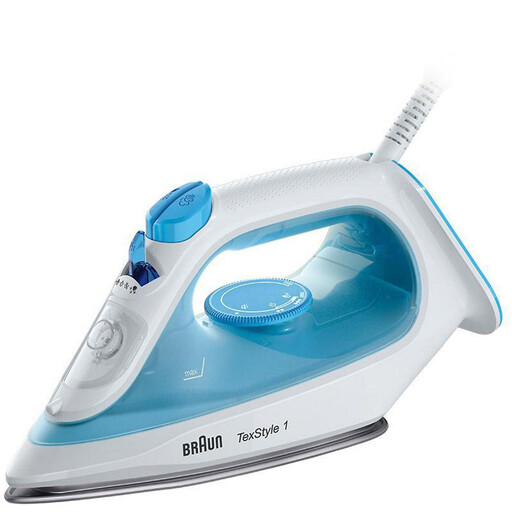
Why it suits this profile: This compact model has a 220 ml water tank, a stated heat-up time of 35 seconds and weighs approximately 1 kg. That makes it easy to use every day and simple to store.
The specifications list not only 2,000 watts, but also 25 g/min of steam, a 120 g steam shot and an anti-drip function. This allows you to assess power and steam capacity separately.
2000 watts, 25 g/min of steam, self-cleaning function, anti-drip and automatic refill.
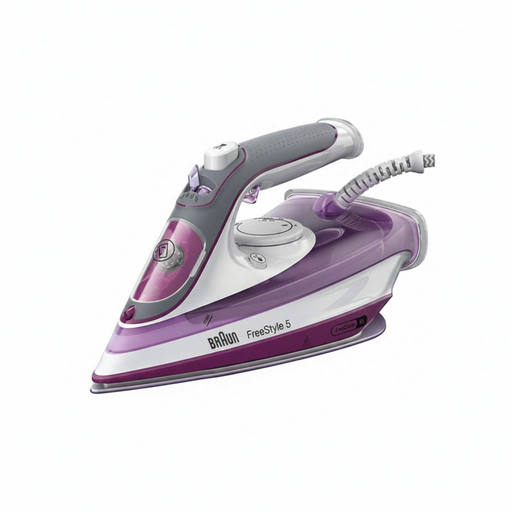
Why it suits this profile: The combination of 2,600 watts, 50 g/min of continuous steam and a 300 ml tank is well suited to households that regularly iron several garments in succession.
Alongside the power rating, the product information mentions anti-drip protection, automatic shut-off and a self-cleaning system. This makes the safety and maintenance features clear.
50 g/min of steam, 180 g steam shot, 300 ml tank and automatic shut-off after 30 seconds when left horizontally.
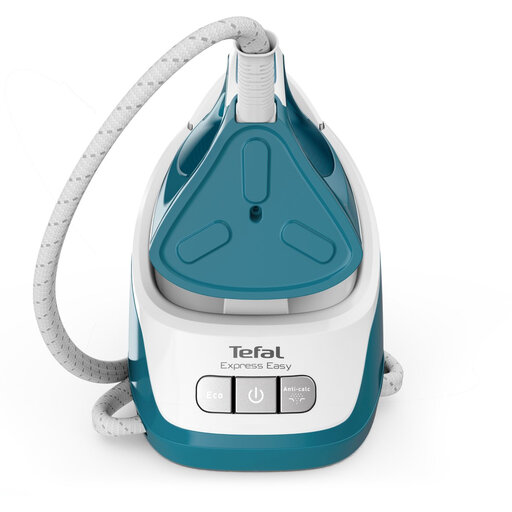
Why it suits this profile: This steam generator has a removable 1.7-litre tank and is designed for longer ironing sessions. However, its base requires more space than a traditional steam iron.
The large tank means you need to refill it less often, while CalcClear maintenance is explicitly mentioned in the product information. Longer sessions therefore go hand in hand with attention to descaling.
5.8 bar pump pressure, 120 g/min of continuous steam, 350 g steam shot and vertical steaming.
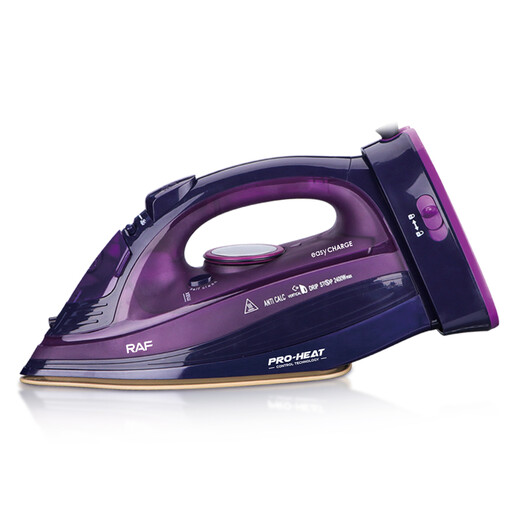
Why it suits this profile: The cordless design with a 360° charging base gives you freedom of movement when ironing sheets, curtains and large garments. The 320 ml tank is suitable for short to medium-length sessions.
The ceramic soleplate, anti-drip function and self-cleaning feature are listed separately. Bear in mind that a cordless model needs to be placed on its charging base from time to time.
2000 watts, ceramic soleplate, 15–25 g/min of steam, 320 ml tank and cordless use.
We’ve put together a complete, up-to-date list of products that fully meet these strict selection criteria and the applicable European safety regulations.
That depends on the duration of use, steam setting and model. A steam generator often has a larger tank and higher continuous steam output, meaning fewer interruptions during longer sessions. For ironing just a few shirts, a compact steam iron may be more practical. So do not compare electricity consumption alone; also consider the time required and heat-up time.
Its lifespan depends mainly on water hardness, maintenance and usage. Empty the tank after use if the instructions recommend doing so, and use the self-cleaning or anti-limescale function according to the stated procedure. Limescale build-up can block the steam holes. According to the product information, the statutory warranty for many of the models mentioned is at least two years; keep your proof of purchase and check the terms and conditions.
No. Look specifically for a vertical steam function or vertical steam shot in the specifications. Keep the appliance pointed away from your body and other people when steaming vertically. A steam iron also does not always replace a clothes steamer: an iron’s soleplate is primarily designed to smooth textiles on a flat surface.
