
Vandaag of morgen in huis

Kwaliteit gegarandeerd

Welkomstaanbiedingen ontgrendelen: GRATIS bezorging | Tot 80% korting | Gratis 30 dagen JoyPlus-proefperiode
Download de app
A steam iron can make light work of a pile of laundry, but not every model suits every household. A compact iron is handy for a few shirts, while a steam generator is better suited to larger loads. If you mainly want to freshen up clothes on a hanger, a clothes steamer may be a better choice.
When comparing models, don’t just look at the wattage or an impressive steam boost. The water tank capacity, maintenance requirements and safety features all have just as much impact on how easy an appliance is to use day to day.
A high wattage, such as 2,400 or 3,200 watts, mainly tells you about how quickly the iron heats up and how much energy it uses while in operation. It doesn’t automatically tell you how much steam the iron produces or how well it handles thick fabrics. So, look at these features too:
A tank of around 200 to 350 ml is suitable for short ironing sessions, but you may need to refill it frequently when dealing with a lot of laundry. This interrupts your ironing and is particularly inconvenient when you want to get through bedding, shirts and trousers in one go.
A steam iron with a large water tank lets you iron for longer. A steam generator takes this a step further, with tanks of around 1.3 to 2 litres. Check whether the tank is removable and can be filled under the tap.
An anti-scale iron reduces the effects of limescale, but you’ll still need to maintain it. Self-cleaning, an anti-scale rod or a Calc-Clean system will only work properly if you follow the instructions. Limescale can build up more quickly in hard water areas.
Also look for an anti-drip function. According to product descriptions from various brands, this helps reduce water droplets at lower temperatures, but it won’t prevent every stain if the iron is used incorrectly or the tank is overfilled.
For everyday ironing, a continuous steam output of around 40 grams per minute or more is a useful benchmark. According to their product specifications, models with an output of 50 to 60 grams per minute produce more steam to tackle creases in cotton and linen. A powerful steam boost of 180 to 250 grams per minute can help with thicker fabrics.
A steam generator has a separate base unit and typically reaches higher figures. Examples in the range list a continuous output of 120 grams per minute and steam boosts of 350 to 510 grams per minute. These figures come from the manufacturer’s or retailer’s product information; results also depend on the fabric, temperature and ironing technique.
Choose a standard steam iron if space is limited and you usually have smaller amounts of laundry to iron. A 300 ml tank is practical in this case. For a household with lots of laundry, a steam generator with a 1.3 to 2 litre tank makes more sense. Bear in mind that the base unit is larger and takes up more space when stored.
A ceramic soleplate or ceramic coating generally glides smoothly and is easy to clean. Always check whether the soleplate is scratch-resistant and whether the steam vents are easy to reach for cleaning.
Automatic shut-off is a useful safety feature. According to the product specifications, the Braun FreeStyle 5 SI5037 switches off after 30 seconds when left horizontally and after 8 minutes when left upright. Not every model has this feature: the Tefal FV2838E0, for example, states that it does not have automatic shut-off. However, never leave a hot iron unattended.
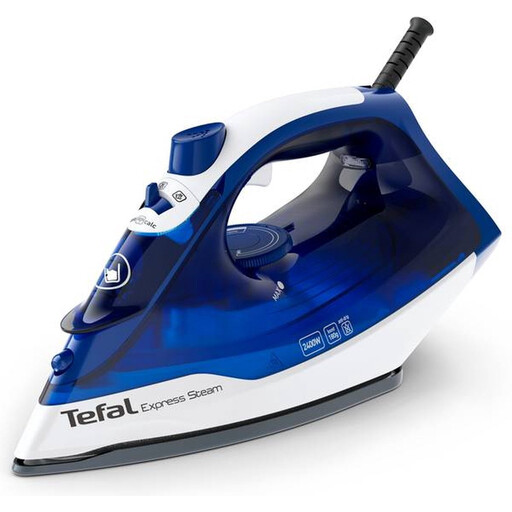
Why it suits this need: This model is designed for everyday ironing, with 2,400 watts, a ceramic soleplate and a vertical steam function.
The product specifications list a 270 ml tank, anti-drip function and a steam boost of 180 g/min. Please note: automatic shut-off isn’t listed for this model.
2,400 watts, vertical steam, ceramic soleplate and automatic temperature selection, according to the product listing.

Why it suits this need: This powerful steam iron combines 3,200 watts with a Micro-Calc filter and a stronger steam boost.
The model features a Micro-Calc filter, a Calc Stick and a self-cleaning function. Check the care instructions to see whether it’s suitable for use with your tap water.
60 g/min variable steam, 250 g/min steam boost, 350 ml tank and automatic shut-off, according to the product details.
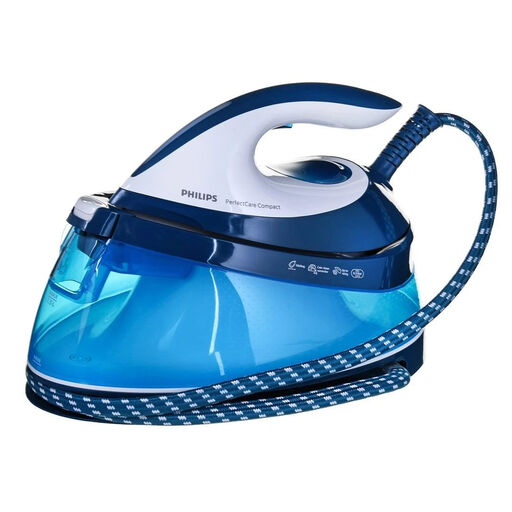
Why it suits this need: The 1.5 litre tank and continuous steam output of 120 g/min are designed for longer ironing sessions with fewer refills.
The tank is removable, and Philips says the Smart Calc-Clean system lets you know when descaling is needed. However, the base unit does require extra storage space.
1.5 litre water tank, 400 g steam boost, vertical steam and automatic shut-off, according to the product information.
We’ve put together a full, up-to-date list of products that meet these strict selection criteria and the applicable European safety requirements.
A steam iron smooths clothes against an ironing board. It’s ideal for creating sharp creases in shirts, trousers and table linen. A clothes steamer works vertically, making it more convenient for dresses, coats, curtains or a quick refresh.
A clothes steamer doesn’t always replace an iron. The Braun QuickStyle 3, for example, has a 70 ml tank, a 30-second heat-up time and a steam output of 20 g/min. It’s suitable for quick touch-ups or travel, but less so for a large basket of laundry.
Not necessarily. A steam generator may get the job done more quickly thanks to its higher steam output, but it also uses energy to power a separate base unit. Check whether it has an eco mode, how long you use it for and how much laundry you iron per session.
Its lifespan depends on water quality, descaling, storage and how often you use it. Empty the tank after use if the instructions recommend doing so, and clean the soleplate carefully. When buying, also check the statutory guarantee and any manufacturer’s warranty.
No. Look specifically for a vertical steam function in the specifications. Hold the appliance far enough away from the fabric, and never direct hot steam at people, animals or electrical appliances.
