
Vandaag of morgen in huis

Kwaliteit gegarandeerd

Welkomstaanbiedingen ontgrendelen: GRATIS bezorging | Tot 80% korting | Gratis 30 dagen JoyPlus-proefperiode
Download de app
A steam iron can make a mountain of laundry much easier to deal with, but not every model suits the same way of working. Someone who mainly touches up shirts has different requirements from a family ironing several loads a week. And for a quick outfit refresh, a clothes steamer can sometimes be more practical than a traditional iron.
Pay particular attention to these three common pitfalls:
Continuous steam output is usually given in grams per minute (g/min). This indicates how much steam the appliance produces during normal use. A higher figure can be useful for thicker fabrics, but the result also depends on the temperature setting and soleplate.
The steam boost is a short burst of additional steam, for example to tackle creases in cotton or linen. Models such as the Braun FreeStyle 5 list 50 g/min of continuous steam and a steam boost of 180 g. A steam generator usually has a higher water capacity and steam output, such as the Philips 3000 Series with 120 g/min of continuous steam and a 350 g steam boost.
A reservoir of around 150 to 350 ml is suitable for a standard steam iron. A steam generator often has a capacity of 1 to 2 litres, making it suitable for longer sessions. The trade-off is that the base unit takes up more space.
Look for an anti-scale function, self-cleaning system or removable limescale collector. These features make maintenance easier to manage, but they do not eliminate limescale build-up entirely. Always follow the instructions and check whether tap water is permitted. Some clothes steamers, such as the Tefal Pure Pop, specify untreated tap water and advise against adding anything else.
A ceramic soleplate is often chosen for its smooth surface and even heat distribution. Also look for an anti-drip function to help prevent water marks at lower temperatures.
An automatic switch-off is a useful safety feature if the appliance is left unused for an extended period. It is not a substitute for supervision: a hot soleplate and steam can cause burns. Place the iron on a stable surface, unplug it before filling and allow it to cool before cleaning or storing it.
Manual temperature control is important for delicate clothing. Always check the care label. Vertical steaming is useful for hanging clothes, curtains or a quick refresh, but a clothes steamer is not always designed to create sharp creases in thick fabrics.
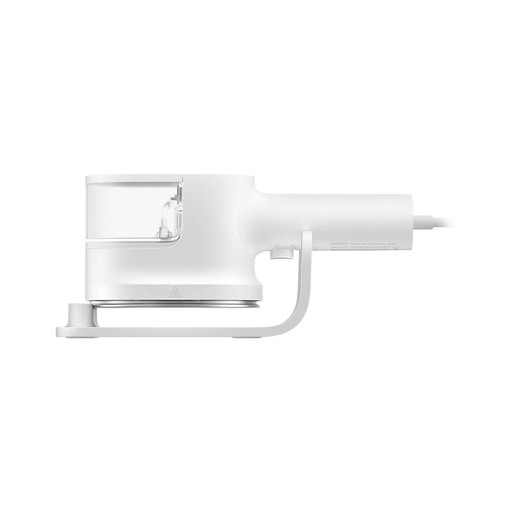
Why it suits this profile: This 2-in-1 iron combines dry and steam ironing in a compact design. With a 0.15-litre reservoir, 1200 W power rating and a warm-up time of around 30 seconds, it is well suited to smaller households and occasional use.
The specifications make it clear that this is a compact appliance. So don’t expect a large reservoir for a long ironing session, but you do get a practical combination of dry ironing, continuous steam and vertical steaming.
Maximum steam output of 22 g/min, powerful steam boost, automatic switch-off and a manageable weight of 0.77 kg.
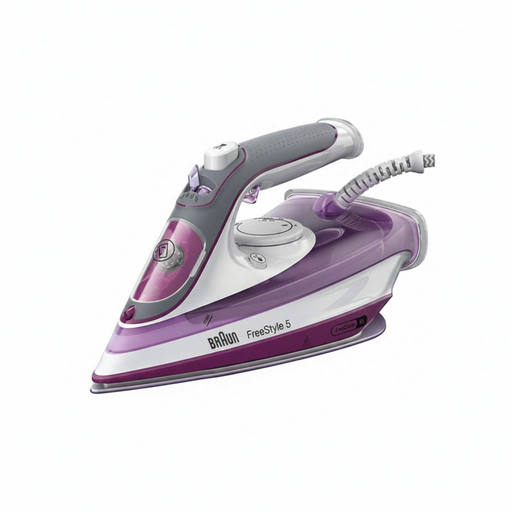
Why it suits this profile: This model is designed for regular ironing, with a 2600 W power rating, a 300 ml reservoir and continuous steam output of 50 g/min. The ceramic soleplate and ergonomic handle are practical when dealing with larger loads of laundry.
The manufacturer specifies automatic descaling and switch-off: after 8 minutes in an upright position and 30 seconds in a horizontal position. Check the instructions for exact maintenance requirements and never leave the appliance unattended.
180 g steam boost, 50 g/min continuous steam, 300 ml reservoir and self-cleaning system according to the product details.
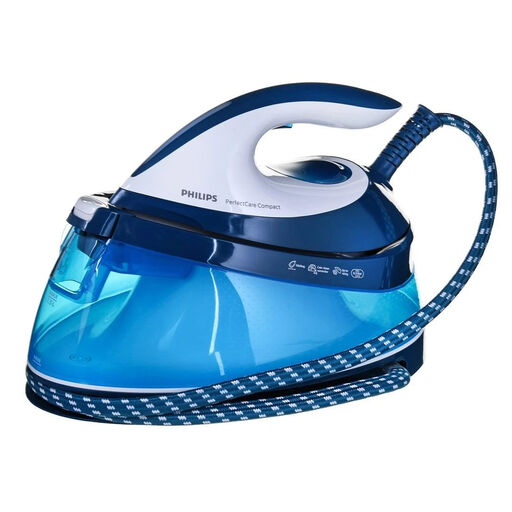
Why it suits this profile: The 1.5-litre water capacity and 120 g/min of continuous steam are designed for long ironing sessions. This steam generator is suited to households processing a lot of clothing at once and looking to refill less often.
The large tank limits the number of interruptions. However, the appliance takes up more space than a standalone steam iron and, according to the product information, takes around 2 minutes to heat up.
1.5-litre reservoir, 400 g steam boost, vertical steaming, automatic switch-off and Smart Calc-Clean according to the product description.
A clothes steamer or handheld steamer works without an ironing board and is useful for dresses, jackets, curtains and clothes that simply need a quick refresh. According to the product details, the Tefal Pure Pop DT2025 has a warm-up time of 15 seconds, steam output of 20 g/min and a 70 ml reservoir. This makes it suitable for short sessions and travel.
For sharp creases, shirts and bed linen, a steam iron remains more practical. If you need both functions, consider a compact 2-in-1 model. A travel iron should also be more than just small: check the voltage, cord length, water reservoir and automatic switch-off too.
We’ve put together a complete, up-to-date list of products that fully meet these strict selection criteria and the applicable European safety regulations.
That depends on how long you use it and its power rating. A steam generator often has a larger reservoir and produces plenty of steam, but it uses a separate base unit. For short ironing sessions, a standard steam iron may be more practical. Compare the power rating, warm-up time and frequency of use rather than looking at wattage alone.
Only use the type of water recommended by the manufacturer, and do not add perfume, fabric conditioner or other substances unless permitted. Empty the reservoir after use and use the anti-scale function or self-cleaning programme according to the instructions. Maintenance may be needed more frequently in hard-water areas.
Yes, if the model is designed for it. Hold the iron upright and use the vertical steam function on hanging clothes. Keep your distance when steaming silk and other delicate fabrics, and test an inconspicuous area first. A handheld steamer is often lighter and easier to manoeuvre for this purpose.
