
Vandaag of morgen in huis

Kwaliteit gegarandeerd

Welkomstaanbiedingen ontgrendelen: GRATIS bezorging | Tot 80% korting | Gratis 30 dagen JoyPlus-proefperiode
Download de app
A steam iron can quickly smooth out a shirt, but not every model suits every ironing routine. A compact appliance is handy for a small home or while travelling, while a steam generator offers greater comfort when you have full laundry baskets. If you mainly want to freshen up clothes, a clothes steamer or handheld steamer may be more suitable.
The biggest buying mistakes usually come from three incorrect assumptions:
Continuous steam output is usually stated in grams per minute (g/min). This indicates how much steam the appliance produces during normal use. A higher figure can help with thicker fabrics, but the result also depends on the temperature control, soleplate and the way you iron.
A steam boost is a short, more powerful burst of steam. This is useful for jeans, linen, collars and set-in creases. A standard steam iron might deliver 25 to 60 g/min continuously, while a steam generator often provides around 120 g/min according to the product specifications, with a much more powerful steam boost.
Also watch out for conflicting information. If in doubt, check the technical specifications and user manual rather than relying solely on the product page.
For everyday use, a tank of around 200 to 350 ml is often a practical middle ground. The appliance remains relatively easy to handle, while still allowing you to iron several garments in succession. An iron with a large water tank or a steam generator is better suited to families and large amounts of laundry.
Limescale in tap water can block the steam vents. Therefore, look for:
An anti-limescale function does not mean that maintenance is unnecessary. Always follow the manufacturer’s water and cleaning instructions. Do not add perfume, fabric softener or an unsuitable descaling product unless the manual permits it.
A ceramic soleplate distributes heat across the surface and is generally easy to clean. The shape is just as important: a narrow precision tip helps you iron around buttons and collars, while a rounded rear is less likely to catch on the fabric.
An anti-drip system helps limit water droplets at lower temperatures. This can help prevent marks on clothing, but empty the tank after use and allow the appliance to cool before storing it.
Also check for:
A cordless iron gives you greater freedom of movement, but it needs to be returned to its charging base regularly. During long ironing sessions, this can cause interruptions.
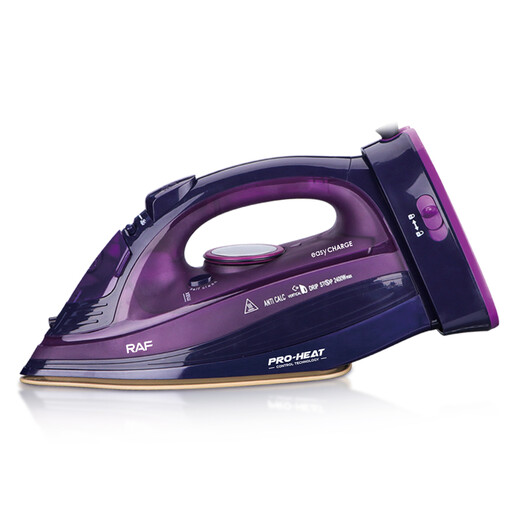
Why it suits this profile: This model combines a cordless design with a charging base, making it suitable for regular ironing at home or occasional use while travelling.
The product specifications list 2000 W, a 320 ml tank, 15–25 g/min of steam, a ceramic soleplate, anti-drip protection and self-cleaning. However, check the charging time between ironing sessions.
Cordless freedom of movement, a ceramic soleplate and a relatively generous tank for a handheld model.

Why it suits this profile: A good choice for anyone who values plenty of steam, a filter solution to tackle limescale residue and settings for different fabrics.
The listed specifications state 3200 W, up to 60 g/min of variable steam, a 250 g/min steam boost, a 350 ml tank and a Calc Stick. The filter must be maintained according to the instructions.
Powerful steam boost, anti-drip protection, automatic shut-off and a ceramic-coated soleplate.
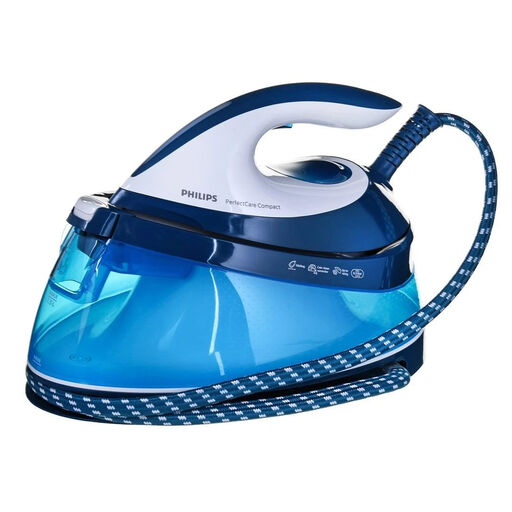
Why it suits this profile: The combination of a large tank and high continuous steam output is ideal for families and users who iron several loads in succession.
The model lists 120 g/min of continuous steam, a 400 g/min steam boost, a 1.5-litre tank, vertical steam and Smart Calc-Clean. However, the base takes up more space than a handheld model.
Large water tank, automatic shut-off, vertical steam and a system that indicates when descaling is required.
We have put together a complete, up-to-date list of products that fully meet these strict selection criteria and the applicable European safety regulations.
Choose a classic steam iron if you want neat collars, cuffs and sharp creases. A clothes steamer is more convenient when you want to freshen clothes on a hanger without using an ironing board. Compact models such as a travel iron or handheld steamer are suitable for holidays and small touch-ups, but they usually have a smaller tank.
A steam generator is particularly useful when you have a lot of laundry. Its separate base holds more water and generally produces a higher continuous steam output. On the other hand, the appliance requires more storage space and is often heavier.
Its lifespan depends on usage, water quality and maintenance. Empty the tank after use, remove limescale according to the instructions and only clean the soleplate with suitable products. An appliance with a self-cleaning system does not remain completely free of limescale automatically.
That depends on how often you iron. A handheld model usually uses less water and is quicker to put away. A steam generator can be more efficient for large amounts of laundry because you need to refill it less often and can move through several layers of fabric more quickly. Compare the power rating, usage time and your own routine.
No. Check that vertical steam is explicitly listed in the product specifications. Keep clothing away from your body, use a sturdy hanger and do not touch the hot soleplate or steam head. Steam can cause burns, even when the appliance appears compact.
