
Vandaag of morgen in huis

Kwaliteit gegarandeerd

Welkomstaanbiedingen ontgrendelen: GRATIS bezorging | Tot 80% korting | Gratis 30 dagen JoyPlus-proefperiode
Download de app
A steam iron can quickly freshen up a shirt, school uniform or curtain. Yet many households choose a model based on one eye-catching figure, such as wattage or a powerful steam boost. That can be misleading. High power does not automatically indicate ease of use, steam distribution or lifespan.
As a Joybuy Product Recommendation Officer, I therefore focus mainly on verifiable specifications. Below, you can find out which features matter, which common pitfalls are often overlooked and which type of steam iron suits your situation.
A power rating of 2400 or 2600 watts can help the iron heat up quickly, but it is not a complete indicator of performance. Also consider the continuous steam output, soleplate and water tank. A high-wattage model with a small tank can still be inconvenient during a large ironing session.
A steam boost is activated briefly to tackle stubborn creases. Continuous steam output, measured in grams per minute, has a greater impact on how smoothly you can work during normal ironing. A steam generator generally has a larger tank and a higher constant steam output, but it also takes up more space.
A self-cleaning iron or anti-scale iron still requires maintenance. Limescale build-up depends on water hardness and usage. Always follow the instructions for cleaning, emptying and descaling. A filter, limescale collector or self-cleaning programme can make maintenance easier, but does not eliminate the need for it completely.
For everyday use, continuous steam output of around 25 to 50 grams per minute is a useful point of comparison. A powerful steam boost is particularly useful for denim, linen, thick cotton fabrics and deep creases. Also check whether vertical steaming is listed if you want to treat hanging clothes, curtains or upholstery.
When reading product information, look out for the difference between:
According to the product description, the Philips 3000 Series produces 40 grams of continuous steam per minute and a steam boost of 180 grams, for example. The Tefal SV8055 Express Anti-Calc is listed as producing 120 grams per minute, with 6.5 bar of pressure and a 450-gram steam boost. These figures are product specifications; the practical result also depends on the fabric, temperature and ironing technique.
A ceramic soleplate is often chosen for its smooth gliding performance and easy cleaning. Also check whether the soleplate has a narrow or precision tip for collars, buttons and seams. A rounded shape can make it easier to move in multiple directions.
Watch out for contradictory or incomplete product information. “Ceramic”, for example, may refer to a coating rather than solid ceramic. So check the stated material, dimensions and care instructions. Do not use a scouring pad or metal object on the soleplate.
A steam iron with a large water tank is useful for families and long ironing sessions. Compact models often have a tank of around 200 to 350 ml. A steam generator may have a tank of 1.4 to 2 litres, but the base takes up more space on or next to the ironing board.
A transparent tank makes the water level easy to see. A removable tank is easier to fill and clean. Also check whether the model has an anti-drip system, self-cleaning programme or removable limescale collector.
Automatic shut-off is a useful safety feature if the appliance is left stationary for an extended period. The shut-off time varies by model and position. According to the product description, the Braun TexStyle 3 switches off after 8 minutes when upright or 30 seconds when horizontal. Not every model has this feature; the Braun TexStyle 1, for example, is not listed as having automatic shut-off.
A cordless iron gives you greater freedom of movement, but it needs to be placed on a charging base regularly. Check how long the appliance can be used per charge and whether the base is stable. This can be practical for a student or small household; for a large pile of laundry, a corded model may provide more consistent performance.
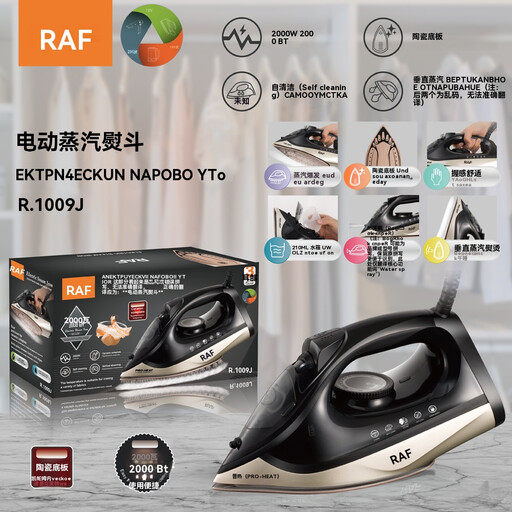
Why it suits this profile: This model offers a ceramic soleplate, vertical steaming and a visible 210 ml water tank for everyday use in a compact household.
Alongside 2000 watts, the product description mentions self-cleaning, a spray function and vertical steaming, so you do not have to choose based on power alone.
2000 watts, ceramic soleplate, visible 210 ml tank and dual voltage according to the product details.
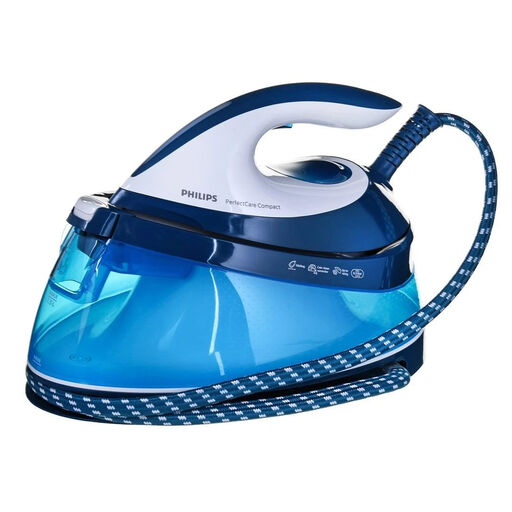
Why it suits this profile: The large tank and automatic temperature selection are designed for long ironing sessions involving different fabrics.
The product specifications list both 120 g/min of continuous steam and a 1.5-litre tank, rather than just a short steam boost.
1.5-litre water tank, 120 g/min of continuous steam, a 400 g steam boost and automatic shut-off according to the product information.
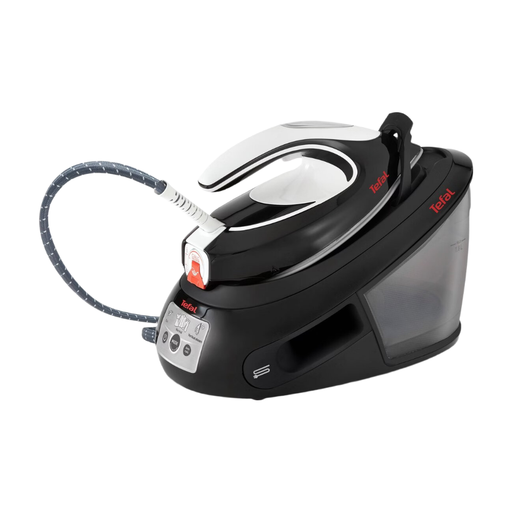
Why it suits this profile: This is a good choice if you regularly iron large amounts of laundry and have room for a separate steam generator station.
The limescale collector makes maintenance more tangible than a general claim about anti-scale performance. Before use, however, check the prescribed cleaning procedure.
6.5 bar steam pressure, 120 g/min of continuous steam, a 450 g steam boost and automatic shut-off according to the product description.
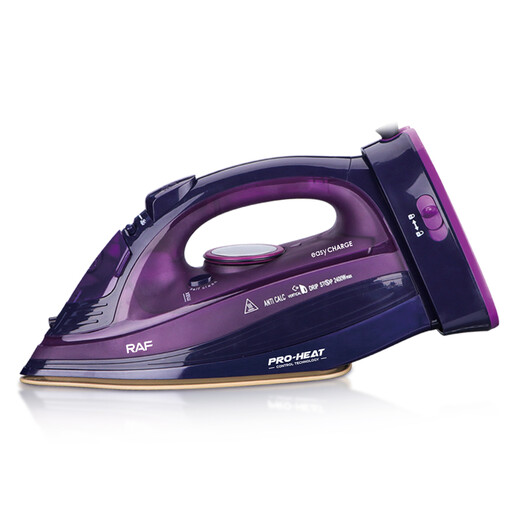
Why it suits this profile: A cordless iron is convenient in a smaller home or for quick jobs, provided you keep the charging station within easy reach.
The product specifications list a 360-degree soleplate, anti-drip system and self-cleaning function. You must still place the appliance on the charging base according to the warnings.
Cordless design, 320 ml water tank, ceramic soleplate and 15–25 g/min steam output according to the product details.
We have put together a complete, up-to-date list of products that fully meet these strict selection criteria and the applicable European safety regulations.
Not automatically. A steam generator usually has a larger tank and higher steam output, allowing you to get through larger amounts of laundry more quickly. However, the appliance also uses a base station and may take up more space. For a few garments a week, a standard steam iron is often more practical.
Its lifespan depends on usage, water quality, maintenance and storage. Empty the tank after use if the instructions require it, remove limescale as directed and store the cooled appliance upright or on the designated base. An anti-scale system helps with maintenance, but does not guarantee a specific lifespan.
Always follow the instructions for the specific model. Some appliances are suitable for tap water, while hard water may call for a mixture containing demineralised water. Do not use perfume, vinegar or descaler unless the manufacturer explicitly recommends it. This helps prevent damage to the appliance and stains on your clothes.
