
Vandaag of morgen in huis

Kwaliteit gegarandeerd

Welkomstaanbiedingen ontgrendelen: GRATIS bezorging | Tot 80% korting | Gratis 30 dagen JoyPlus-proefperiode
Download de app
A steam iron can make light work of a laundry basket full of shirts, bedding and curtains. However, a high wattage or a powerful steam burst doesn't automatically mean an appliance is right for your home. The difference often lies in the details – the water tank, the soleplate, descaling, and how you actually use the iron.
A power rating of 2,400 or 3,100 watts mainly tells you about heat-up time and energy consumption during heating. It doesn't fully indicate how much steam the iron produces. So, also check the continuous steam output in grams per minute and the steam burst.
A powerful steam iron with limited steam output can, in practice, be less suitable for thick fabrics than a model with a lower wattage but well-tuned steam production.
An iron with a steam burst can temporarily release extra steam for stubborn creases. This is useful for denim, linen and thick cotton. For a whole ironing session, however, the continuous steam output is more important.
Also pay attention to the unit: continuous steam is usually given in g/min, whereas a steam boost is sometimes shown as a separate amount per burst.
Limescale can clog the steam vents, especially in areas with hard tap water. A self-cleaning iron, anti-scale function or filter can make maintenance easier, but they don't replace regular cleaning.
An anti-drip iron also helps to prevent water droplets from forming on clothes when you iron at a lower temperature. Always check the manual for the correct type of water. Manufacturer instructions can vary by model.
For everyday use, a continuous steam output of around 25 to 50 g/min is a useful benchmark within this product category. A higher steam burst is particularly relevant for thick or heavily creased fabrics.
If you regularly iron large amounts of laundry, you might consider a steam generator iron. These appliances have a separate base with a larger water tank and generally deliver sustained steam. They do take up more space and are less convenient for a quick touch-up.
A ceramic soleplate is easy to clean and is used in many models. Also look at the shape of the soleplate. A rounded back or special design can help when you move backwards over buttons, pockets or zips.
A precision tip at the front is practical for collars, seams and the area between buttons. Also check whether the soleplate is scratch-resistant or self-cleaning according to the product specifications; such features depend on the specific model and the coating used.
A tank of around 220 to 350 ml suits short or average ironing sessions. For a large household, a base station with 1.4 to 2 litres is more convenient. You'll need to refill less often, but the appliance requires more storage space.
Also look out for:
The models below have been selected based on verifiable product specifications. Brand claims about comfort, glide performance or protection are not presented as a general guarantee.
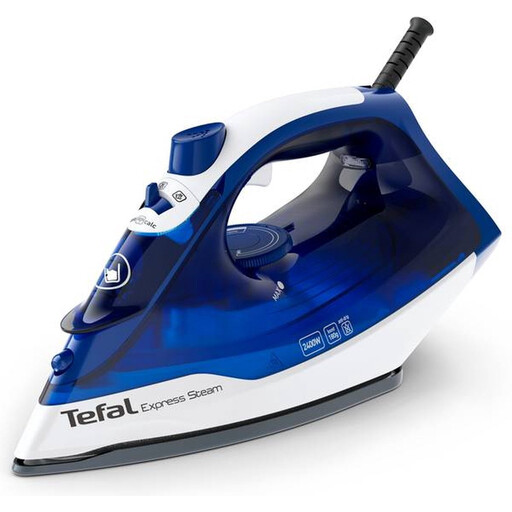
Why this fits the profile: This model features a ceramic soleplate, 2400 watt power, automatic temperature selection and a 270 ml tank. That's a straightforward combination for regular household use.
The product specifications list both continuous steam at 40 g/min and a steam burst of 180 g/min. This means you can assess these values separately.
Ceramic soleplate, anti-drip function, vertical steam and a relatively compact tank.
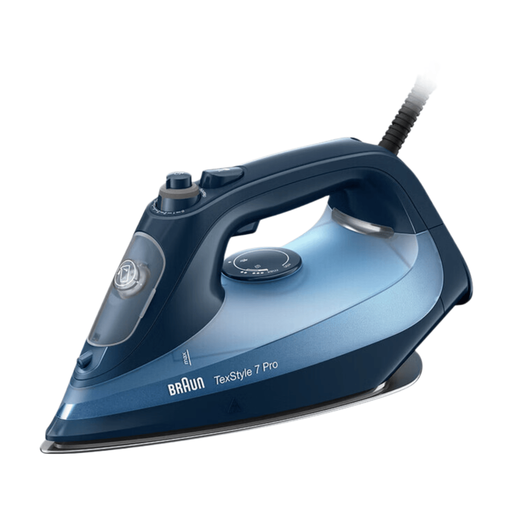
Why this fits the profile: According to the product specifications, this Braun steam iron combines 3,100 watts with 50 g/min continuous steam and a steam boost of up to 225 g/min.
The steam values, the 300 ml tank and the self-cleaning function are all clearly listed separately. Anti-drip and automatic shut-off are also included in the description.
High steam burst, precision tip, self-cleaning and automatic shut-off.

Why this fits the profile: A household with lots of shirts, bedding or curtains benefits from a large tank. According to the product specifications, this system has a 2-litre tank and a continuous steam output of up to 190 g/min.
The large water tank reduces interruptions. Choosing a steam generator also makes it clear that this model is designed for larger volumes, not just quick fixes.
2-litre tank, continuous steam up to 190 g/min and vertical steam function.
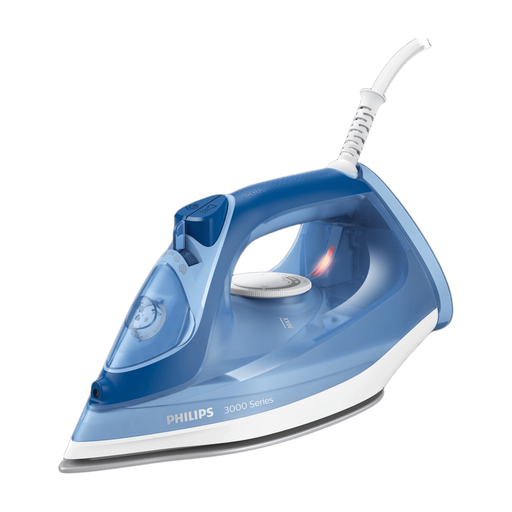
Why this fits the profile: This Philips steam iron features a ceramic soleplate, 40 g/min continuous steam, a steam boost of 180 g and a 300 ml tank.
In addition to a steam boost, anti-drip, automatic shut-off and vertical steaming are also listed. This makes the model suitable for clothes on a hanger as well as standard ironing.
Automatic shut-off, vertical steam, ceramic soleplate and 35-second heat-up time according to the product specifications.
We've put together a full, up-to-date list of products that fully meet these strict selection criteria and current European safety regulations.
Use the appliance according to the manual and clean the steam vents regularly. Do not leave water in the tank for long periods after use if the manufacturer advises emptying it. Descale a steam generator or self-cleaning iron at the recommended time.
Clean a ceramic soleplate with a soft, damp cloth when it has fully cooled down. Abrasive cleaners can damage the coating. Before each ironing session, check the cord, plug and soleplate for visible damage.
That depends on the amount of laundry. A steam generator usually has a larger tank and a higher continuous steam output. For a few items of clothing, a standard steam iron is more compact and quicker to put away.
Don't just look at wattage. Models in the range vary from around 2,000 to 3,200 watts. Always compare this with the continuous steam output, the steam burst, the tank and the safety features.
That depends on the water hardness, how often you use it and the manufacturer's instructions. A self-cleaning function helps with maintenance, but still check the manual. If you notice less steam, spitting or limescale particles on clothes, cleaning is usually needed.
