
Vandaag of morgen in huis

Kwaliteit gegarandeerd

Welkomstaanbiedingen ontgrendelen: GRATIS bezorging | Tot 80% korting | Gratis 30 dagen JoyPlus-proefperiode
Download de app
A steam iron can be a quick solution for creased shirts, bedding and curtains. However, it is not wise to look only at the wattage or a striking marketing claim. A compact model may be convenient for a quick touch-up, but become impractical when faced with a full laundry basket. A steam generator offers more capacity, but also takes up extra space.
The right choice therefore depends on three things: how much you iron, which fabrics you work with and how much space you have.
A high wattage mainly indicates the heating power and heating-up time. It does not automatically tell you how much steam the appliance produces. So also look at the continuous steam output in grams per minute and the powerful steam boost.
A 2,000-watt model may heat up quickly, but provide less consistent steam than a steam generator with lower or similar power. For stubborn creases, steam output and the soleplate are at least as important.
A steam iron with a 150 to 350 ml water tank is compact, but requires more frequent refilling when ironing larger amounts of laundry. A handheld steamer with a 70 or 160 ml tank is primarily intended for a few items of clothing.
If you iron a lot of shirts, trousers or bedding every week, it is better to consider a steam generator with a tank of around 1.4 to 2 litres. Also check whether the tank is removable and can be refilled during use.
A product description may state that an appliance is suitable for various fabrics. That does not mean every fabric should be treated at the same temperature or with the same amount of steam. Always check the care label and test delicate materials on an inconspicuous area first.
A vertical steam function is useful for hanging clothes and curtains, but it does not always replace ironing thick cotton or linen fabrics flat.
The continuous steam output determines how much steam is available during normal use. For regular ironing, values such as 45 to 60 g/min on a traditional iron provide a useful point of comparison. A steam generator may deliver, for example, 120 to 150 g/min.
The steam boost is intended for localised, stubborn creases. Bear in mind that product pages sometimes use different measurement methods. Where possible, compare models within the same product category.
A ceramic soleplate is often chosen for its smooth surface and easy cleaning. Also check whether the soleplate has a precision tip for collars and buttons, and whether there are enough steam vents at the front.
A smooth soleplate helps the appliance move evenly across the fabric. This makes ironing more comfortable, but does not prevent damage caused by using the wrong temperature.
Limescale deposits can block the steam vents, particularly with frequent use of hard tap water. An anti-scale function, limescale collector or self-cleaning iron reduces the maintenance required, but does not eliminate the need for cleaning. Always follow the brand’s instructions on water use and descaling.
Automatic switch-off, an anti-drip function and a clear water-level indicator are practical safety and convenience features. Also check the cord length, weight and the stability of the heel or base.
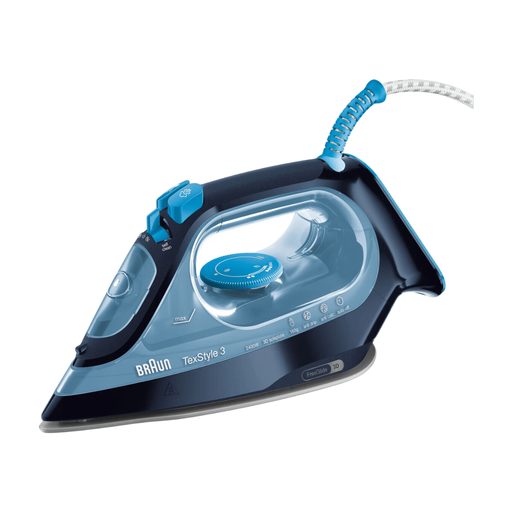
Why it suits this profile: This traditional steam iron is suitable for households looking for a straightforward appliance for regular, but not particularly heavy, ironing. According to the product information, it is ready to use within a maximum of 35 seconds.
Alongside 2,400 watts, the product specifies a steam boost of up to 170 g and an anti-scale system. This means you do not have to rely on wattage alone.
2,400 watts, automatic switch-off and a steam boost of up to 170 g. The product information also mentions a FreeGlide 3D SuperCeramic soleplate.
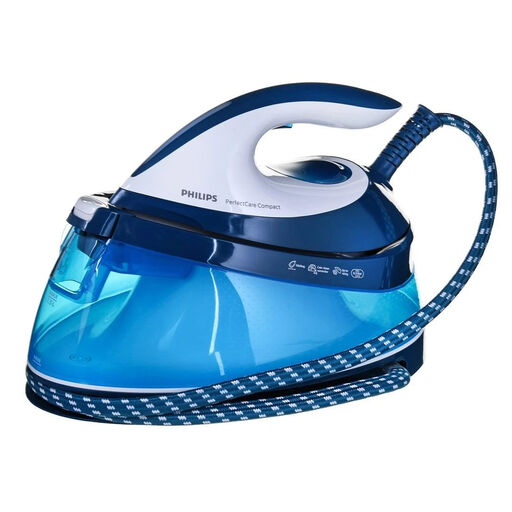
Why it suits this profile: A household with a lot of laundry can benefit from the 1.5-litre tank and continuous steam output of 120 g/min. The base takes up more room than a standard iron, but is designed for longer ironing sessions.
The specifications show both the continuous steam level and the tank capacity. The Smart Calc-Clean alert indicates when maintenance is required.
1.5-litre water tank, 120 g/min continuous steam, 400 g steam boost and vertical steam function. According to the product information, the appliance is ready to use in approximately 2 minutes.
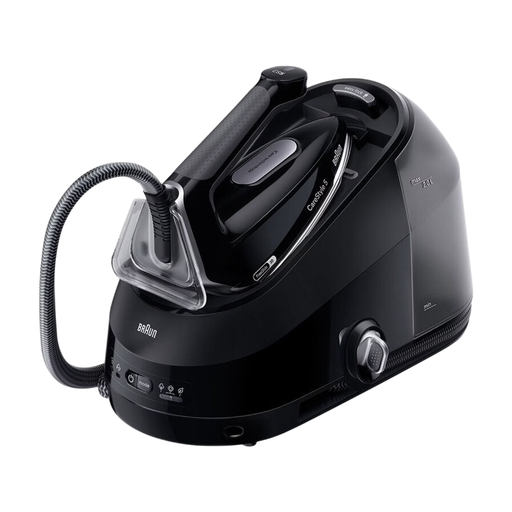
Why it suits this profile: This model is a good fit for families or users who process several baskets of laundry in succession and consider a large tank important.
In addition to the stated 510 g steam boost, this appliance has a removable 2-litre tank. So you are choosing based on capacity and maintenance, rather than a standalone boost claim.
2-litre water tank, 150 g/min steam output, 510 g steam boost, vertical steam and automatic switch-off.
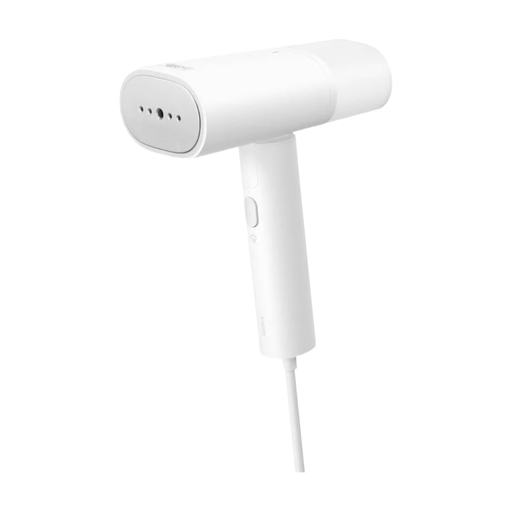
Why it suits this profile: This compact handheld steamer is designed for quick garment care without an ironing board. The 0.16-litre tank and 0.80 kg weight are practical for small households and travel.
The limited tank makes it clear that this is not a replacement for an appliance designed for large piles of laundry. The stated heating-up time of around 25 to 30 seconds suits short periods of use.
1,300 watts, 22 g/min steam output, compact design and use without an ironing board. Keep the steam head away from the fabric in accordance with the safety instructions.
We have compiled a complete, up-to-date list of products that fully meet these strict selection criteria and the applicable European safety regulations.
It depends on the task. A clothes steamer is useful for hanging dresses, jackets and curtains, and works without an ironing board. A steam iron applies more pressure to the fabric and is generally more practical for shirts, trousers, cotton and bedding.
Its lifespan depends on use, water quality, storage and maintenance. Regular descaling, emptying the tank correctly and keeping the soleplate clean can help maintain consistent performance for longer. When buying, also check the warranty and available maintenance information.
Electricity consumption is mainly affected by the wattage and the length of use. A fast-heating iron can be convenient for short sessions, while a steam generator may prove more efficient when you iron continuously for a longer period. So, alongside the wattage, consider how often you iron and how quickly the appliance needs to heat up.
