
Vandaag of morgen in huis

Kwaliteit gegarandeerd

Welkomstaanbiedingen ontgrendelen: GRATIS bezorging | Tot 80% korting | Gratis 30 dagen JoyPlus-proefperiode
Download de app
A steam iron can smooth a pile of shirts, bedding or curtains more quickly. However, it is not advisable to look only at the wattage or a striking marketing term. For example, a high-powered appliance may have a small water tank, while a compact model may be less suitable for large quantities of laundry.
Instead, pay particular attention to the combination of steam output, water capacity, soleplate and maintenance. This helps prevent you from having to refill the tank too often after a few months, dealing with limescale residue or buying an appliance that does not suit your everyday needs.
A high wattage mainly indicates the electrical power and possibly a short heating-up time. It does not automatically tell you how much usable steam the appliance produces. Also check the continuous steam output in grams per minute and the amount of the steam boost.
An iron with a large water tank needs refilling less often, but is generally larger and heavier. For a student room or suitcase, a 150 to 210 ml tank may be more practical. If you iron a lot of laundry every week, you will benefit more from a capacity of 300 to 350 ml or a steam generator with a 1.4 to 1.8-litre tank.
An anti-limescale function, limescale filter or self-cleaning system can make maintenance easier. However, it does not automatically replace emptying, cleaning and following the instructions. Water hardness also varies between locations in the Netherlands. Therefore, check what type of water the manufacturer recommends and how often the system needs to be cleaned.
For everyday ironing, continuous steam of around 40 to 60 g/min is a useful benchmark for standard steam irons. A higher steam boost, for example 120 to 250 g/min, can help with thick fabrics or stubborn creases. Steam generators often have higher figures. Also look at the pressure in bar, but only compare models from the same product category.
A vertical steam function is useful for hanging clothes, curtains or jackets. This function is particularly suitable for freshening garments and reducing visible creases. For a crisp finish on a shirt, horizontal ironing is usually still more practical.
A small tank makes a compact iron lightweight and easy to store, but means refilling it more often. A 300 to 350 ml model is a good middle ground for household use. A steam generator offers greater capacity, but requires additional space on the ironing board and in the cupboard.
Also look for a wide filling opening, a visible water level and the option to refill the tank during use. Always check whether the tank is removable and whether it may only be filled when the appliance is switched off and cool.
A ceramic soleplate or ceramic coating is often chosen for its smooth surface and even heat distribution. The precise composition varies between manufacturers. Therefore, also look for a narrow tip for collars and buttons, an anti-drip system and the recommended temperature settings.
An automatic switch-off is a useful safety feature. The exact activation time varies by model. Always place a hot iron securely on its heel, keep children and pets away and never direct hot steam at anyone.
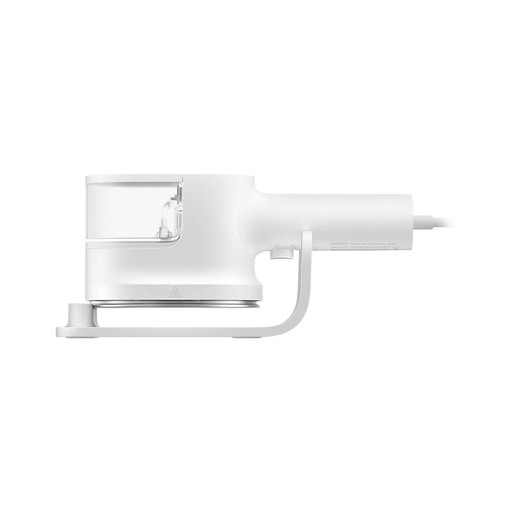
Why it suits this profile: This lightweight 0.77 kg model is suitable for small households, students and travellers with limited storage space. The appliance can be used as both a dry iron and a steam iron.
The product specification states not only 1200 W, but also 22 g/min of steam, a maximum pressure of 2.2 bar and a 0.15-litre tank. This makes the key limitations clear in advance.
Heating time according to the product information: 30 seconds. It also features manual temperature control, vertical steam and automatic switch-off.

Why it suits this profile: This model is designed for households that iron regularly and value extensive steam and maintenance functions.
The manufacturer specifies a Micro-Calc filter, a limescale collector and a self-cleaning soleplate. According to the product information, regularly cleaning the filter system is part of the maintenance routine.
According to the stated specifications: 3200 W, up to 60 g/min variable steam, a 250 g/min steam boost and a 0.35-litre water tank.
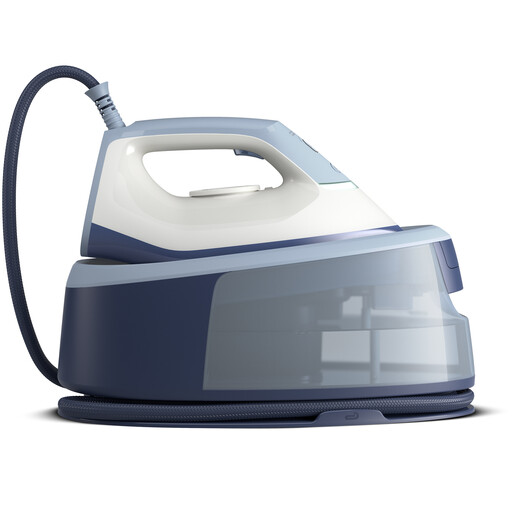
Why it suits this profile: A steam generator with a large tank is ideal for households that iron frequently and in large quantities. The removable 1.4-litre tank reduces the number of interruptions.
The product information gives specific figures: 120 g/min continuous steam, a 350 g steam boost and a heating-up time of approximately 2 minutes. This makes it clear that it is a different type of appliance from a handheld steam iron.
Ceramic soleplate, vertical steam, automatic switch-off and a removable 1.4-litre tank. According to the specification, the appliance weighs 1.03 kg.
We have put together a complete, up-to-date list of products that fully meet these strict selection criteria and the applicable European safety regulations.
Yes, if the model has a vertical steam function. Hang the garment securely, keep your distance from the fabric and follow the manufacturer's instructions. A clothes steamer is often easier for this purpose; an iron with a vertical function also provides a soleplate for horizontal ironing.
Use the water and cleaning method specified in the manual. Empty the tank after use when recommended, and use the anti-limescale function or self-cleaning programme according to the maintenance schedule. Do not add vinegar, perfume or cleaning products unless the manufacturer explicitly instructs you to do so.
Consumption depends on the power, the length of the ironing session and the selected setting. A steam generator often has a higher wattage and produces more steam, but may work more efficiently with large quantities of laundry because you need to stop less often. Compare the stated wattage with how long you use the appliance and choose an eco mode if one is available.
