A steam generator is worth considering if you have several cotton waistcoats or other garments to iron one after another. For just a couple of waistcoats and limited storage space, a standard steam iron may be more practical. The Dutch Consumers’ Association highlights the larger size of steam generators and the space they need for storage. Before use, check the care label for the whole waistcoat, then compare the steam settings, water tank, space taken up by the base and maintenance requirements.
Who is this relevant for?
Anyone ironing crease-prone waistcoats
If you want to iron a cotton waistcoat neatly, follow the care label for the whole garment. GINETEX describes the symbols as guidance on the textile treatments allowed; the outer fabric alone does not determine which heat or steam setting is suitable.
Anyone with a pile of clothes to iron before moving
If you need to iron several waistcoats or other cotton garments one after another, compare the continuous steam output and water tank capacity with the space the generator takes up. The Dutch Consumers’ Association highlights size and storage as points to consider.
Anyone short on storage space
If you’ll need to move the appliance often during your move or have little cupboard space, factor in the separate base of a steam generator. The Dutch Consumers’ Association notes that a generator can be larger and more difficult to store than a standard steam iron.
What should you look for when choosing?
Steam generator
A good fit if: you want to iron several items one after another and the care label allows steaming.
Things to consider: the base takes up space and can be awkward to move or store; the Dutch Consumers’ Association highlights this as a point to consider.
Standard steam iron
A good fit if: you only have a few waistcoats to iron or have little room for a separate base.
Things to consider: during a longer ironing session, the tank capacity may mean you need to refill more often; check the specifications of the model you’re considering.
| What to consider |
What should you check? |
Who should bear this in mind? |
| Fabric and finish |
Read the care label and check the permitted temperature and steam treatment. |
If you don’t want to risk damaging the finish of your waistcoat, follow the care label for the whole garment. Around 33% of consumers prioritise fabric treatment and finish. |
| Continuous ironing |
Compare continuous steam output in g/min with the tank capacity; consider the steam boost separately from the continuous output. |
If you have a pile of clothes to iron, you’ll want to minimise interruptions to refill the tank. Around 27% of consumers prioritise being able to keep going when ironing several items. |
| Space and moving the appliance |
Check whether the base fits on your ironing board and whether you have room to store the appliance. |
If you have little space during your move, consider the appliance’s size and portability before choosing. Around 20% of consumers place the greatest importance on space and portability. |
| Maintenance |
Check the model-specific instructions for water, descaling and any replaceable parts. |
If you plan to keep using the appliance after your move, check in advance what maintenance and consumables it requires. Around 20% of consumers prioritise ease of maintenance. |
Common mistakes
-
Comparing only the maximum steam boost
A steam boost is a peak output. If you’re ironing several items one after another, continuous steam output and tank capacity are separate points to consider.
Compare continuous output in g/min separately from the steam boost, and check whether the base will fit in your available space.
-
Assuming cotton can always be ironed with maximum heat and steam
The care label for the whole waistcoat determines the permitted treatment. Excessive heat can damage the fabric.
Check the ironing symbol before you start, and don’t base the setting on the outer fabric alone.
-
Leaving it until after purchase to check the size
A steam generator has a base alongside the iron and can take up a lot of room on a standard ironing board and in a cupboard.
Measure the available ironing-board and storage space in advance. If you only have a few waistcoats to iron, you could also consider a standard steam iron.
-
Assuming an anti-scale feature means no maintenance
An anti-scale feature slows the build-up of limescale, but maintenance is still necessary. The exact process varies by model.
Follow the instructions on which water to use and how to descale the appliance, and check whether it uses replaceable parts.
Brands to consider
Philips
The models reviewed include the compact PerfectCare Compact GC7840/20 and the separate 3000 Series PSG3000/30; these are different models.
- Philips describes the GC7840/20 as compact and lightweight, and lists OptimalTEMP as a feature of this model.
- These features are specific to this model and don’t guarantee a particular result for every waistcoat. Follow the care label.
Tefal
The Express Essential SV6115E0 is one of the models reviewed. It has manual settings and a 1.4 L tank.
- For the SV6115E0, Tefal lists continuous steam output of 120 g/min and highlights vertical steaming and Calc Clear.
- The stated 280 g/min is a steam boost, not the continuous output. The time saving quoted is a Tefal comparison, not the result of a test on cotton waistcoats.
Braun
According to Braun, the CareStyle 3 IS3257BK combines a removable 1.8 L tank with a carry lock.
- Braun describes this model as having a rounded FreeGlide 3D soleplate, designed to glide around buttons and seams.
- Claims about glide and ergonomics come from the manufacturer and don’t guarantee a result on a specific garment. The tank takes up space.
Rowenta
The Compact Steam DG7520F0 is another model reviewed. According to Rowenta, it has a compact base and a carry lock.
- For this model, Rowenta lists a stainless-steel soleplate and a lock for moving the appliance.
- Claims about steam distribution and glide are the manufacturer’s claims for this model; assess whether it suits your ironing needs.
Steam generators at Joybuy
This selection focuses on steam generators for ironing several garments one after another, with model specifications, tank capacity and storage space in mind.
 No image available
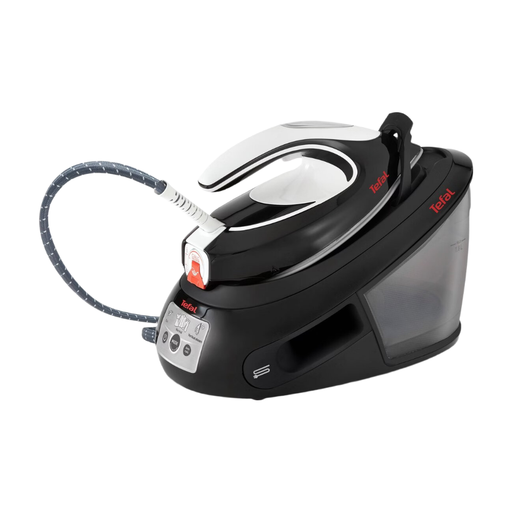
Tefal SV8055 Express Anti-Calc steam generator, 6.5bar
A steam generator to consider if you iron several garments one after another; check in advance that the base will fit in your ironing and storage space.
The model name lists 6.5 bar. Always follow the care label when ironing a cotton waistcoat.
View at Joybuy
 No image available
Philips 3000 Series PSG3000/20 steam generator
A model to compare if you iron several items one after another and need to consider your available storage space too.
Specifications listed include: 2400 W, a 350 g steam boost, a 1.4 L tank and vertical steaming. Follow the waistcoat’s care label.
View at Joybuy
 No image available
Philips PerfectCare Compact Essential GC6842/30
A steam generator to include in your comparison for an ironing session with several garments. Check the model-specific instructions and follow the care label.
View at Joybuy
 No image available
Tefal SV8026 Express Power steam generator
This steam generator is an option to compare if you have several items to iron. Check the model specifications and maintenance instructions, and allow space for the base.
View at Joybuy
 No image available
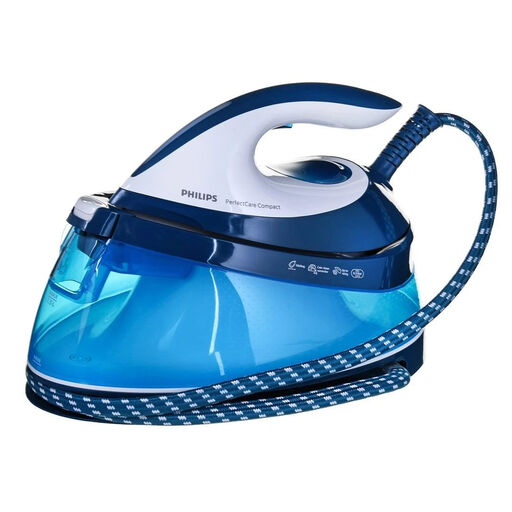
Philips GC7840/20 PerfectCare Compact steam generator
A compact model to compare if you’re ironing several items but also need to consider moving and storing the appliance.
The product specifications list 2400 W, a 400 g steam boost and a 1.5 L tank. Philips describes this model as compact; follow the waistcoat’s care label.
View at Joybuy
Frequently asked questions
Can you automatically iron a cotton waistcoat on the hottest setting?
No. The care label for the whole garment determines the permitted treatment, not just the fibre name of the outer fabric. Check the ironing symbol before use; it may specify a maximum temperature or that you should iron without steam.
How can you stop your waistcoat staying damp after steaming?
Use steam sparingly and don’t keep applying the steam boost one burst after another. The Dutch Consumers’ Association recommends finishing by ironing without steam, then leaving the garment to cool while dry.
What water should you use, and does a steam generator need descaling?
Follow the instructions for your chosen model, especially any guidance on using softened water. The Dutch Consumers’ Association says tap water is generally suitable, but an anti-scale system doesn’t replace maintenance; water with perfume or other additives can cause problems.
What are your rights when buying online in the Netherlands?
For many qualifying consumer purchases made at a distance, you have a 14-day cooling-off period, according to the Dutch Government. This is separate from the remedies available for a faulty product, which you should raise with the seller. The Dutch Government also states that the Netherlands has no fixed statutory guarantee period.
Is a CE logo the same as an independent safety test?
No. According to Your Europe, CE marking is not a central EU authorisation or certificate. The logo alone therefore doesn’t mean that an independent body has tested the specific appliance.


