If you regularly iron several cotton aprons in one go and have room for a base unit, a steam generator could suit your routine. For occasional ironing or limited storage space, a standard steam iron is likely to be a better fit. A larger tank can mean fewer interruptions to refill, but a generator takes up space and requires a suitable, sturdy ironing board and regular maintenance. Before use, check the care label on each apron. When buying, check the applicable safety marking on the specific appliance.
Who is this relevant to?
Anyone ironing several aprons in one go
If you regularly iron a pile of cotton aprons, having to refill less often can be a real plus. First, check that each apron can be ironed according to its care label. GINETEX explains that the label takes account of the treatment the item can withstand.
Housemates with limited storage space
If you need to put the appliance away after use or have a small ironing area, consider the size of the base unit and the board’s weight capacity. The Consumentenbond points out that a large steam generator can be awkward when space is limited; Tefal recommends a sturdy, steam-permeable board.
Housemates sharing maintenance and storage
When sharing an appliance, it helps to agree who will respond to maintenance alerts and where it can cool down safely. The Consumentenbond stresses that limescale maintenance is still necessary, even with an anti-scale system.
What should you look for?
Your choice mainly depends on how often you iron several items in a row and how much space you have for the appliance and ironing board.
Steam generator
Best for: housemates who regularly iron several aprons that can be ironed in one go and have room for a separate base unit.
The trade-off: the base takes up extra space, and the appliance needs a suitable ironing board and regular limescale maintenance.
Standard steam iron
Best for: anyone who only irons an apron now and then or needs to put the appliance away after each use.
The trade-off: a smaller tank may mean more frequent refills during a long ironing session.
| What to consider |
What to look for |
Most relevant to |
| Ironing several items in a row |
Compare tank capacity and whether the tank is removable. Consider continuous steam separately from a short burst of steam. |
If I’m ironing several aprons in a row, I want as few interruptions as possible to refill the water tank. Around 33% of consumers say being able to keep working without frequent refills is their top buying concern. |
| Space and ironing board |
Measure your storage space and check that the board is sturdy enough to support the filled base unit. |
With limited storage, I want to know whether the appliance can be put away after use and whether our shared ironing board can support the base. Around 27% of consumers prioritise storage and a suitable ironing area. |
| Safe use |
Follow the care label on each apron and the model-specific instructions. When buying, check the applicable CE marking. |
If several housemates use the same appliance, I want clear guidance on fabrics and safe use. Around 20% of consumers put safe shared use first among their concerns. |
| Descaling and maintenance |
Compare the descaling instructions, alerts and any consumable parts for the model you’re considering. |
When several people share maintenance, I want a routine that’s clear to everyone. Around 20% of consumers say ease of maintenance is their top buying concern. |
Common buying mistakes
-
Automatically ironing cotton on the highest setting
The fibre alone doesn’t determine the right treatment. The care label also takes account of delicate details, prints and appliqués.
Check the ironing symbol on each apron before choosing a temperature or steam setting. Don’t iron an apron with a do-not-iron symbol.
-
Looking only at the steam boost
A short burst of steam and continuous steam output are different functions. A peak figure on its own doesn’t tell you how an appliance will perform over a series of aprons.
Compare continuous output, tank capacity and performance on cotton separately. Don’t treat a manufacturer’s figures as measured results on your aprons.
-
Assuming an anti-scale feature means no maintenance is needed
According to the Consumentenbond, a limescale system slows the build-up, but maintenance is still necessary. Some models use replaceable cartridges.
Before buying, read the instructions for the specific model and check whether it needs consumable parts. Follow the manual’s guidance on water and cleaning.
-
Confusing a model name with a verified individual appliance
A similar model name doesn’t automatically tell you the specifications or safety warnings for a specific version. Some Philips recalls apply only to named model series in combination with specific code numbers.
Check the full model and version code, and the appliance’s code number where relevant. Also check the applicable marking and the latest product instructions.
Brands to consider
Tefal
The Express range includes models with a variety of features. Tefal distinguishes these from its Pro Express boiler models.
- For the SV6131E0, Tefal lists a 1.7 l tank, 120 g/min continuous steam, Calc Clear and a carry lock.
- These are specifications and claims for the named version, not independent evidence of ironing results on cotton aprons.
Braun
CareStyle models have different control options; the IS1013GR is one example with manual temperature selection.
- For the IS1013GR, Braun lists a 1.5 l tank, a thermostat setting for cotton and linen, and a CalcClean reminder.
- Braun’s in-house comparison of time savings isn’t a test of ironing aprons.
Philips
The 3000 Series includes steam generators with manual temperature selection. The Consumentenbond lists a removable 1.5 l tank for the PSG3000/30.
- Check the product specifications and tank capacity against the full model number. Information for the PSG3000/30 doesn’t automatically apply to other versions.
- A Philips recall applies only to the specified model series in combination with the listed code numbers, not to the whole brand.
Rowenta
Silence Steam is a product range for anyone who takes noise into account when using an appliance in a shared home.
- Rowenta describes the DG8960F0 as quiet and powerful.
- Without independent noise measurements for this model, the range name isn’t proof that it’s quieter than other appliances.
Joybuy products for this ironing routine
This selection features steam generators suited to ironing cotton aprons in a shared household. Compare the specifications, available storage space, maintenance instructions and ironing board suitability for each version.
 No image available
Philips 3000 Series PSG3000/20
A steam generator to compare if you iron several aprons in one go.
The product title lists 2400 W, a 350 g steam boost and a 1.4 l water tank.
Joybuy
 No image available
Philips PerfectCare Compact Essential GC6842/30
A steam generator to compare if you share one appliance in a communal ironing area.
Check the tank capacity, controls and descaling instructions for this version in the product specifications and manual.
Joybuy
 No image available
Tefal SV8026 Express Power
A steam generator to compare if you regularly iron several aprons one after another.
Check the tank capacity and the descaling and storage instructions for the version you’re considering.
Joybuy
 No image available
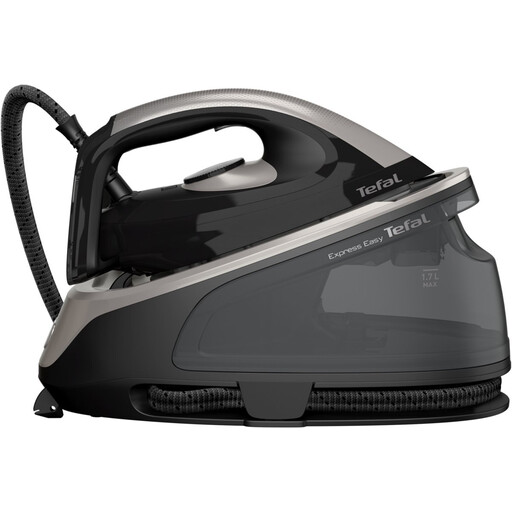
Tefal SV6140 Express Easy
A steam generator to compare for a shared routine involving several aprons.
Check the specifications for this version and make sure your storage space and ironing board can accommodate the base.
Joybuy
 No image available
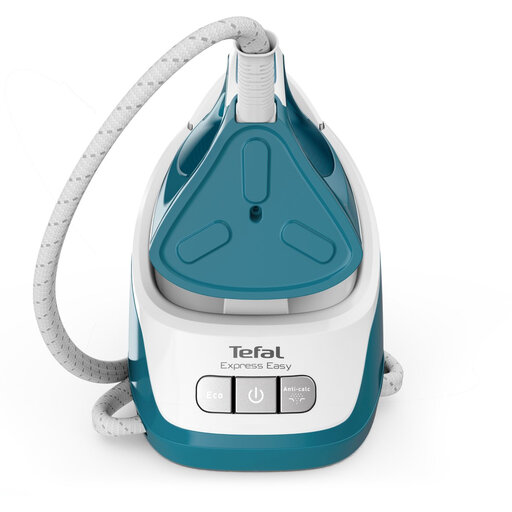
Tefal SV6131 Express Easy
A steam generator to compare if you iron several cotton aprons in one go.
The product title lists 2400 W, 5.8 bar, a 350 g steam boost, a removable 1.7 l tank and a ceramic soleplate.
Joybuy
Frequently asked questions
Can I iron every cotton apron with steam on the highest setting?
No. Follow the care label on each apron rather than relying on the fact that it’s made from cotton. GINETEX explains that the label takes account of the treatment the item can withstand. Don’t iron an apron with a do-not-iron symbol.
What ironing board is suitable for a steam generator shared by housemates?
Choose a stable board that can support the filled base unit. Tefal recommends a sturdy board with a steam-permeable cover; the Consumentenbond points out that a large generator may be too heavy or bulky for a standard board.
Does an anti-scale system mean an iron needs no maintenance?
No. According to the Consumentenbond, maintenance is still necessary, even with a limescale system. Follow the manual for the version you’ve chosen and agree who will respond to maintenance alerts in a shared household.
Is the CE marking an independent quality mark?
No. The CE marking is a declaration by the manufacturer, not an independent quality mark. It’s mandatory for electrical appliances covered by EU rules that require it. When buying, check the applicable marking on the specific appliance.
Does a Philips recall apply to every appliance in that model series?
No. The recall mentioned applies to specific Philips model series in combination with the listed code numbers 2419 to 2441. Check both details on the appliance. If they match the warning, Philips advises you to stop using it and contact them about the recall.


