What should you look for when buying?
Start by considering how much laundry you iron in one go. Then look at steam control, maintenance and how much space the complete set takes up.
| What to consider |
What should you check? |
Who should take this into account? |
| Amount of laundry |
Work out how many handkerchiefs and other items you iron in one session; check the tank capacity and the dimensions of the base. |
If I often get through a large pile, I don’t want to keep stopping to refill the tank. Around 29% of consumers prioritise the amount of ironing and the tank. |
| Controlling the steam |
Check whether the standard steam output is adjustable, and compare continuous steam output separately from a short burst of steam. |
When ironing small cotton items, I want to use enough steam without making the fabric and ironing board too wet. Around 24% of consumers prioritise controllable steam and the ironing results. |
| Limescale maintenance |
Look up the descaling instructions for the full model number and check which steps and parts are required. |
If I use steam often, I want to know in advance what maintenance the appliance requires. Around 18% of consumers prioritise straightforward limescale maintenance. |
| Space and handling |
Measure the space on your ironing board and in your cupboard; allow for the base and assess the whole appliance, not just the iron itself. |
With limited space, I want to be able to set the whole unit down securely and store it away easily afterwards. Around 17% of consumers focus mainly on space and ease of handling. |
| Price and aftercare |
Weigh up the purchase price against how often you iron, and check what any additional cover actually includes. |
If I want to use the appliance for a long time, I want to know what service I’ll receive in addition to my statutory rights. Around 12% of consumers put cost and aftercare ahead of other buying concerns. |
Steam generators at Joybuy
These products are steam generators for household ironing. Compare the stated features with the amount you iron, the space you have available, and your preferences for steam control and maintenance. For mains-powered appliances covered by Directive 2014/35/EU, with a rated AC voltage of 50 to 1,000 V, EU safety requirements apply and CE marking is required; check this for the specific item. The European Commission explains that the marking is a declaration by the manufacturer, not a separate EU quality mark for ironing performance.
 No image available
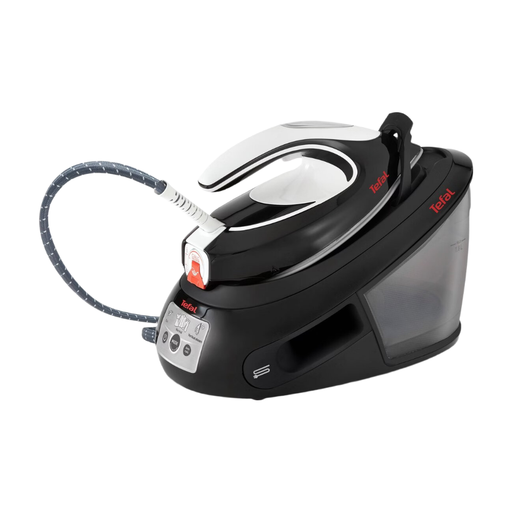
Tefal SV8055 Express Anti-Calc, 6.5 bar
Could be a good fit if you’re looking for a steam generator and want to factor in maintenance; compare the model-specific instructions before you choose.
Pressure stated in the product name: 6.5 bar.
View at Joybuy
 No image available
Philips 3000 Series PSG3000/20
Could suit larger piles of ironing if the stated tank capacity and steam output meet your needs.
For the PSG3000/20, Philips lists a 1.4 l tank, continuous steam output of 120 g/min and a steam boost of 350 g. The product name lists 2400 W and vertical steaming.
View at Joybuy
 No image available
Philips PerfectCare Compact Essential GC6842/30
A compact model to compare if you’re looking for a steam generator; also check whether the base will fit your ironing board and storage space.
View at Joybuy
 No image available
Tefal SV8026 Express Power
Could be worth comparing if you’re considering tank capacity and the maintenance system; follow the instructions for the exact version.
View at Joybuy
 No image available
Morphy Richards EasySteam+ MUH-ISE4B, black
Could suit longer ironing sessions if the removable tank and the stated maintenance and steam settings match your preferences.
The product name lists 2400 W, a steam boost of 120 g, steam output of 70 g, pressure of 6 bar, an ECO mode and a removable 1.8 l tank.
View at Joybuy
Frequently asked questions
Do I need a steam generator if I only iron a few cotton handkerchiefs?
A standard steam iron is usually more practical if you have little ironing to do. The Consumers’ Association lists its more compact size and quicker heat-up time as factors to consider; a generator may be a better fit for regularly tackling larger piles, if you have enough space.
How can I stop handkerchiefs staying damp after steaming?
Use no more steam than necessary, then continue ironing without steam until the cotton is dry. The Consumers’ Association warns that too much steam can also make the ironing board wet.
How do I descale a steam generator?
Follow the maintenance procedure for the exact model, as it can vary between appliances. When cleaning a limescale collector designed for this purpose, Tefal advises switching off the appliance and letting it cool down completely.
Can I return an iron bought online?
For a standard online purchase, you usually have a 14-day cooling-off period after delivery. ACM ConsuWijzer explains this period; check the applicable exceptions and returns policy. This is separate from your rights if a product is faulty.
Does a mains-powered steam generator sold in the Netherlands need CE marking?
If the appliance falls within the applicable EU rules for electrical equipment, CE marking is required. Directive 2014/35/EU applies to electrical equipment with a rated AC voltage of 50 to 1,000 V; check the marking and accompanying documentation for the specific item. The European Commission emphasises that CE is a declaration by the manufacturer, not a separate EU quality mark for ironing performance.


