
Napkin ironer short on space
You want to smooth out your linen napkins, but the base, ironing area and safe storage all need to fit into a small laundry space. Consumentenbond cites limited storage as a reason to consider a standard steam iron.


A compact steam generator may be worth considering if you regularly iron several linen napkins in one go and have room for the separate base. If you only iron a few napkins at a time or storage space is limited, a standard steam iron is probably a better fit. For either option, check the care label and make sure you have enough space.
You want to smooth out your linen napkins, but the base, ironing area and safe storage all need to fit into a small laundry space. Consumentenbond cites limited storage as a reason to consider a standard steam iron.
You iron several napkins in a row and want to stop less often to refill the water. A removable tank and continuous steam output are useful features to compare.
You want to tackle creases without exceeding the care instructions for your napkins, and want to know what maintenance the appliance requires. Choose the temperature based on the care label and follow the descaling instructions for your exact model.
Balance the number of napkins you iron in each session against the space available for the complete ironing set-up. Also check fabric-care requirements and maintenance.
| What to consider | What should you look for? | Who is this most relevant to? |
|---|---|---|
| Stubborn creases | Compare continuous steam output in g/min separately from the steam boost; also check the settings and the care label. | If my main aim is to remove creases from linen napkins, I look at the steam output during ironing. Around 29% of consumers say smoothing out creases is their main concern. |
| Ironing and storage space | Measure the available work and storage space, then compare it with the dimensions of the complete base and iron. | If my laundry area is short on space, I need to allow for the whole set-up, not just the iron. Around 29% of consumers pay particular attention to the space available. |
| Fabric care | Check the ironing symbol before choosing a temperature and steam setting; check which controls the specific model offers. | I want to care for my napkins according to their own care labels, even when they’re made of linen. Around 24% of consumers say correct fabric care is their main concern. |
| Refilling and descaling | Check whether the tank is removable and follow the descaling procedure for your exact model. | When ironing several napkins in one session, I want to be able to refill the tank easily and know what maintenance is required. Around 18% of consumers focus on ease of use and maintenance. |
A steam generator has a separate base that takes up space both when in use and in storage.
Measure the available work and storage space, then compare it with the dimensions of the complete appliance.
Manufacturers list these figures separately. Continuous steam output is also relevant when ironing several napkins in a row.
Compare continuous steam output and steam boost as two separate specifications.
According to the Government of the Netherlands, there is no fixed statutory guarantee period in the Netherlands. What you can reasonably expect from a product is a factor; if something goes wrong, contact the retailer.
Check any additional guarantee terms separately and see what extra cover they provide.
The CareStyle Compact range is worth comparing if you’re looking for a steam generator for a small laundry area. Check how much space the complete set-up takes up for each model.
The Express Easy SV6131E0 is worth a look if a removable tank is important when ironing several napkins in one session.
The 3000 Series is worth comparing if you’re looking for a model with manual temperature selection and a removable tank.
These steam generators are selected for anyone who irons several linen napkins in a row and can make room for a separate base.
 No image available
Worth comparing if you iron several napkins in one session and want a removable tank.
Removable tank: 1.4 l. Continuous steam: 120 g/min. Steam boost: 350 g/min. Manual temperature setting.
 No image available
Worth comparing if you’re looking for a compact model with continuous steam and automatic temperature control.
Tank: 1.3 l. Continuous steam: 120 g/min. Steam boost: 360 g. According to the product description, there’s no need to set the temperature manually.
 No image available
Worth comparing if you want to factor in the stated steam boost and tank capacity when ironing napkins.
Tank: 1,800 ml. Steam boost: 380 g/min. Pump pressure: 6.2 bar. Calc Clear is listed.
 No image available
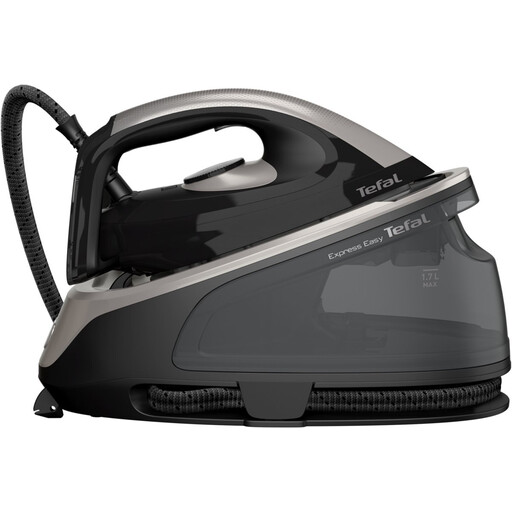
Worth comparing if a removable tank and continuous steam are important to you when ironing repeatedly.
Removable tank: 1.7 l. Continuous steam: 120 g/min. Steam boost: 350 g/min. Calc Clear and a locking system are listed.
 No image available
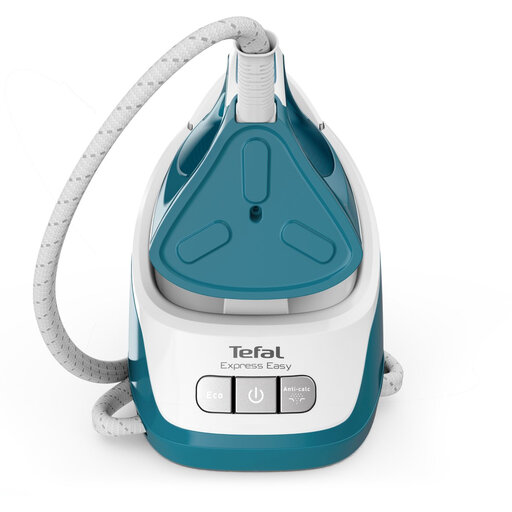
Worth comparing if you iron several napkins in a row and want a removable tank.
Removable tank: 1.7 l. Continuous steam: 120 g/min. Steam boost: 350 g/min. A locking system and Calc Clear are listed.
According to Consumentenbond’s buying advice, a standard steam iron is a sensible choice if you only iron a few napkins in a row or have limited storage space. If you often tackle a larger pile with stubborn creases, compare steam generators too, and remember to allow room for the separate base.
No. Choose the maximum ironing temperature based on the care label for each napkin. GINETEX advises against basing the temperature solely on the type of fibre.
Find the exact model number and follow the descaling instructions for it. Philips says the procedure can vary by model and that harder water can cause limescale to build up more quickly.
No. According to the Government of the Netherlands, there is no fixed statutory guarantee period in the country. You’re entitled to a product that works properly, and what you can reasonably expect from it is one factor. If something goes wrong, contact the retailer. A manufacturer’s guarantee is separate.
Electrical appliances covered by the Low Voltage Directive must meet the applicable electrical safety requirements and CE requirements. The European Union explains that CE marking is only compulsory for products covered by harmonised EU rules that require it. Check the information for the specific product before drawing conclusions about which requirements apply.