
Anyone who wants to iron uniform sleeves precisely
If you want to get sleeves, cuffs and seams looking neat, check that the soleplate is easy to manoeuvre and follow the care label.


A steam generator can be useful if you regularly iron several uniform items, but for the occasional uniform or if storage space is limited, a standard steam iron is often more practical. The Dutch Consumers’ Association points out that a steam generator takes up more room. For neat sleeves, the shape of the soleplate, the care label and having enough room to manoeuvre all matter. The quoted steam figures alone don’t tell you how well an appliance irons uniform sleeves.
If you want to get sleeves, cuffs and seams looking neat, check that the soleplate is easy to manoeuvre and follow the care label.
If you share your ironing space with housemates, it’s important that the appliance is easy to put away after use.
If you’re ironing several items in one go, the reservoir, ease of handling and maintenance may all influence your choice.
A good fit if: you regularly iron several uniform items in one go or want a separate water reservoir.
Bear in mind: the separate base takes up space on the ironing board and when stored away.
A good fit if: you only iron one uniform now and then or have limited space.
Bear in mind: the smaller reservoir may need refilling more often during longer ironing sessions.
| What to consider | What to look for | Who should prioritise it? |
|---|---|---|
| Precision around sleeves | Check the soleplate shape and how easy it is to manoeuvre. Read the care label and see whether you can use a sleeve board or a rolled-up towel. | If you mainly want neat cuffs and seams, look for good control around the fabric; around 33% of consumers say precise ironing is their main priority. |
| Space and storage | Measure your ironing board and storage space, and check whether the board can support the base securely. | If you share your ironing space with housemates, you’ll want to put the appliance away easily after use; around 27% of consumers prioritise limited shared space. |
| Several items in one go | Compare the reservoir and how it’s refilled; assess continuous steam separately from the steam boost. | If you have several uniforms to iron in a row, refilling less often may be important; around 20% of consumers say longer ironing sessions are their main priority. |
| Shared use and limescale | Check the manual for the exact model, including its descaling method and safety instructions for use and cooling. | If several housemates use the appliance, you’ll want to know how to hand it over and maintain it safely; around 20% of consumers prioritise shared use and limescale maintenance. |
A steam boost isn’t the same as continuous steam. Too much steam can leave the uniform fabric and ironing board damp.
Compare the two figures separately and check whether you can dry the fabric without steam after steaming it.
A steam generator may be too large or heavy for a standard ironing board, and it also takes up space when stored.
Before you buy, check the space available, the stability of your ironing board and your storage space. If you’ll only use it occasionally, consider a standard steam iron too.
Descaling procedures and safety instructions can vary between models and product ranges.
Keep the manual with the full model number and follow the instructions for that specific model.
The PSG3000/20 is worth comparing if you’re considering a 3000 Series steam generator with a ceramic soleplate.
The CareStyle 7 Pro IS7282BL is worth comparing if manoeuvring around buttons and seams is a priority.
The Express Power SV8110E0 is worth considering if you want to compare steam generators with a removable limescale collector.
These steam generators are for anyone who wants a separate water reservoir. The models listed offer different features to consider, including size, soleplate, session length and maintenance.
 No image available
Worth comparing if you’re looking for a more compact steam generator with a ceramic soleplate.
1.4-litre reservoir; continuous steam of 120 g/min; steam boost of 350 g; vertical steaming; 2400 W.
 No image available
A compact generator worth comparing if you want to iron several items in one go.
1.3-litre reservoir; continuous steam of 120 g/min; steam boost of 360 g; temperature setting for different fabrics; carry lock and automatic shut-off.
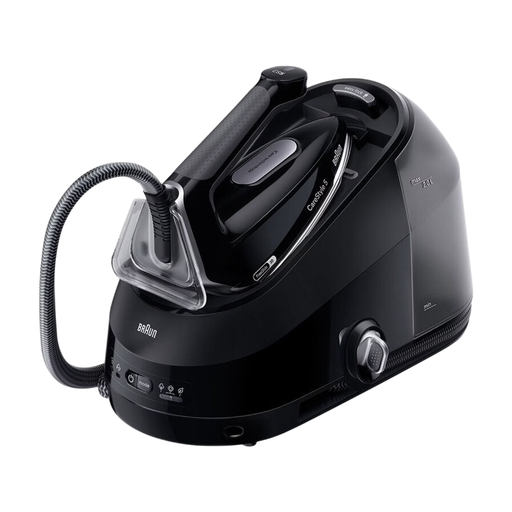 No image available
An option worth comparing if you want a removable reservoir and a soleplate designed for easy manoeuvring.
Removable 2-litre reservoir; steam output of up to 150 g/min; steam boost of 510 g; automatic setting; iCare temperature control; FreeGlide 3D soleplate.
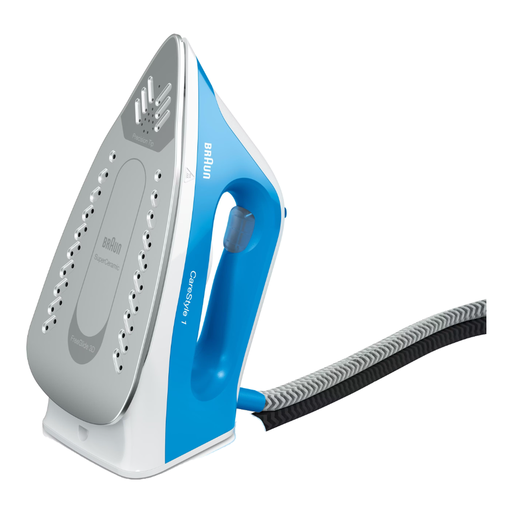 No image available
Worth comparing if you’re looking for a steam generator with adjustable settings and handy storage features.
1.5-litre reservoir; 5.5-bar pump pressure; CalcClean function; FreeGlide 3D technology; four adjustable settings; integrated storage compartment and carry lock.
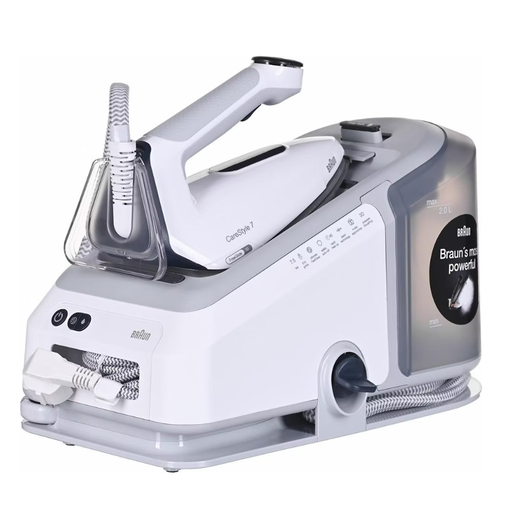 No image available
An option worth comparing if easy manoeuvring around buttons and seams and a larger reservoir matter to you.
2-litre reservoir; FreeGlide 3D soleplate; FastClean descaling; vertical steaming.
Check the care label first. If possible, use the sleeve board attachment on your ironing board or place a rolled-up towel inside the sleeve. Iron cuffs and other double layers of fabric on the inside first. After steaming, leave the fabric to cool and dry.
Follow the manual for the full model number, as cooling times vary by model. For certain Easy De-Calc models, Philips advises unplugging the appliance after ironing and letting it cool for two hours first. This isn’t a general waiting time for all steam generators.
The seller must provide a solution if the product is faulty. According to the Dutch government, the Netherlands doesn’t have a fixed statutory warranty period of two years; a manufacturer’s warranty is in addition to your statutory rights.
Electrical equipment placed on the Dutch market must meet the relevant European safety requirements. To demonstrate compliance, the manufacturer must affix a CE mark and draw up an EU declaration of conformity. CE isn’t an independent quality mark, so check the documentation for the specific product.