If you usually iron just one or a few cotton handkerchiefs after a wet trip, a standard steam iron is generally more practical. The Dutch Consumers’ Association cites having little ironing to do and limited storage space as reasons to choose one. A steam generator becomes more appealing if the handkerchiefs are part of a larger cotton wash, but it needs more space and maintenance. Iron damp cotton according to the care label, avoid using more steam than necessary and, if needed, finish ironing without steam.
Who is this relevant for?
If you iron one or a few handkerchiefs
You want to smooth out a small amount of cotton after a wet trip, without setting up a large station for every ironing session. The Dutch Consumers’ Association cites having little ironing to do and limited storage space as reasons to consider a standard steam iron.
If you iron larger amounts of cotton
You include handkerchiefs in a larger ironing session and value a bigger water tank and plenty of steam for stubborn creases. The Dutch Consumers’ Association explains the trade-offs between a steam iron and a steam generator.
If you have limited storage space
You need to put away the appliance and ironing board after use, so you’ll also want to consider the size of the complete steam station. The Dutch Consumers’ Association cites limited storage space as a reason to consider a standard steam iron.
What should you consider when choosing?
Standard steam iron
When: If you mainly iron one or a few handkerchiefs after your trip, or have limited storage space.
Trade-off: It’s more compact than a steam generator, but usually has a smaller water tank.
Steam generator
When: If you regularly include handkerchiefs in larger ironing sessions with lots of cotton.
Trade-off: The larger tank and steam capacity come with a bigger station that needs more storage space. The Dutch Consumers’ Association also notes that a station like this may be too big or heavy for a standard ironing board.
The Dutch Consumers’ Association recommends ironing cotton while it’s slightly damp, then finishing without steam if needed. Check the care label too, and consider the size of the complete appliance.
| Concern |
What to check |
Who is it more important for? |
| Smoothing and drying damp cotton |
Check the care label and whether you can adjust or switch off the steam; finish ironing without steam if needed. |
If my handkerchief is already damp, I want to smooth out the creases without making it wet again. Around 36% of consumers put moisture control at the top of their list of buying concerns. |
| Convenience for a small ironing session |
Compare the size of the complete appliance, its heat-up time and how many items you usually iron in one go. |
If I only have a few handkerchiefs to iron, I want an appliance that’s easy to get out and put away. Around 29% of consumers prioritise convenience for a small ironing session. |
| Ironing more cotton in one go |
Compare the tank, controls and space on your ironing board; don’t treat the stated steam figures as a measure of how well it will iron handkerchiefs. |
If I’m ironing handkerchiefs with a larger cotton wash, I want to know how often I’ll need to refill the tank and how much space the station takes up. Around 21% of consumers prioritise capacity for larger cotton ironing sessions. |
| Maintenance and replacement parts |
Read the model-specific descaling instructions and check whether the appliance uses replaceable cartridges. |
If I want to keep maintenance simple, I want to know in advance what descaling and replacement parts my model requires. Around 14% of consumers put maintenance at the top of their list of buying concerns. |
Buying pitfalls
-
Choosing the highest steam output for a handkerchief that’s already damp
The Dutch Consumers’ Association warns that too much steam can condense, making the fabric or ironing board wet again.
Check the steam controls and, if needed, finish ironing without steam. Leave the handkerchief to cool and dry afterwards.
-
Only considering the iron itself
A steam generator is bigger and heavier than a standard steam iron, and may be too big or heavy for a standard ironing board. The Dutch Consumers’ Association highlights size and storage space as things to consider.
Measure the space where you plan to store the complete station, and check that your ironing board has enough room.
-
Assuming an anti-scale function means no maintenance
According to the Dutch Consumers’ Association, an anti-scale system slows the build-up of limescale, but maintenance is still needed.
Read the model’s manual before buying and check what descaling or replacement parts it requires.
Brands to consider
Philips
The 3000 Series is worth comparing if you iron larger amounts of cotton as well as handkerchiefs.
- For the PSG3000/30, the Dutch Consumers’ Association lists a removable tank and manual temperature control.
- These features alone don’t tell you how well the model irons cotton handkerchiefs.
Tefal
The Express Easy SV6131 is worth a look if a removable tank matters to you for longer ironing sessions.
- Tefal lists a removable 1.7 l tank, a 350 g/min steam boost and a 2-minute heat-up time for this model.
- These are manufacturer specifications and claims, not an independent assessment of its ironing performance on cotton handkerchiefs.
Braun
The CareStyle 9 IS 9090 is worth considering if automatic steam control and descaling are priorities for you.
- Braun lists AutoSteam, AutoClean and a steam output of 190 g/min for this model.
- These features don’t prove that this model works better than a simpler appliance for ironing just a few handkerchiefs.
Rowenta
The Silence Steam DG8960F0 may be worth considering if available manuals and parts matter to you.
- The Dutch support page lists parts including a limescale collector and a tank.
- This product information doesn’t assess how well it irons handkerchiefs.
Steam generators at Joybuy
These Joybuy steam generators are for anyone who irons handkerchiefs as part of a larger cotton load. For a quick session with just a few handkerchiefs, the size of the station may be less practical.
 Image unavailable
Philips 3000 Series PSG3000/20
For anyone who irons handkerchiefs as part of a larger ironing session.
The product name lists 2400 W, a 350 g steam boost, a 1.4 l tank and vertical ironing.
View at Joybuy
 Image unavailable
Philips PerfectCare Compact Essential GC6842/30
A steam generator to consider if handkerchiefs are part of a larger ironing session.
View at Joybuy
 Image unavailable
Tefal SV8026 Express Power
A steam generator to consider if you iron larger amounts of cotton as well as handkerchiefs.
View at Joybuy
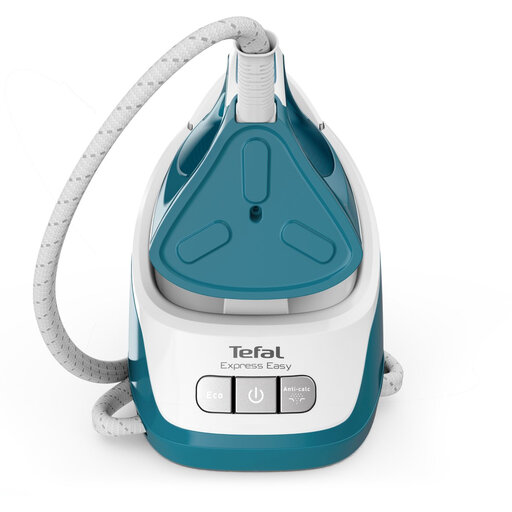 Image unavailable
Tefal SV6131 Express Easy
Suited to longer ironing sessions where handkerchiefs are ironed with other cotton items.
The product name lists 2400 W, a 350 g steam boost, a removable 1.7 l tank, 5.8 bar pressure and a ceramic soleplate.
View at Joybuy
 Image unavailable
Morphy Richards EasySteam+ MUH-ISE4B
A steam generator to consider if you want to include handkerchiefs in a larger ironing session.
The product name lists 2400 W, a 1.8 l tank, an ECO mode and 6 bar pressure.
View at Joybuy
Frequently asked questions
Can I use plenty of steam to iron a cotton handkerchief that’s still damp?
Don’t automatically use lots of steam: according to the Dutch Consumers’ Association, a little moisture helps smooth out creases, but too much steam can leave the fabric and ironing board too wet. Check the care label and finish ironing without steam if needed.
Do I need a special ironing board for a steam generator?
Check that your ironing board is large and sturdy enough for the whole station. The Dutch Consumers’ Association notes that plenty of steam can condense; a well-ventilated board with a padded cover helps reduce condensation and drips.
What water should I use, and how can I prevent limescale problems?
If you use softened water, follow the manual for your specific model; the Dutch Consumers’ Association says tap water is commonly used. An anti-scale feature doesn’t replace maintenance, and water containing perfume or other additives isn’t suitable.
What warranty applies to purchases in the Netherlands?
According to the Dutch government, there’s no fixed statutory warranty period in the Netherlands, but you are entitled to a product that is of satisfactory quality. Contact the seller if your product is faulty. A manufacturer’s warranty is in addition to your statutory rights.


