
If you like to iron shirts precisely
If you iron shirts every week, look at the shape of the soleplate tip for working around collars and buttons. Tefal lists a precision tip for the SV9202 and GV9567 models.


For collars and cuffs, the shape of the soleplate tip and the controls are important points to compare. For larger weekly loads, the tank and refilling are worth considering too. A steam generator takes up more space than a standard steam iron and, according to the Consumers’ Association, may be too large or heavy for a standard ironing board. When ironing mixed fabrics, always check the care labels: automatic settings don’t override instructions not to iron or steam.
If you iron shirts every week, look at the shape of the soleplate tip for working around collars and buttons. Tefal lists a precision tip for the SV9202 and GV9567 models.
If you iron several types of fabric in one session, compare how the temperature and steam are set. Philips describes OptimalTEMP for the PSG7200/20; even with automatic settings, check the care labels.
For longer sessions, a larger water tank may mean fewer refills. Also consider how much room the base takes up on your ironing board and where you’ll store it; the Consumers’ Association highlights size and weight as factors to consider.
Start with collar work and controls for your fabrics, then decide whether the tank and overall size suit your weekly load and available space. The Consumers’ Association points out that a steam generator can be larger and heavier than a standard steam iron.
| What to consider | What should you look for? | Who is this important for? |
|---|---|---|
| Collars and buttons | Check the shape of the soleplate tip and the steam controls. | If I often iron around collars and buttons, I want to be able to assess the tip and steam control properly. Around 36% of consumers rank precision around collars as their top priority when buying. |
| Different fabrics | Compare manual settings with controls that don’t require a fabric setting, and read the care labels. | When ironing a mixed load, I want to switch between ironable fabrics without losing sight of the care labels. Around 29% of consumers rank switching between fabrics as their top priority. |
| Ironing time and refilling | Compare the tank capacity and whether the tank is removable; also consider the space available on your ironing board. | If I sometimes iron a large load in one go, I want to know how often I’ll need to refill the tank and where I can put the base. Around 21% of consumers prioritise longer sessions. |
| Space required | Measure the space on your ironing board and in your cupboard before choosing a model. | If I have limited space on my ironing board or for storage, I want to check first whether a base will fit practically. Space and other practical considerations are the main purchase constraints for around 14% of consumers. |
The stated steam boost alone doesn’t tell you how easy it is to work around a collar or buttons.
For collar work, also check the shape of the soleplate tip and the controls on the exact model. For longer sessions, compare the continuous steam output and tank as well.
A steam generator can be larger and heavier and, according to the Consumers’ Association, may be too large or heavy for a standard ironing board.
Measure the available space and check your ironing board’s dimensions and weight capacity before choosing a model.
The right descaling procedure varies from model to model, so general instructions can’t automatically be applied to every appliance.
Look up the manual using the exact model number and follow the steps it describes.
The SV9202 and GV9567 models are worth comparing for collar work.
The PSG7200/20 and PSG3000/20 offer different options; features of one series don’t automatically apply to the other.
The CareStyle 7 Pro IS7286BK is worth comparing if steam output and a choice of programmes matter to you.
The Lift Original Red is a separate option if you want to steam vertically as well as iron on a table.
These Joybuy product picks cover steam generators for shirt collars and varied weekly laundry. Compare the features listed for each model and check that the base fits your ironing board and storage space.
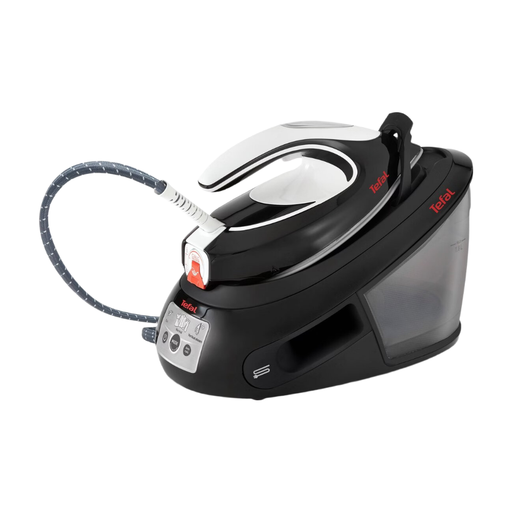 Image unavailable
Worth comparing if you switch between different ironable fabrics; check this model’s controls and always follow the care labels.
6,5 bar, as stated in the product name.
 Image unavailable
Worth comparing if you have longer ironing sessions. Check the tank details and how it can be refilled to make sure it suits your needs.
Also check that the base fits your ironing board and storage space.
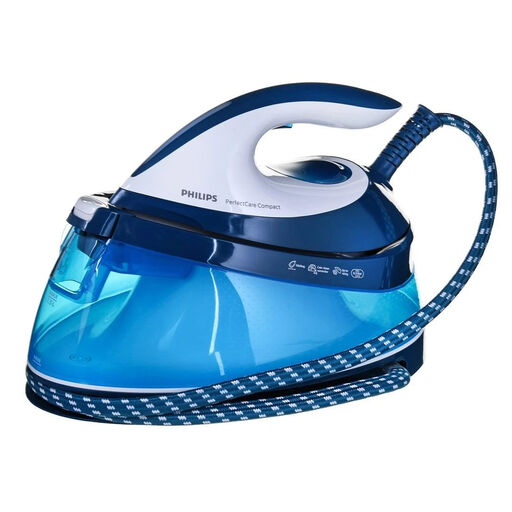 Image unavailable
Worth comparing if you iron different ironable fabrics in one session; check the care labels and this model’s controls.
2400 W; 400 g steam boost; 1,5 l water tank, as stated in the product name.
 Image unavailable
Worth comparing if you have longer ironing sessions; check whether the removable tank and base are practical for your needs.
2400 W; 6 bar; ECO setting; removable 1,8 l water tank, as stated in the product name.
 Image unavailable
Worth comparing if you iron several ironable garments in a row. Philips lists a manual temperature setting for different fabrics; follow the care labels.
2400 W; 350 g steam boost; 1,4 l water tank; vertical steaming, as stated in the product name.
No. Check the care label first: a crossed-out iron means you mustn’t iron the garment; a no-steam symbol means you mustn’t use steam. Automatic settings don’t mean you can ignore these instructions.
In its shirt-ironing instructions, Philips recommends starting with the collar. Check the care label first and let the appliance heat up as instructed; when working around buttons, also check that the soleplate tip suits the way you iron.
Follow the descaling procedure for the exact model. Philips generally recommends descaling its steam generators every one to two months and says that certain systems should be unplugged and left to cool for two hours first. Don’t automatically apply that timing or those steps to another brand or model.
No. According to the Dutch government, there’s no fixed period for the legal guarantee in the Netherlands; what matters is what you can reasonably expect from the product. If a product is faulty, the retailer is your point of contact, even if a manufacturer’s guarantee also applies.