
If you iron cuffs with precision
You want to smooth out double-layered cuff fabric and work neatly around buttons. So focus on how easy the iron is to handle and whether you can control the steam output.


If you only iron a shirt or a few cuffs now and then, a standard steam iron is often more practical. A steam generator may be a good choice if you regularly iron several shirts or tackle stubborn creases. The Dutch Consumers’ Association points out that the larger separate tank takes up more space, and that more steam doesn’t automatically mean greater precision when ironing details.
You want to smooth out double-layered cuff fabric and work neatly around buttons. So focus on how easy the iron is to handle and whether you can control the steam output.
You want to refill less often during a longer ironing session and have enough room for a separate water tank. The Dutch Consumers’ Association suggests a steam generator as an option for people who regularly do a lot of ironing.
Your ironing or storage space is limited, so the size and weight of the complete unit and whether your ironing board can accommodate it are important factors.
Choose this if: you iron a shirt or a few cuffs now and then, or have limited storage space.
The trade-off: it takes up less space, but the smaller tank may need refilling more often if you have a lot to iron.
Choose this if: you regularly iron several shirts and have room for the unit.
The trade-off: the separate tank can be useful during longer sessions, but the larger unit may not fit easily on or beside a standard ironing board.
| What to consider | What should you check? | Who is this relevant to? |
|---|---|---|
| Cuffs and buttons | Consider the shape of the iron, how easy it is to handle and whether you can control the steam output. Take care when ironing double-layered fabric on the inside, and work around buttons. | If I mainly want neat cuffs and need to work precisely around buttons, ease of use matters more than maximum tank capacity. Around 36% of consumers say precision around cuffs is their top priority. |
| Several shirts | Compare the tank capacity and filling method with the length of your usual ironing session. | If I want to iron several shirts in a row without refilling often, tank capacity matters. Around 29% of consumers say the length of the session is their top priority. |
| Different fabrics | Check the care label and make sure the temperature and steam controls are suitable for its instructions. An automatic setting doesn’t replace checking the care label. | When ironing shirts made from different fabrics, I want to follow the care labels and avoid unnecessary heat or moisture. Around 21% of consumers say protecting the fabric is their top priority. |
| Space and maintenance | Measure the space available, check whether your ironing board can support the unit and consult the model manual for descaling instructions. | If my utility room is short on space or I want to keep maintenance simple, the unit and its upkeep need to suit the way I use it. Around 14% of consumers say space and maintenance are their top priorities. |
More steam is most useful when you have a larger pile of ironing or stubborn creases. For detailed work, the shape of the iron and how easy it is to use still matter. The Dutch Consumers’ Association also warns that a steam generator unit may be too large or heavy for a standard ironing board.
Start by considering how many shirts you iron in each session and whether a standard steam iron would meet your needs. If you’re considering a steam generator, measure the space and check your ironing board too.
A larger unit needs more storage space and may mean you need a sturdier ironing board.
Ironing and steaming instructions vary from one garment to another, and the wrong temperature can damage fabric. An automatic setting doesn’t remove the need to check.
Read the care label first and check that the controls on your chosen model are suitable.
Limescale can affect how well the steam works, and the recommended cleaning method varies by appliance.
Check the model manual before buying, then follow the maintenance instructions.
The CareStyle 1 IS 1012 BL is an option if you want to choose the temperature setting yourself.
The Express Power SV8111E0 may suit longer sessions if you want a removable tank and a limescale collector.
Philips describes the PerfectCare Compact GC7840/20 as compact and lightweight, with OptimalTEMP and no temperature setting to adjust.
These models are steam generators for people who iron clothes on an ironing board and want a solution for several garments or longer sessions.
 Image unavailable
Suits anyone looking for a steam generator for ironing on a board and vertical steaming.
The product name lists 2400 W, a 350 g steam boost, a 1.4-litre tank and vertical ironing.
 Image unavailable
The model name identifies this as a compact steam generator; compare its dimensions with the space available in your utility room.
When choosing, also check whether the controls are suitable for your shirts’ care labels.
 Image unavailable
Worth considering if you’re looking for a steam generator for longer ironing sessions.
Check the model manual for the maintenance instructions for this appliance.
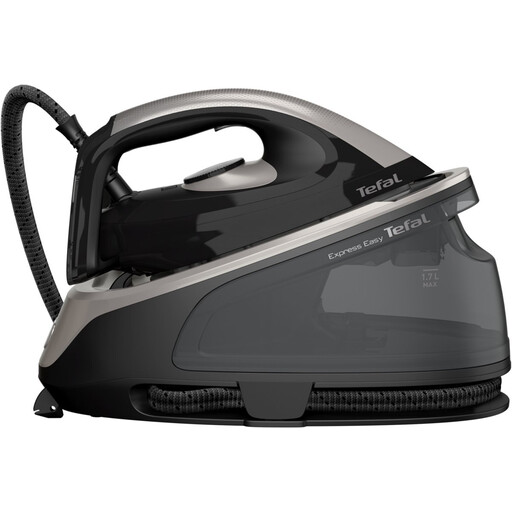 Image unavailable
Suits anyone looking for a generator for ironing on a board or vertical steaming, and for longer sessions.
Before use, check the manual for the correct operation and maintenance of the model.
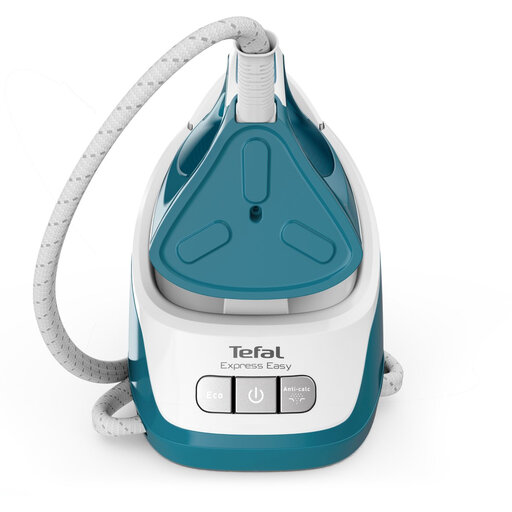 Image unavailable
May suit you if you’re looking for a steam generator for back-to-back ironing sessions.
The product name lists 2400 W, 5.8 bar, a 350 g steam boost, a removable 1.7-litre tank and a ceramic soleplate.
For double-layered fabric, start on the inside and check the care label first. The Dutch Consumers’ Association advises against steaming the same spot continuously, as this can make the fabric or ironing board too wet.
It depends on the space available and how much weight your board can support. The Dutch Consumers’ Association warns that a generator may be too large or heavy for a standard ironing board, so compare the model’s dimensions and weight with your ironing space.
Follow the manual for your specific appliance, as the method and frequency vary by model. The Dutch Consumers’ Association suggests that this is usually done about once a month, and notes that steam generators often have a maintenance alert. This isn’t a fixed schedule for every appliance.
No. According to the Government of the Netherlands, there is no fixed statutory guarantee period in the Netherlands. You’re entitled to a product that meets the standard you’re entitled to expect, and if there’s a problem, the retailer is your point of contact. Any manufacturer’s guarantee offered is separate from this.
According to the Netherlands Food and Consumer Product Safety Authority, electrical products covered by the Commodities Act Decree on Electrical Equipment must carry a CE marking. The low-voltage rules mentioned apply to electrical equipment with a rated AC voltage of 50 to 1000 V. Check the rating plate and product information for the specific appliance.