
Anyone who wants to iron precisely around collars and buttons
If you mainly iron shirts, pay attention to the shape and ease of handling of the iron tip. Philips recommends laying the collar flat and using the tip to work around buttons.


When choosing a steam generator for shirts, first look for an easy-to-handle iron tip and a base unit that fits in your shared ironing space. A high steam output alone won’t tell you how easy it is to work around collars and buttons. If you usually iron just one shirt and storage is a priority, a standard steam iron may be more practical: the Consumentenbond describes steam generators as larger and heavier, while noting that they can be useful for larger loads of laundry or stubborn creases. For the exact model, also check the relevant safety documentation. Business.gov.nl, the Dutch government website, outlines requirements for manufacturers, including CE marking and an EU declaration of conformity.
If you mainly iron shirts, pay attention to the shape and ease of handling of the iron tip. Philips recommends laying the collar flat and using the tip to work around buttons.
A steam generator has a separate base unit that you’ll need to move and store after use. Measure the available ironing and storage space, and check the shelf where you plan to put the appliance.
A larger tank can mean fewer refills during a longer ironing session. At the same time, consider moisture on your laundry and ironing board, as well as how housemates will share the maintenance.
In a shared ironing space, it’s not just about steam: access around buttons, room for the base unit and the maintenance routine all matter too.
| What to consider | What to look for | Who is this most important for? |
|---|---|---|
| Collars and buttons | Look at the shape of the iron tip and whether you can adjust the steam; follow the care label. | If I mainly iron shirts, I want to be able to lay the collar flat and use the tip to work around buttons. Around 33% of consumers prioritise precision when ironing collars. |
| Space and moving the appliance | Check the dimensions and weight of the complete system, as well as the load capacity of your ironing board. | In a shared home, I want to have room for the base unit and be able to move the appliance safely after use. For consumers who prioritise space and storage, this is the main concern; they make up around 25%. |
| Longer ironing sessions | Compare the tank capacity and continuous steam output; treat the steam boost as a separate figure. | If I iron several shirts in a row, I want to take fewer breaks to refill the water tank. Around 25% of consumers put longer sessions first. |
| Descaling and maintenance | Look up the maintenance instructions for the full model number and check what the anti-scale function does and doesn’t do. | When sharing an appliance, I want to agree in advance who will descale it and what procedure to follow. Around 17% of consumers prioritise maintenance that’s easy to share. |
A steam boost isn’t the same as continuous steam output, and a higher steam figure doesn’t tell you how easy it is to work around buttons with the iron tip. Too much steam can also leave your laundry and ironing board too damp.
Compare the continuous steam output, soleplate shape and adjustability separately. Follow the care label and don’t use more steam than the fabric needs.
A steam generator also has a separate base unit, so it takes up more room than the iron alone. The Consumentenbond also describes generators as larger and heavier than standard steam irons.
Measure your shared ironing and storage space, and check that the board can support the complete appliance.
An anti-scale function doesn’t remove the need to follow the maintenance routine for your specific model. When an appliance is shared, housemates may also end up following different instructions by mistake.
Keep the manual with the appliance and agree who will carry out the maintenance. Unplug the appliance and let parts cool before maintenance; Tefal recommends this for its steam generators.
The Power Pro Compact 200 SV6211E0 is worth considering if access around collars and storage are important to you.
The 3000 Series PSG3000/20 is a model to compare for regular ironing sessions.
The CareStyle 7 Pro IS7282BL is worth comparing if manoeuvrability around buttons and longer ironing sessions matter to you.
This selection includes a steam generator for longer ironing sessions and compact alternatives for smaller jobs, including a 2-in-1 garment steamer with an ironing function.
 No image available
The removable 1.8 l tank is useful for longer ironing sessions; the product information also mentions an iron lock for storage.
The stated steam output is 70 g in Eco mode, with a steam boost of 120 g. The description also lists 6 bar pressure, self-cleaning and an anti-scale function.
 No image available
According to the product description, this 2-in-1 model has an ironing function and a heated ceramic soleplate for smaller ironing jobs.
The description lists a steam output of 20 g/min, a compact design, cord storage and a 3 m cord. It doesn’t mention a specific precision tip for collars.
 No image available
The product description mentions a slim-tip soleplate and variable steam settings, both worth considering when ironing around collars and buttons.
The stated dimensions are 260 × 111 × 136 mm. According to the description, steam isn’t available on the synthetic setting.
 No image available
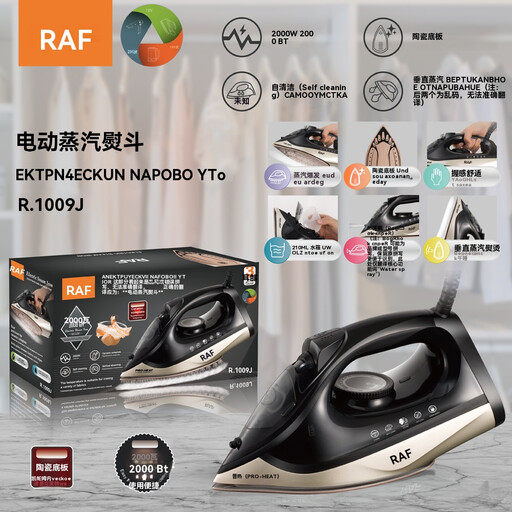
This standard steam iron is an option to consider for shorter ironing sessions; the product information lists a ceramic soleplate.
The tank capacity is 210 ml. The description also mentions vertical steam, a steam boost function and self-cleaning.
Lay the collar flat and iron the underside first, Philips recommends; use the tip to work around the buttons. Check the care label first, adjust the steam to suit the fabric and let the shirt dry.
It depends on the board’s dimensions and load capacity. A steam generator has a separate base unit and may be heavier as a whole, so check the specifications of both the appliance and your ironing board before you choose.
Follow the descaling procedure for the exact model and agree who will do it. Tefal recommends unplugging the appliance and letting its parts cool before maintenance; Philips uses different procedures for different model series.
For consumer purchases in the Netherlands, the legal guarantee has no fixed statutory time limit. The Dutch Government advises reporting faulty products to the seller; the manufacturer’s guarantee is in addition to your statutory rights.
The manufacturer must meet the applicable European requirements, apply the required CE marking and draw up an EU declaration of conformity. Business.gov.nl, the Dutch government website, outlines these obligations; they don’t automatically confirm the documentation for a specific model.