What should you look for when choosing?
Start by asking yourself whether you usually touch up one collar or iron several shirts. The Consumers’ Association describes a standard steam iron as a more compact choice if you do little ironing or have limited storage space.
| What to consider |
What should you check? |
Who should prioritise this? |
| Precision around the collar |
Check the shape and manoeuvrability of the soleplate, and follow the temperature and steam instructions on the care label. |
If I want to work carefully around buttons and collar edges, I look for good control and check what the fabric can withstand. Around 33% of consumers give collar precision their top priority. |
| Quick to get started |
Compare the stated heat-up time for the complete model with how often and how much you iron at a time. |
For a quick session, I don’t want to spend longer getting set up than doing the touch-up itself. Around 27% of consumers prioritise being able to get started quickly. |
| Several shirts at a time |
Check the tank capacity separately from the continuous steam output and short bursts of steam. |
If I’m ironing a pile of shirts after getting home, I want to refill as little as possible. Around 20% of consumers say being able to iron continuously is their main priority. |
| Space and maintenance |
Check whether your ironing board has room for the base unit, and follow the descaling instructions for the exact model. |
I want to know in advance where I’ll keep the appliance and how to maintain it in line with the manual. Around 20% of consumers give space and maintenance their top priority. |
Steam generators at Joybuy
These models are worth considering if you’re looking at a steam generator for collars and possibly several shirts in a row.
 No image available
Philips 3000 Series PSG3000/20
Worth comparing if you iron several shirts and want control over the temperature.
2400 W; 350 g steam shot; 1.4-litre tank; vertical ironing.
View at Joybuy
 No image available
Philips PerfectCare Compact Essential GC6842/30
Worth comparing if you’re looking for a steam generator for different fabrics that can be ironed.
Pink version.
View at Joybuy
 No image available
Tefal SV8026 Express Power
Worth comparing if you’re considering a steam generator for a longer ironing session.
View at Joybuy
 No image available
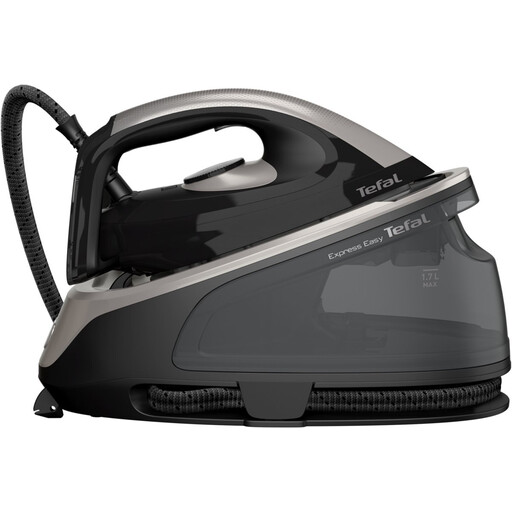
Tefal SV6140 Express Easy
Worth comparing if you iron several shirts in a row and want a setting suited to the fabric type.
View at Joybuy
 No image available
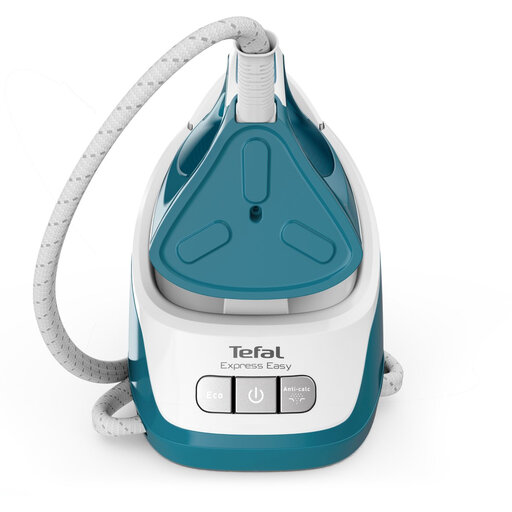
Tefal SV6131 Express Easy
Worth comparing if you iron several shirts in a row and want a removable tank.
Removable 1.7-litre tank; 350 g steam shot; ceramic soleplate.
View at Joybuy
Frequently asked questions
Can you steam-iron any shirt collar?
No. Check the care label first. A crossed-out iron means the garment must not be ironed; also follow any instructions about steam and the permitted temperature. Philips includes this label check in its ironing advice for shirts.
How can you stop an ironed collar from staying damp?
Use only as much steam as you need and let the fabric dry. The Consumers’ Association recommends ironing with steam first, then without steam until the fabric is dry. Too much steam can make the fabric and ironing board wet.
How do you descale a steam generator?
Find the full model number and follow the corresponding manual. Philips has different descaling procedures for different models, so don’t assume the instructions for another series will apply. Always follow the safety instructions for a hot appliance.
What if an appliance you bought online develops a fault?
In the Netherlands, statutory rights apply for a reasonable period, rather than for a fixed period set by law: you can expect a product to work properly for an appropriate length of time. Report any fault to the seller; a manufacturer’s guarantee doesn’t replace your statutory rights. Regular online consumer purchases also generally come with a 14-day cooling-off period, subject to legal exceptions. The Dutch government explains these rights.
What safety requirements apply to an electric steam generator?
Electrical appliances placed on the market in the Netherlands must meet the applicable European safety requirements and carry the required CE marking. Ondernemersplein, the Dutch government’s business portal, explains this obligation. However, this general rule alone does not confirm that a specific version complies.


