If you have a weekly pile of linen tea towels with stubborn creases, a steam generator is worth considering. Look at its continuous steam output, how easy the iron is to handle and whether the tank suits your ironing session. If you only iron a few towels or have limited storage space, compare it with a standard steam iron too. More steam isn’t automatically better and can leave the towel or ironing board too damp. Follow the care label, finish ironing without steam after steaming, and check the care instructions for the exact model.
Who is a steam generator suitable for?
Weekly batch ironer
After a busy week, you work your way through several linen tea towels and don’t want to keep stopping to refill the tank. A separate tank and an easy-to-handle iron are important to you. The Consumentenbond describes a steam generator as an option for people who do a lot of ironing.
Crease-conscious linen ironer
Your main aim is to smooth out stubborn creases, while making sure clean linen doesn’t stay damp after steaming. The Consumentenbond explains that heat and moisture can help when ironing linen.
Care-conscious ironer
You want to know in advance how to prevent limescale and possible marks on light-coloured tea towels. Care instructions can vary by model, so check the manual for the appliance you’re considering.
What should you look for when choosing one?
Steam generator
When: if you regularly iron a larger pile or want to tackle deep creases in linen.
The trade-off: the separate base and tank need storage space; more steam won’t automatically leave fabric drier or smoother.
Standard steam iron
When: if you only iron a few tea towels at a time and want something compact to store.
The trade-off: a steam generator may be more suitable for large piles or stubborn creases; results vary by appliance.
The Consumentenbond explains that heat and moisture can help smooth linen. Follow the care label, then iron the laundry without steam until it’s dry.
| What to consider |
What to look for |
Most relevant for |
| Ironing a pile in one go |
Compare the tank capacity, whether the tank is removable, whether you can refill it during use, and the weight of the iron. |
After a busy school week, I want to iron several tea towels without frequent refills. Around 33% of consumers prioritise getting through a pile in one go. |
| Smoothing linen |
Check the ironing symbol and whether you can adjust or turn off the steam. Compare continuous steam output separately from the steam boost. |
I want to smooth stubborn creases in linen without leaving the towel or ironing board damp. Around 27% of consumers prioritise tackling creases. |
| Preventing limescale and marks |
Check the model-specific instructions for water, descaling and any removable limescale collector. Don’t use vinegar or descaler unless the manufacturer instructs you to. |
I want to keep light-coloured tea towels clean and know how to care for the appliance. Around 20% of consumers prioritise careful descaling. |
| Storage space and frequency of use |
Compare the storage space required and how often you iron with a standard steam iron. |
If I only iron a few tea towels, I don’t want to store a large base that I rarely use. Around 20% of consumers prioritise compact appliances for occasional ironing. |
Common mistakes when choosing
-
Confusing a steam boost with continuous steam
A steam boost and the steam output during continuous ironing are different specifications. What’s more, extra steam can leave the towel and ironing board too wet.
Compare continuous steam output separately from the steam boost. Also check whether you can reduce or turn off the steam when ironing dry.
-
Assuming linen can always be ironed at the highest temperature
The care allowed depends on the label on the specific tea towel, not just the type of fibre.
Check the label before you start and adjust the temperature and steam accordingly.
-
Using the same descaling method for every model
Care instructions vary by model. Tefal warns that vinegar or descaler can damage the water tank.
Follow the manual for the exact appliance and don’t use descaler or vinegar unless the manufacturer recommends it for that model.
-
Choosing a large generator for just a few tea towels
A separate base and tank take up storage space. If you don’t have much ironing to do, a standard steam iron may be a better fit.
Think about how often you actually iron a pile, then compare both types of appliance before choosing.
Brands to consider
Philips
The Philips 3000 Series PSG3000/20 is one model to compare if you’re looking for specific steam output figures. Philips lists continuous steam of 120 g/min and a steam boost of 350 g for this model.
- The stated continuous steam output and steam boost give you specific figures to compare with other models.
- These product specifications aren’t an independent measure of ironing time or results on linen, and don’t automatically apply to other Philips series.
Braun
The Braun CareStyle 5 IS5249BK is an example of a model designed for longer sessions. Braun lists a maximum steam output of 150 g/min and an ergonomically designed handle; Joybuy lists a removable 2-litre tank for this model.
- The tank capacity and handle design are worth considering if you iron several items in one go.
- The comfort and performance claims aren’t based on an independent test of ironing results on linen. Decide whether the size and grip suit you.
Tefal
According to Tefal, the Tefal Express Protect SV9202E0 combines continuous steam output of 130 g/min, a 1.8-litre tank and a removable limescale collector.
- The stated tank and limescale collector give you specific features to compare for longer sessions and easier maintenance.
- The product specifications don’t prove how well it irons linen. Tefal says the descaling method varies by model, so follow the relevant manual.
Steam generators at Joybuy
The models below are steam generators you can compare for a weekly pile of tea towels. Check the specifications listed for each model to see how they fit your ironing session and care routine.
 No image available
Philips 3000 Series steam generator PSG3000/20
A model to compare for a weekly pile of tea towels.
The product name lists 2400 W, a 350 g steam boost and a 1.4 l water tank.
View at Joybuy
 No image available
Philips PerfectCare Compact Essential steam generator GC6842/30
A steam generator to compare if you iron several tea towels in one go.
View at Joybuy
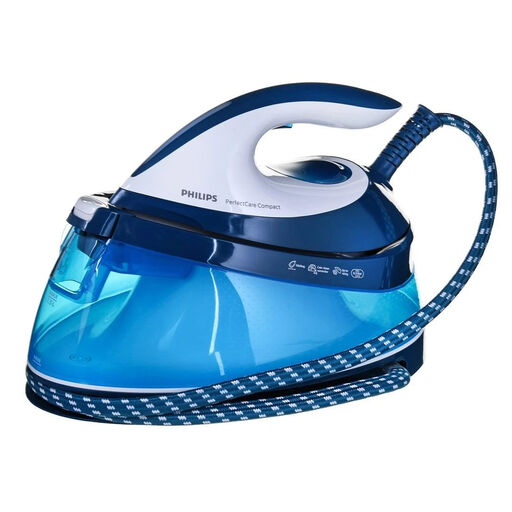 No image available
Philips PerfectCare steam generator GC7840/20
A model to compare with other steam generators for a pile of tea towels.
The product name lists 2400 W, a 400 g steam boost, a 1.5 l water tank and vertical steaming.
View at Joybuy
 No image available
Morphy Richards EasySteam+ steam generator MUH-ISE4B
A model to compare if tank capacity and care features matter for a longer ironing session.
The product name lists 2400 W, 120 g Steam Boost, 70 g Steam Output, a pressure of 6 bar, an ECO mode and a removable 1.8 l tank.
View at Joybuy
Frequently asked questions
Can I iron every linen tea towel with steam on the hottest setting?
No. Follow the care label on the specific tea towel rather than relying on the type of fibre alone. The Consumentenbond advises matching the temperature and amount of steam to the fabric, then finishing the ironing without steam after steaming.
How can I stop tea towels feeling damp after ironing?
Use only as much steam as you need, then iron without steam until the fabric is dry. Check whether you can adjust or turn off the steam on the appliance you choose.
Can I use vinegar to descale a steam generator?
Not as a general rule: Tefal warns that vinegar or descaler can damage the water tank. Follow the manual for the exact model and let the appliance cool down before carrying out any recommended maintenance.
When is a standard steam iron an alternative to a steam generator?
If you only iron a few tea towels at a time or have limited storage space, a standard steam iron is worth comparing. A steam generator may be more suitable for larger piles or stubborn creases; results vary by appliance.
What does a CE mark tell me about a steam generator?
For electrical equipment that EU rules require to carry a CE mark, the manufacturer applies the mark under its own responsibility. The European Commission makes clear that a CE mark isn’t an independent test of ironing results. Check the product identity and relevant safety information for the model you’re considering.


