
If you iron napkins regularly
If you often iron a pile of linen napkins, a separate water tank can be useful if you have somewhere to store the appliance. The Consumentenbond says a steam generator is most suited to frequent ironing.


If you regularly iron a pile of heavily creased linen napkins, a steam generator could be useful, provided you have enough storage space and your ironing board can support the whole appliance. For just a few napkins now and then, limited space or a tight budget, a conventional steam iron is usually more practical. In either case, follow the care label on each napkin.
If you often iron a pile of linen napkins, a separate water tank can be useful if you have somewhere to store the appliance. The Consumentenbond says a steam generator is most suited to frequent ironing.
If you share a cupboard and ironing board, measure the space available first and check that the board can support the whole appliance. The Consumentenbond suggests a conventional steam iron if storage space is limited.
For a quick ironing session with a few napkins, a conventional steam iron may be more practical than an appliance with a separate tank.
Don’t just look at the steam specifications: the amount of laundry, the space available for ironing and the maintenance required all help determine which type suits your needs.
| What to consider | What should you look for? | Who should consider this? |
|---|---|---|
| Creases and linen | Compare the stated steam settings and check the care label on the napkins you’ll actually be ironing. | If you want to tackle recurring creases in linen, weigh up the steam specifications against the permitted ironing temperature. Around 30% of consumers prioritise crease removal. |
| Space and stability | Measure your storage space and compare the dimensions and weight of the whole appliance with your ironing board’s weight capacity. | If you share a cupboard or ironing board, the appliance needs to be practical to store and stable when set up. Around 30% of consumers prioritise a suitable size and a suitable place to iron. |
| Usage and purchase cost | Work out how many napkins you iron at a time, then compare the current prices of suitable appliances. | If you only iron a few napkins and don’t want to buy a larger appliance for a quick job, a conventional steam iron may be enough. Around 20% of consumers focus mainly on the purchase cost in relation to how often the appliance will be used. |
| Descaling and maintenance | Check the manual for the exact model to see what cleaning is required and whether any parts are replaceable. | If you want to plan maintenance easily, check which descaling method the appliance uses and what it involves. Around 20% of consumers prioritise manageable maintenance and predictable running costs. |
A steam generator has a separate tank and may be too large or heavy for the ironing board you have available.
Check the space available and the board’s weight capacity first. Then compare the stated steam specifications.
If your existing board can’t support the appliance securely, you may need a different, suitable ironing board.
An anti-scale system slows limescale build-up, but it doesn’t remove the need for maintenance.
Check the descaling method and any replacement parts required for the exact model.
The maximum of 200 °C on the label of a specific 100% linen IKEA napkin doesn’t automatically apply to other napkins or linen blends.
Always follow the care label on the item itself, especially if it’s a linen blend or has an unknown finish.
The Philips PSG3000/20 is worth comparing if the stated steam specifications are important to you. Philips lists continuous steam of 120 g/min and a steam boost of 350 g for this model.
Braun offers models including the compact CareStyle Compact IS 2143 and the CareStyle 5 IS5249BK. The specifications of each model are worth checking if you want to compare size and steam output.
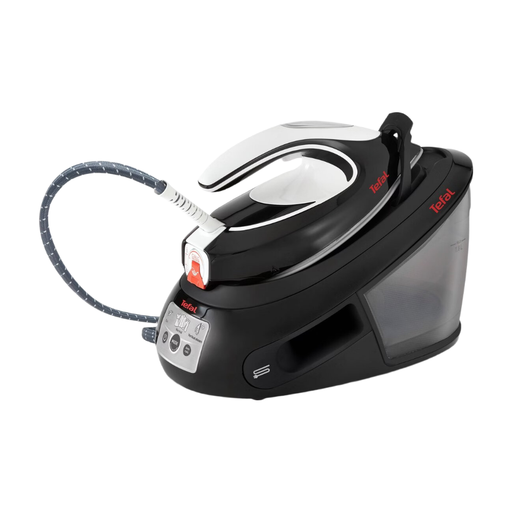
The Express Power SV8111E0 is worth comparing if tank capacity and maintenance features matter for your ironing sessions. Tefal lists a removable 1,8 l tank and a removable scale collector.
These steam generators are options to compare if you’ll be ironing several napkins in one go. Before choosing, check that the whole appliance will fit in your shared storage space and can be set up on the ironing board available.
 No image available
The product description lists a 1,5 l tank for ironing sessions with several napkins.
The product name states a pressure of 6,5 bar.
 No image available
The product description lists a detachable tank for ironing sessions with several napkins.
Stated specifications: 2400 W, a 1,4 l water tank and a steam boost of 350 g.
 No image available
The product description says you can refill it under the tap, which may be handy when ironing several napkins in one go.
Stated tank capacity: 1,3 l.
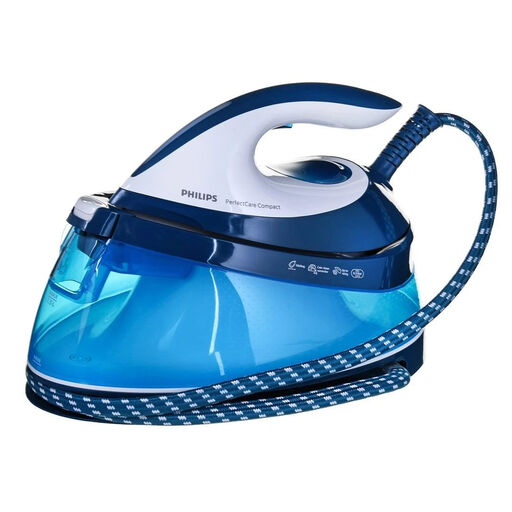 No image available
The product description says the tank can be refilled during use, a useful feature to consider when comparing models for ironing several napkins.
Stated specifications: 2400 W, a 1,5 l tank and a steam boost of 400 g.
 No image available
The product name lists a removable 1,8 l tank for anyone ironing several napkins in one go.
The product description mentions a self-cleaning function and anti-scale technology; check the model’s maintenance instructions.
Not necessarily: the Consumentenbond suggests a conventional steam iron if you have little ironing to do, a limited budget or little storage space. A steam generator may be a better fit if you do a lot of ironing, but you’ll need room for the appliance and its separate tank.
That depends on the board and the whole appliance. The Consumentenbond points out that a steam generator may be too large or heavy for a standard ironing board, so check the dimensions, weight and weight capacity before buying.
Follow the care label on the napkin you’re about to iron. The 100% linen IKEA napkin reviewed lists a maximum of 200 °C, but this product-specific limit doesn’t automatically apply to other napkins or linen blends.
According to the Consumentenbond, these appliances are designed to use tap water, but maintenance is still necessary. Check the manual for the exact model for descaling instructions and advice on softened water; don’t add perfumed ironing water or other additives.
An electric steam generator covered by the relevant EU rules must carry a CE marking; the manufacturer is responsible for compliance. Check the marking and product information on the specific appliance. A CE marking isn’t independent evidence of ironing performance.