
Parent applying patches to clothes
Wants to attach patches without damaging the fabric or design. MrPatch and iBadge recommend dry heat or switching the steam off, so the instructions for the specific patch matter more than steam power.


Don’t buy a steam generator for its steam output when applying iron-on patches: MrPatch and iBadge recommend dry heat or switching the steam off, so the patch instructions, care label and model manual all need to be compatible. A steam generator is worth considering mainly if you also have a lot of family ironing to do. For the occasional patch, a simpler iron with the steam switched off may be more practical.
Wants to attach patches without damaging the fabric or design. MrPatch and iBadge recommend dry heat or switching the steam off, so the instructions for the specific patch matter more than steam power.
Wants one appliance for patches as well as longer sessions of everyday ironing. The Dutch Consumers’ Association and Tefal describe steam generators as appliances for ironing, where a separate water tank and steam can come in handy.
Wants to adjust the heat for different garments and check in advance which fabrics can be ironed. Follow both the patch instructions and the care label; Fasola recommends fabric glue for materials that cannot be ironed.
First check the instructions for the patch and fabric, then see whether the appliance manual allows dry pressing without steam. MrPatch and iBadge recommend switching off the steam when applying patches; steam specifications for everyday ironing don’t, on their own, tell you anything about how well a patch will stick.
| What to consider | What should you check? | Who should pay particular attention? |
|---|---|---|
| Dry heat and adhesion | Check whether the manual allows dry pressing without steam, and follow the patch instructions. | If I’m applying patches to clothes, I want the heat to be suitable for both the patch and the fabric. Around 36% of consumers put patch adhesion first. |
| Everyday family ironing | Consider the water tank and steam settings for longer ironing sessions; these features tell you nothing about patches. | When the laundry basket is full, I want to know whether a separate tank suits my ironing routine. Around 27% of consumers prioritise everyday family ironing. |
| Protecting fabrics | Compare the patch instructions with the care label and the temperature settings of the exact model. | When ironing different garments, I want to take each fabric’s heat limit into account rather than automatically choosing the hottest setting. Around 27% of consumers put fabric protection first. |
| Care and storage | Check the dimensions of the complete appliance and the descaling process for the specific model. | I want to know how much space the base takes up and what maintenance it needs, especially if I only iron patches occasionally. Around 10% of consumers prioritise care and storage. |
MrPatch and iBadge recommend dry heat or switching off the steam when applying patches. So a steam output figure for everyday ironing doesn’t prove that a patch will stick better.
First check whether the appliance allows dry pressing, then consult the instructions for the specific patch and the garment’s heat limit.
A setting designed for ironable clothes doesn’t confirm that the adhesive on a specific patch will stick properly.
Check the instructions for both the patch and the fabric, and don’t treat an automatic temperature setting as proof that the appliance is suitable for patches.
Braun lists the CareStyle 1 IS 1012 BL as a steam generator with a thermostat dial.
Tefal describes the GV9720 from the Pro Express Ultimate II range as having three settings for everyday ironing.
Philips describes the PerfectCare 6000 PSG6064/80 as having a single OptimalTEMP temperature setting.
These products are steam generators for everyday family ironing. Check the manual for each model to see whether dry pressing without steam is allowed for your patch and fabric. The Dutch government says that electrical appliances in the EU must carry a CE marking, so check the marking on the appliance itself too.
 Image unavailable
This model is a steam generator for everyday family ironing; check the manual separately to see whether it allows dry pressing with your patch.
Listed features: 2400 W, a 1.4 l water tank and a 350 g steam boost.
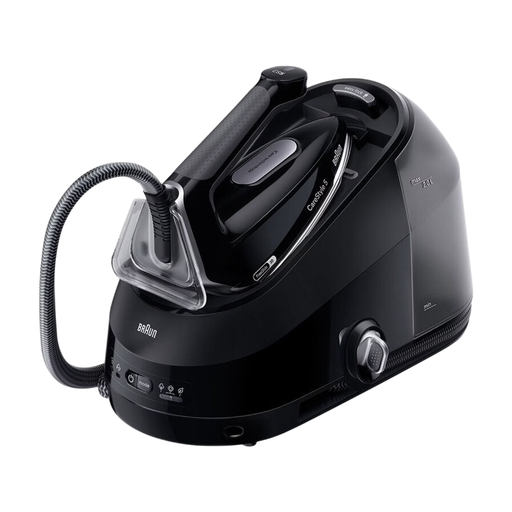 Image unavailable
This steam generator is designed for ironing. For patches, check that the model manual allows dry pressing without steam.
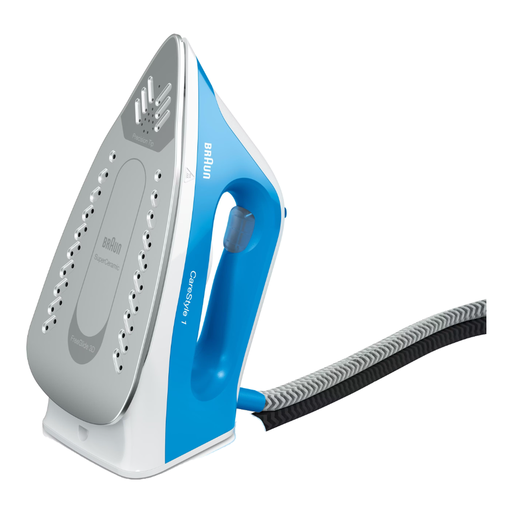 Image unavailable
This ironing system is a steam generator for everyday laundry. Check the manual to see whether the permitted method for your patch includes dry pressing.
 Image unavailable
This model is a steam generator for everyday family ironing; its specifications alone don’t confirm that it is suitable for patches.
Listed features: 2400 W, a removable 1.8 l water tank, 6 bar and an anti-scale function.
 Image unavailable
This compact steam generator is designed for everyday ironing. For patches, check whether the manual allows dry pressing without steam and whether the heat is suitable for both the patch and fabric.
MrPatch and iBadge recommend using dry heat or switching off the steam. Also follow the instructions for the specific patch and the heat limit on the garment’s care label.
MrPatch recommends using a thin protective cloth or baking paper, pressing the patch without moving the iron, and letting it cool completely. The pressing time in those instructions applies to MrPatch patches and isn’t automatically suitable for other patches.
Follow the descaling process for the exact model. Philips describes a descaling system for the PSG6064/80, while Tefal lists a removable scale collector for the GV9720. These features aren’t interchangeable.
Yes. The Dutch government says that electrical appliances in the EU must carry a CE marking. Check the marking on the appliance itself.
According to the Dutch government, if a product is faulty, the seller must provide a solution; there is no fixed statutory guarantee period that applies to all products. For eligible online purchases, you usually have 14 days to change your mind, although there are exceptions.