
If you iron several covers
After a weekend away, you want to smooth out several ironable covers one after another, and you’re concerned about stubborn creases and having to stop to refill the tank.


A steam generator may be worth considering if you regularly iron several covers in one go or want to tackle stubborn creases. For the occasional single cover, a compact steam iron may be a better fit. First check the care label, then compare continuous steam output, the steam boost, tank capacity, storage space and descaling instructions.
After a weekend away, you want to smooth out several ironable covers one after another, and you’re concerned about stubborn creases and having to stop to refill the tank.
You iron for short periods or only occasionally, and want to weigh up whether a separate steam generator will fit in your cupboard. The Consumers’ Association describes a standard steam iron as a compact option for people who do little ironing or have limited space.
Your cover may have a print or a restrictive ironing label, for example. GINETEX states that the symbol for ironing at a maximum of 110 °C means ironing without steam, so always follow the care label on the complete cover.
The care label on the cover should guide your choice. After that, the amount of ironing you do and the storage space available can help you decide which type of appliance suits you. The Consumers’ Association lists steam output and tank capacity among the points to compare, while GINETEX links permitted treatment to the care symbol.
| What to consider | What should you check? | Who should give this more weight? |
|---|---|---|
| Stubborn creases | Compare continuous steam output in g/min separately from the steam boost, and follow the care label. | If I’m ironing several covers, I want to know what the appliance delivers throughout the ironing session, as well as what it produces in a short steam boost. Around 33% of consumers put creases at the top of their list. |
| Short ironing sessions and storage space | Consider how many covers you usually iron in one go, and how much room both the iron and base unit will take up. | For a short ironing session, I want to get started quickly and put the appliance away easily. Around 27% of consumers prioritise convenience for short sessions and compact storage. |
| How to treat the cover | Check the ironing symbol and any instructions relating to prints or finishes; don’t use steam if the label rules it out. | If my cover has a restrictive label, the permitted treatment matters more than extra steam power. Around 20% of consumers consider care-label safety their main concern. |
| Refilling and descaling | Compare the tank capacity and whether it can be removed, and look up the descaling instructions for the exact model. | If I’m ironing several covers, I want to know how refilling works and how to descale the appliance. Around 20% of consumers prioritise uninterrupted ironing and maintenance. |
Manufacturers list these figures separately. A steam boost doesn’t tell you how much steam the appliance delivers over a whole ironing session.
Compare the stated continuous steam output in g/min and the steam boost as two separate specifications for the same model.
The fibre content alone doesn’t determine what treatment the complete cover can withstand. GINETEX states that the symbol for ironing at a maximum of 110 °C means ironing without steam.
Check the cover’s care label before setting the temperature or using steam.
A steam generator has a separate base unit alongside the iron. The Consumers’ Association describes a standard steam iron as a compact option for people who do little ironing or have limited space.
Work out how many covers you usually iron in one go, and measure the space where you plan to store both the iron and the base unit.
For the Philips PSG3000/20, Philips lists continuous steam output of 120 g/min and a steam boost of 350 g. These are model specifications, not test results for cushion covers.
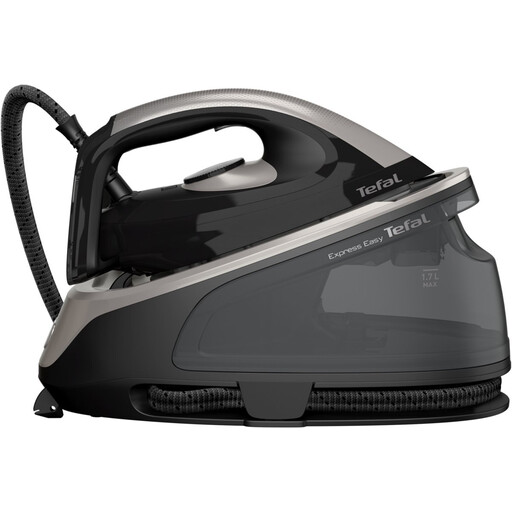
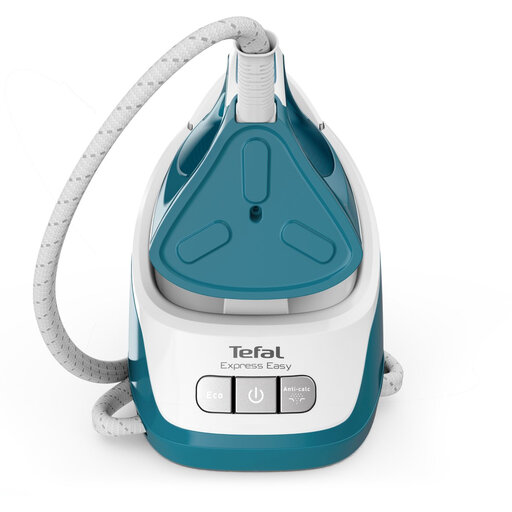
For the Express Easy SV6131, Tefal lists continuous steam output of 120 g/min and a removable 1,7 L tank. These figures apply to this model.
For the CareStyle 3 IS 3132 WH, Braun lists a 2 L tank and the Eco, iCare and Turbo programmes.
These Joybuy products are steam generators to compare for ironable covers and longer ironing sessions. Check your cover’s care label and compare the features that matter for how you’ll use the appliance.
 No image available
A steam generator to compare if you iron several covers one after another.
Philips lists continuous steam output of 120 g/min and a steam boost of 350 g for the PSG3000/20. The product name specifies a 1,4 L tank and 2400 W.
 No image available
The product name describes this model as a steam generator. Compare it with other models based on your ironing needs and available storage space.
 No image available
A steam generator to include in your comparison if you iron several covers one after another.
 No image available
This model is described as a steam generator. Compare its specifications with the amount of ironing you do and the space you have available.
 No image available
A model to compare if you iron several covers one after another; also check how to fill the tank.
Tefal lists continuous steam output of 120 g/min, a steam boost of 350 g/min and a removable 1,7 L tank. The product name specifies 2400 W, 5,8 bar and a ceramic soleplate.
A steam generator may suit you if you iron several ironable covers one after another or want to tackle stubborn creases. For occasional ironing and limited storage space, the Consumers’ Association describes a standard steam iron as a compact option.
No. Follow the cover’s care label and don’t base the setting on the cotton fibre alone. According to GINETEX, the symbol for ironing at a maximum of 110 °C means ironing without steam.
Follow the descaling instructions for the exact model. Philips refers to model-specific procedures; Tefal advises against using vinegar or descaling products with its steam generators.
ACM ConsuWijzer explains that a product must do what you could reasonably expect it to do when used normally. If it develops a fault sooner than expected, the seller must offer an appropriate free solution, such as a repair, replacement or refund; there isn’t one fixed statutory guarantee period for every product.
Electrical equipment within the scope of the EU Low Voltage Directive must meet safety requirements and carry CE marking. The Netherlands Food and Consumer Product Safety Authority describes the scope as covering appliances with a rated AC voltage between 50 V and 1000 V.