
If you mainly iron cuffs
You want to work neatly around buttons and along narrow seams; a large water tank is not automatically necessary. The Consumentenbond and Philips outline points to consider when choosing an iron and ironing shirts.


For one shirt or a pair of cuffs, a standard steam iron is often more practical. A steam generator is better suited to ironing several shirts in a row or tackling stubborn creases, according to the Consumentenbond. For cuffs, consider not just the steam output but also the shape and manoeuvrability of the soleplate, as well as heat-up time, storage space and maintenance. Before buying, check that the exact version sold in the Netherlands meets the applicable product safety requirements.
You want to work neatly around buttons and along narrow seams; a large water tank is not automatically necessary. The Consumentenbond and Philips outline points to consider when choosing an iron and ironing shirts.
You want to top up less often during a longer ironing session, and you’ll need space for the base unit. The Consumentenbond describes a steam generator as an option for people who iron a lot and often.
You iron in short sessions and value being able to set up and put away your iron quickly more than having a high steam output. The Consumentenbond cites limited storage space and a small ironing load as reasons to consider a standard steam iron.
First decide whether you mainly iron one shirt at a time or regularly work through a pile. Then compare the soleplate, water tank, space requirements and maintenance with your ironing routine.
Best for: one shirt or the odd pair of cuffs, especially if storage space is limited.
Bear in mind: the smaller tank and generally lower steam output when dealing with stubborn creases, as described by the Consumentenbond.
Best for: regularly ironing several shirts, when space for a base unit is limited.
Bear in mind: it has a separate base unit and steam hose; compare the dimensions of the exact model too. Braun’s claims about time and space savings relate to specific comparisons with its own models.
Best for: ironing several shirts in a row, when easy access around cuffs and buttons matters.
Bear in mind: you’ll need space for the base unit and a suitable ironing board; manufacturer specifications don’t automatically predict how well it will iron your shirt.
| What to consider | What should you look for? | Who is this important for? |
|---|---|---|
| Precision around cuffs | Look at the shape of the soleplate and how easily its tip moves around buttons and along narrow seams. Tefal lists a precision tip for the SV9202E0; Braun describes the IS 2144 BK soleplate as gliding backwards over buttons. | If I mainly want to iron neatly around buttons and narrow cuff seams, easy access matters more than simply having lots of steam. Around 28% of consumers prioritise precision. |
| Getting started quickly for a short session | Compare the stated heat-up time with your own ironing routine, and consider whether a standard steam iron would be easier to set up. Tefal gives a heat-up time of 2 minutes for the SV9202E0; this is not the total ironing time. | If I’m only ironing one or a few shirts, I want to keep preparation time short. Around 22% of consumers prioritise a short session. |
| Ironing several shirts | Compare the tank capacity and check whether you can refill it while ironing. Tefal lists a removable 1,8 L tank for the SV9202E0. | If I’m working through a pile of shirts, I don’t want to keep stopping to refill the tank. Around 17% of consumers prioritise longer ironing sessions. |
| Descaling and maintenance | Check the maintenance instructions for the exact model and whether it has a limescale collector. Follow the manual; Tefal advises against using vinegar or descaling products with its steam generators. | If I want to keep maintenance simple, I check the recommended descaling method. Around 17% of consumers prioritise ease of maintenance. |
| Storage and ironing space | Measure your storage space and check whether the base unit will sit securely on your ironing board. A steam generator takes up more room than an iron alone. | If I have limited storage space, I want to know in advance whether the base unit and my ironing area will fit. Around 16% of consumers prioritise space. |
A stated steam boost doesn’t automatically tell you how easily you can manoeuvre between buttons or along a narrow cuff.
Compare the shape of the soleplate and check whether the exact model specifically lists a tip function. Treat manufacturer claims as just that, not as independent test results.
A steam generator takes up more space than a standard steam iron because of its separate tank and base unit; the Consumentenbond also notes that it generally takes longer to heat up.
Compare both types of appliance with the length of your usual ironing session, and measure the space available for the base unit.
You’ll also need enough storage space and a suitable spot for the base unit on your ironing board.
A manufacturer’s guarantee does not replace your rights if a product is faulty. The Dutch Government states that there is no fixed statutory guarantee period in the Netherlands.
Keep your proof of purchase and contact the retailer if a product is faulty. When considering an extra guarantee, check what it adds to your existing rights.
Several Express models are worth comparing for precision, tank capacity and maintenance; features vary by version.
The CareStyle Compact IS 2144 BK and CareStyle 5 IS5249BK have different features worth comparing.
The 3000 Series PSG3000/30 is worth considering if you’re looking for a more compact model.
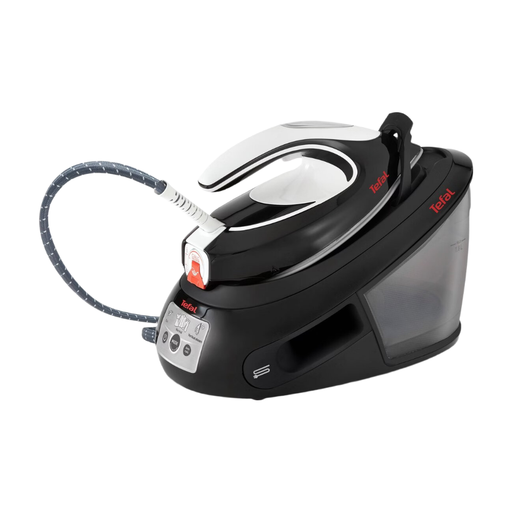
This selection focuses on steam generators for getting through the ironing after a busy week, with a look at tank capacity, maintenance and practical features for ironing several shirts.
 No image available
The listed tank and steam features are worth considering if you iron several shirts in a row.
Durilium AirGlide soleplate.
Continuous steam: 120 g/min; steam boost: 450 g/min.
Removable limescale collector.
 No image available
The compact design and stated heat-up time may suit a shorter ironing session.
Power: 2400 W; heat-up time: 2 minutes.
Continuous steam: 120 g/min; steam boost: 350 g.
Removable tank: 1,4 L; can be refilled while in use.
Described as compact and lightweight in the product title.
 No image available
The tank capacity and option to refill while in use are worth considering if you’re ironing several shirts in a row.
Tank: 1.800 ml; can be refilled while in use.
Continuous steam: 120 g/min; steam boost: 380 g/min.
Durilium AirGlide soleplate and Calc Clear technology.
Lock for carrying and storage.
 No image available
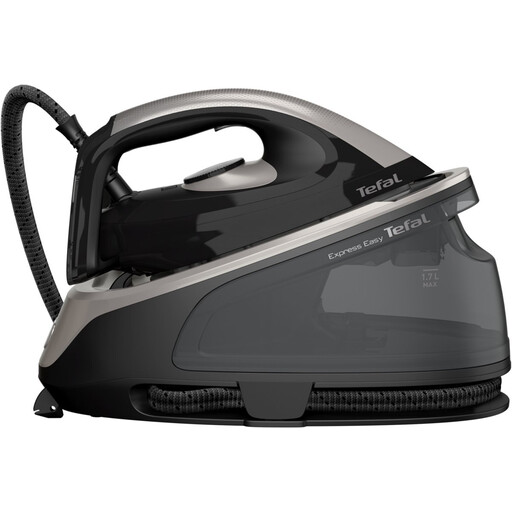
The tank capacity and option to refill may come in handy when you’re ironing several items of clothing.
Removable tank: 1,7 L; can be refilled while in use.
Continuous steam: 120 g/min; steam boost: 350 g/min.
Xpress Glide soleplate.
Compact design and a lock for carrying and storage, according to the product description.
 No image available
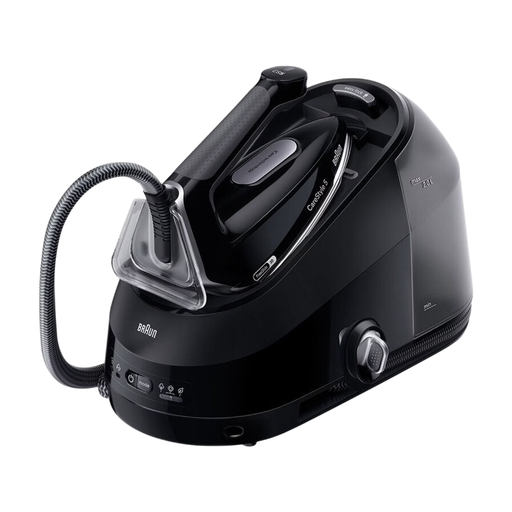
The described soleplate movement around buttons and the tank capacity are worth considering when ironing a batch of shirts.
FreeGlide 3D soleplate; according to the product description, it also glides backwards over buttons and other obstacles.
Removable tank: 2 L.
Maximum steam output: 150 g/min; steam boost: 510 g/min.
iCare temperature control.
Not necessarily. The Consumentenbond describes a standard steam iron as a more compact option for people who don’t iron many items in a row; a steam generator is better suited to larger ironing loads and stubborn creases.
Check the care label first. An iron symbol with a cross through it means you shouldn’t iron the garment; a symbol indicating that you should iron without steam means you shouldn’t use steam. When ironing around buttons, use the tip or guide the soleplate around them rather than pressing the iron onto them.
Follow the manual for the exact model. Tefal advises against using vinegar or descaling products with its steam generators; the recommended procedure varies, including according to whether the model has a limescale collector.
Contact the retailer if a product is faulty. According to the Dutch Government, there is no fixed statutory guarantee period in the Netherlands; what you can expect also depends on the reasonable lifespan of that type of product. A manufacturer’s guarantee is in addition to your rights.
Applicable European safety rules apply to electrical appliances. Where CE marking is required for an appliance, the manufacturer must apply it and draw up an EU declaration of conformity. A general statement on a product page does not, by itself, prove that a specific version complies.