If you iron several cotton waistcoats with stubborn creases every week, a steam generator could be worth considering. The Consumers' Association says these appliances are particularly useful if you have a lot of ironing or stubborn creases to deal with. For just a few waistcoats, limited storage space or a tight budget, a standard steam iron may be more practical. Always follow the care label for the entire waistcoat, then compare continuous steam output, how heavy the iron feels in your hand, the water tank and maintenance requirements.
Who is this relevant to?
Weekly batch ironer
You want to smooth out several ironable waistcoats in one go after the school week, and are looking at steam output, tank capacity and ease of handling. The Consumers' Association says a steam generator can be useful if you have a lot of ironing to do.
Careful clothes enthusiast
Your waistcoats may have a lining or trim as well as cotton. So start by checking the care label for the whole garment, and look for controls that suit the permitted treatment. GINETEX stresses that the care label determines the maximum ironing temperature.
Practical buyer with limited space
You’re weighing up how much you iron against the space needed for an appliance with a separate base, as well as maintenance and purchase costs. If you don’t have much ironing to do, a standard iron may be more practical.
What should you look for?
Steam generator for a large pile of ironing
A good fit if: you iron several cotton waistcoats in a row and want to tackle creases.
Bear in mind: the separate base needs storage space; lots of steam can also condense on the ironing board.
Steam generator for different fabrics
A good fit if: you iron fabrics other than cotton and want straightforward temperature controls.
Bear in mind: an automatic setting doesn’t replace the care instructions for the whole waistcoat.
Standard steam iron
A good fit if: you usually iron just a few waistcoats, have limited storage space or don’t want a separate base.
Bear in mind: according to the Consumers' Association, a steam generator is especially useful if you have a lot of ironing or stubborn creases to deal with.
| What to consider |
What to look for when buying |
Who is this important to? |
| Piles of ironing and creases |
Compare the continuous steam output of the exact model with its short bursts of steam. Also check the soleplate and how easily it reaches seams and buttons. |
If I want to iron several waistcoats in a row after a busy week, I look for suitable steam output and a soleplate that works for my clothes; around 36% of consumers say tackling piles of ironing and creases is their main concern. |
| The whole waistcoat |
Check the ironing and steaming instructions for every part of the garment, including the lining and any embellishments. |
If my waistcoat has a lining or trim, I want to avoid relying on the cotton label alone; around 29% of consumers prioritise caring for the whole garment according to its care label. |
| Ease of handling |
Consider the weight of the iron itself, the tank capacity and the space needed for the base and cord. |
If I want to work comfortably during regular ironing sessions and avoid frequent refills, I look at the weight and tank capacity; around 21% of consumers say ease of handling and refilling are their main concerns. |
| Maintenance and space |
Check the descaling instructions for the exact model and consider where you’ll store the base and ironing board. |
If space is limited or I want to keep maintenance simple, I factor that in before choosing an appliance with a separate base; around 14% of consumers focus mainly on maintenance, space and the overall purchase decision. |
Common buying mistakes
-
Assuming a high steam boost means continuous steam or proven ironing speed
A steam boost and continuous steam are different features. A quoted figure on its own doesn’t prove how quickly a particular model will smooth cotton waistcoats.
Compare the continuous steam output separately. For claims about ironing results, look for an independent review of the exact model and the fabric in question.
-
Relying on the word ‘cotton’ alone
The lining, embellishments or finish may have different ironing instructions from the outer fabric. The care label for the whole garment determines the maximum temperature.
Check the care label before choosing a temperature or steam setting, and don’t use a function that goes against its instructions.
-
Choosing high steam output without considering the ironing board and maintenance
Lots of steam can condense on the ironing board, and descaling instructions vary by model.
Check that your ironing board lets steam pass through, and follow the maintenance instructions for the exact appliance.
Brands to consider
Braun
The CareStyle 7 Pro may be worth considering if you’re looking for a large tank and high quoted continuous steam output for longer ironing sessions.
- Braun lists continuous steam output of 190 g/min for the IS7286BK and a 2-litre tank for the CareStyle 7 Pro range.
- These are manufacturer specifications, not independently measured ironing results. The IS7286BK figures don’t automatically apply to every CareStyle version.
Tefal
The Pro Express Ultimate II GV9720E0 is an option to consider if you want adjustable steam and a removable limescale collector.
- Tefal lists three settings, continuous steam output of 170 g/min and a 1.2-litre tank for the GV9720E0.
- Check the full model number: the GV9720E0 and GV9721 aren’t necessarily the same version.
Philips
Philips positions the PerfectCare 7000 PSG7200/20 as an option that doesn’t require you to switch manually between ironable fabrics; the 3000 Series offers a different model option.
- Philips links its OptimalTEMP claim to ironable fabrics and operation without manually switching between temperature settings.
- This claim doesn’t override a no-ironing or no-steaming instruction on the care label. The PSG3000/20 and PSG7200/20 are different models; check the features against the full model number.
Steam generators at Joybuy
This selection at Joybuy features steam generators for regular ironing sessions, with models suited to larger piles and to ironing different types of fabric.
 No image available
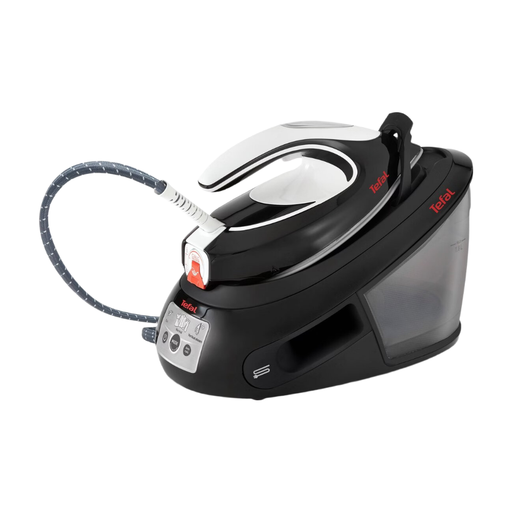
Tefal SV8055 Express Anti-Calc steam generator
The listed continuous steam output and removable limescale collector may be useful for regular ironing and maintenance.
Continuous steam: 120 g/min; steam boost: 450 g/min; tank: 1.5 litres; removable limescale collector; 6.5 bar.
View at Joybuy
 No image available
Philips 3000 Series PSG3000/20 steam generator
The 1.4-litre tank and quoted continuous steam output are worth considering for ironing several garments in one session.
Continuous steam: 120 g/min; steam boost: 350 g; tank: 1.4 litres; ceramic soleplate; removable tank.
View at Joybuy
 No image available
Philips PerfectCare Compact Essential GC6842/30 steam generator
The listed automatic temperature and steam settings may make it easier to iron different fabrics, but they don’t replace the instructions on the care label.
Continuous steam: 120 g/min; tank: 1.3 litres; OptimalTEMP; vertical steam.
View at Joybuy
 No image available
Tefal SV8026 Express Power steam generator
The quoted tank capacity and maintenance system are worth considering if you’ll use the appliance regularly.
Continuous steam: 120 g/min; steam boost: 380 g/min; tank: 1.8 litres; Calc Clear maintenance system; Durilium AirGlide soleplate.
View at Joybuy
 No image available
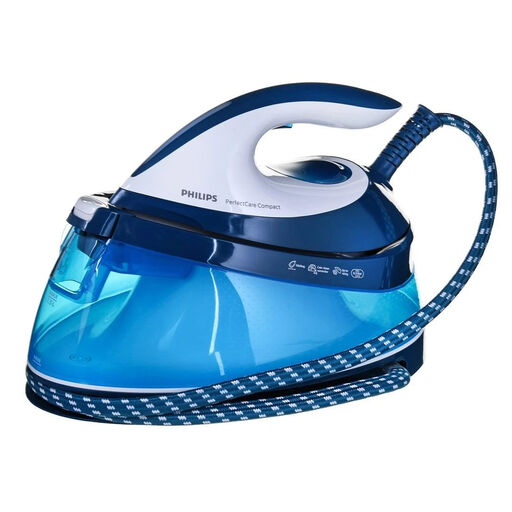
Philips GC7840/20 PerfectCare steam generator
The listed automatic temperature setting and descaling system may be useful if you iron different fabrics and do so regularly.
Continuous steam: 120 g/min; steam boost: 400 g; tank: 1.5 litres; 2400 W; OptimalTEMP; Smart Calc-Clean.
View at Joybuy
Frequently asked questions
Should you automatically iron a cotton waistcoat on a high cotton setting?
No. Follow the maximum ironing temperature on the care label for the whole waistcoat, not just the information about its fibres. Don’t use an ironing or steam function that goes against the care label.
What type of ironing board works well with lots of steam?
Choose a board that lets steam pass through and has a padded cover. The Consumers' Association points out that lots of steam can condense in the board; give the board and clothes enough time to dry between steam bursts.
How do you descale and maintain a steam generator?
Follow the manual for the exact model; maintenance procedures aren’t interchangeable. For the PerfectCare 7000 models mentioned, Philips says to unplug the appliance and let it cool for two hours before using EASY DE-CALC if it’s hot. Tefal also advises letting the appliance cool down and unplugging it as part of its maintenance instructions.
What if the appliance develops a fault after the manufacturer's warranty expires?
In the Netherlands, you’re also covered by statutory consumer rights, with no fixed legal warranty period. What you can expect depends, among other things, on the product and normal use. The seller is responsible if a product is faulty, according to the Dutch government.
Is CE marking compulsory for a steam generator in the Netherlands?
Yes, if the appliance falls under the Dutch Electrical Equipment Decree. The NVWA (Netherlands Food and Consumer Product Safety Authority) includes electrical appliances with a rated AC voltage between 50 V and 1000 V among the products covered; CE marking is compulsory for appliances that fall under these rules. Check the marking on the specific item: it is the manufacturer's declaration and doesn’t mean that the individual item has been independently tested here.


