
The careful tie wearer
You want to remove creases from cotton ties without damaging their shape by pressing them directly. Check the care label and, for light creases, try hanging the tie up first. The Tie Bar provides care advice for its own ties.


If you only want to remove creases from a cotton tie now and then, you don’t automatically need a steam generator. The larger base takes up space, while your tie needs to be handled with care. A generator is worth considering if your housemates also regularly iron larger loads of laundry and you have a suitable, stable place for the appliance. Follow the tie’s care label; The Tie Bar advises against ironing its own ties directly.
You want to remove creases from cotton ties without damaging their shape by pressing them directly. Check the care label and, for light creases, try hanging the tie up first. The Tie Bar provides care advice for its own ties.
You only iron occasionally and need to store the appliance and ironing board in shared accommodation. The Consumers’ Association points out that a steam generator is larger and heavier to store than a steam iron.
You also regularly iron other laundry and want to refill the tank less often during longer sessions. The Consumers’ Association notes that a steam generator’s larger water tank is useful for this type of ironing.
A good fit if: you regularly iron larger loads of laundry as well as ties, and have a stable place for the base.
The trade-off: the base takes up more space, and an ordinary ironing board may not be large or sturdy enough, according to the Consumers’ Association.
A good fit if: you have limited space or only iron occasionally. The Consumers’ Association recommends considering this option if storage space is limited and you have smaller loads of laundry.
The trade-off: the tank is smaller, and there is less steam available for larger piles of laundry, according to the Consumers’ Association.
A good fit if: the tie is lightly creased, or its care label says you can steam it carefully without pressing the soleplate against the fabric. The Tie Bar gives this advice for its own ties.
The trade-off: hanging a tie up won’t necessarily remove every crease straight away, and this advice does not replace the care label for your tie.
| What to consider | What to look for | Which shoppers? |
|---|---|---|
| Caring for your tie | Read the care label and check whether it allows steaming or ironing. | I want to remove creases from my tie without damaging its shape; around 33% of consumers say tie care is their main concern when buying. |
| Storage and ironing space | Measure the available storage space and check whether your existing ironing board is large and sturdy enough. | If space is limited in shared accommodation, the whole appliance needs to be practical to store; around 27% of consumers say space is their main concern when buying. |
| Larger ironing sessions | Compare tank capacity and continuous steam output separately from the steam boost. | I regularly iron laundry for several housemates and want to know whether a larger tank will suit those sessions; around 20% of consumers say larger shared ironing sessions are their main concern when buying. |
| Sharing maintenance | Check the manual for the exact model and agree on who will carry out the maintenance. | If several housemates use the appliance, I want everyone to be able to follow the right maintenance steps; around 20% of consumers say shared maintenance is their main concern when buying. |
The fabric alone won’t tell you which treatment is suitable. The Tie Bar advises against ironing its own ties directly, while a generator may be particularly useful for larger loads of ironing.
First check the tie’s care label and work out how much other laundry you actually iron.
The larger base needs storage space and may not fit well on the ironing board you already have at home.
A steam boost and continuous steam output are different specifications. Manufacturer information for Tefal and Braun models doesn’t show how they will perform on your particular tie.
Compare the specifications separately and follow the tie’s care instructions first.
The recommended maintenance method can vary by model. Tefal warns that using vinegar or descaling products with its steam generators can damage the water tank.
Keep the manual for the exact model and, in shared accommodation, agree on who will carry out the maintenance.
Incorrect cleaning can damage the tank; sharing the appliance also calls for clear maintenance arrangements.
These models offer examples of different features to compare. Their specifications are not test results for cotton ties.
The Express Essential SV6115E0 is an example of a steam generator with a refillable tank and vertical steaming function.
The PerfectCare Compact GC7840/20 is a compact model you can compare for ease of storage and use.
The CareStyle 3 range, including the IS3255BL, is a useful comparison for households with larger ironing sessions.
The Compact Steam DG7520F0 is a reference point for comparing compact models and their features.
These Joybuy steam generators are options to compare for shared ironing sessions and limited storage space. Having a steam generator doesn’t automatically make it suitable for pressing a tie directly; follow the care label.
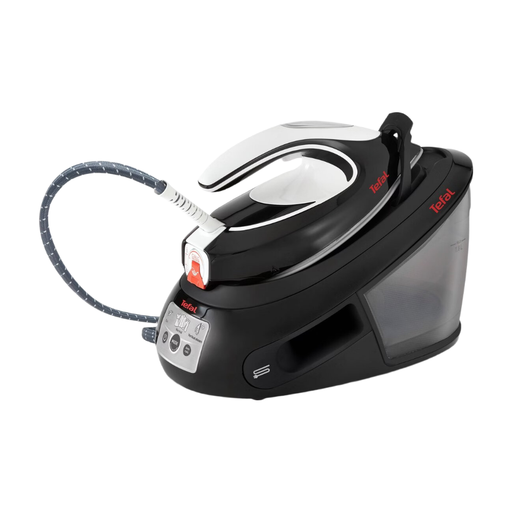 No image available
This steam generator is worth comparing if your housemates also have larger ironing sessions. Check the product information and manual for the features that matter for your needs.
The product name states 6.5bar. On its own, this doesn’t tell you which treatment is suitable for a tie.
 No image available
The product name mentions vertical ironing and a compact design. Compare this model if you’re looking for those features as well as an appliance for shared ironing sessions.
The product name lists 2400 W, a 1.4-litre tank and a steam boost of 350 g. Always check the tie’s care label.
 No image available
The product name identifies this as a compact steam generator to compare if storage space is a consideration.
Before buying, check the product specifications and maintenance instructions, and make sure your ironing board can support the entire base.
 No image available
This is a steam generator to compare if your household irons other laundry as well as ties.
Check the model-specific details for the tank, steam output and maintenance. Don’t assume that a steam generator is suitable for pressing a tie directly.
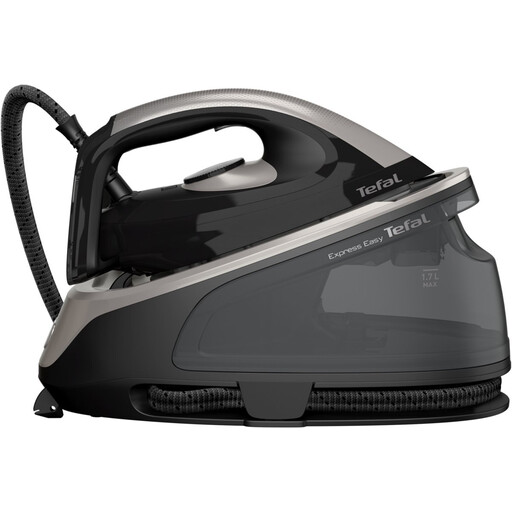 No image available
The product name describes a steam ironing station to compare if you have other ironing to do as well as caring for ties.
Check the specifications and maintenance instructions for this version, and make sure the base fits on the ironing board you plan to use.
Don’t assume you can just because the tie is made of cotton: check its care label. For its own ties, The Tie Bar advises hanging them up first to deal with light creases and warns against ironing deep creases directly; careful steaming is suggested as an alternative.
Not necessarily, but before buying, check that your existing board is large and sturdy enough to support the base. The Consumers’ Association warns that a standard ironing board may be too small or unsuitable for a steam generator.
Follow the manual for the exact model, as maintenance methods vary between appliances. Tefal advises against using vinegar and descaling products with its steam generators. Unplug the appliance and let it cool before carrying out maintenance.
For many eligible distance purchases in the Netherlands, you have 14 days to change your mind, according to the Government of the Netherlands. You’re also entitled to a product that conforms to the sales agreement; there is no set statutory warranty period. If a product is faulty, contact the seller.
For products covered by EU rules that require CE marking, the manufacturer must apply the marking before the product is placed on the EU market, according to the European Union’s Your Europe website. CE is the manufacturer’s declaration of conformity, not an independent performance test or proof that a model is suitable for your tie.