What should you look for in a steam generator?
Start by checking the tie’s care label, then decide whether a generator’s extra capacity is worth the space it takes up.
| What to consider |
What should you check? |
Who should pay particular attention? |
| Keeping the tie in good condition |
Follow the care label; GINETEX links the maximum ironing temperature to the instructions on that label. For its own ties, The Tie Bar recommends steaming rather than ironing to remove deep creases. |
I don’t want to damage my cotton tie, so I check the care instructions first; around 33% of consumers put protecting their tie above all else. |
| Limited space when you don’t iron much |
Measure your storage space and make sure you have a stable spot for the base. Also compare a standard steam iron or clothes steamer. |
If I don’t iron much and have very little space, I don’t want to store a bulky base; around 27% of consumers prioritise space and occasional use. |
| Capacity for housemates |
Compare tank capacity and continuous steam output, keeping the latter separate from the stated steam boost. Check whether you can refill the tank while the appliance is in use. |
If my housemates and I regularly iron other items, I need an appliance that suits those sessions; around 20% of consumers prioritise capacity for shared ironing. |
| Safe sharing and maintenance |
Check the manual for instructions on switching off and descaling. Agree who will switch the appliance off and maintain it after use, and avoid overloading extension leads. |
I want to know how my housemates can use and maintain the appliance safely; around 20% of consumers give shared use and maintenance top priority. |
Steam generators on Joybuy
These steam generators are selected for shared ironing. Only use an appliance or its vertical steam function on a tie if the care label allows it.
 No image available
Philips 3000 Series PSG3000/20 steam generator
The title mentions vertical ironing, which may be useful if the tie’s care label allows steaming.
2400 W; 350 g steam boost; 1,4 L water tank.
Joybuy
 No image available
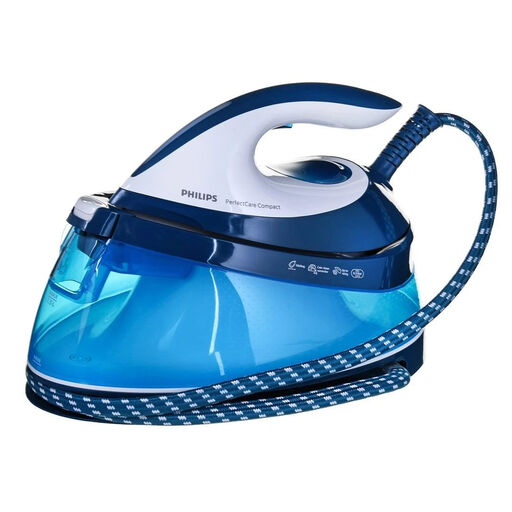
Philips PerfectCare GC7840/20 steam generator
The product title mentions vertical steaming; only use this on a tie if its care label allows steaming.
2400 W; 400 g steam boost; 1,5 L water tank; vertical steaming.
Joybuy
 No image available
Morphy Richards EasySteam+ MUH-ISE4B steam generator
The product title mentions a removable 1,8 L tank, which may come in handy for shared ironing sessions if you have enough storage space.
2400 W; 120 g steam boost; 70 g steam output; 6 bar pressure; ECO mode; 1,8 L tank.
Joybuy
 No image available
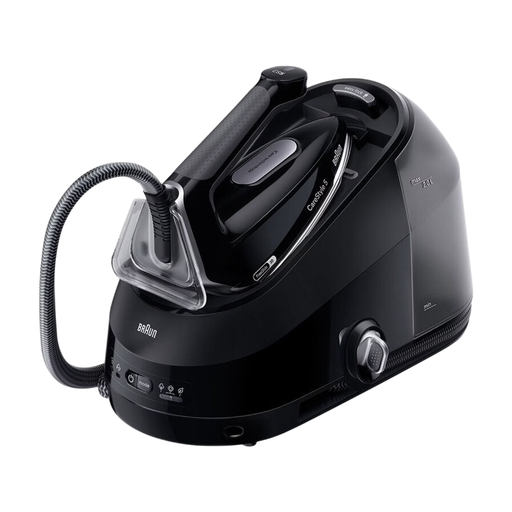
Braun CareStyle 5 IS5249BK steam generator
This model is a steam generator for ironing at home; only use it on a tie if the care label allows it.
Joybuy
Frequently asked questions
Can I press a cotton tie with a hot iron?
Not just because it’s made of cotton. GINETEX says the maximum ironing temperature depends on the care label, not just the fibre. For its own ties, The Tie Bar recommends steaming rather than ironing to remove deep creases.
Do I need a special ironing board in student accommodation?
Check that your existing board has a stable place for the generator. The Consumentenbond points out that a generator may be too large or heavy for a standard ironing board; it depends on the board and the appliance you choose.
How can I avoid damp ties and maintenance problems?
Use only as much steam as needed on fabrics that can be steamed according to their care labels, and let them dry thoroughly. According to the Consumentenbond, excess steam can leave fabrics and the ironing board damp. Follow the instructions for your exact model when descaling; Philips says procedures can vary from model to model.
What should I do if the appliance is faulty, and is there always exactly a two-year legal guarantee in the Netherlands?
If a product is faulty, contact the seller. According to the Dutch government, there is no fixed statutory guarantee period in the Netherlands: what you can expect from a product depends, among other things, on the product itself, its price and normal use. A manufacturer’s guarantee is separate from this.
What safety requirements apply to a mains-powered steam generator sold in the Netherlands?
For electrical equipment covered by the relevant EU rules, the manufacturer must meet the requirements, apply the required CE marking and draw up an EU declaration of conformity. Business.gov.nl and EUR-Lex outline the general obligations; this does not in itself mean that a specific model has been individually checked.


